Follow Us on Google

From Jude Chinedu, Enugu
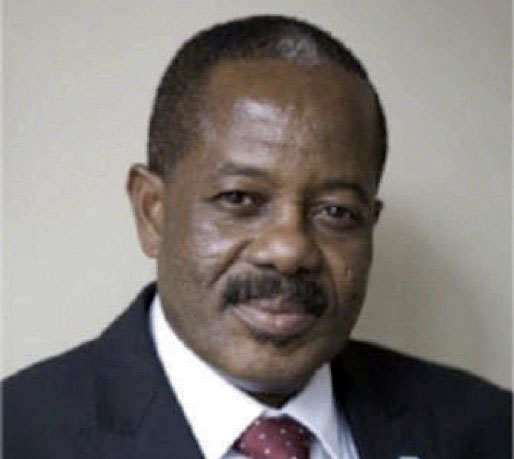
Dr Ifeanyi Eric Okoye is the Chief Executive Officer of Juhel Group and President of the Manufacturers Association of Nigeria (MAN).
In this interview, he speaks on the company’s journey since its establishment in 1987, its corporate social responsibility (CSR) initiatives, challenges facing manufacturers in Nigeria, succession planning and the role of the private sector in national development.
What was the dream behind its establishment and after all these years, have you been able to achieve that dream?
A dream is always a dream. I don’t think there will ever be a time when we relax and say we have achieved everything we set out to achieve.
Juhel was established in 1987, and since then, it has been growing gradually. As you know, we started in Trans-Ekulu, in a room apartment. From there, we expanded into a flat before moving to Emene, where our current corporate headquarters is located. We subsequently expanded to Awka, where we manufacture parenteral products. These are drugs that are not taken orally but administered through other parts of the body, such as injections, eye drops and intravenous fluids.
We are strictly into pharmaceuticals. However, we also do a little bit of water bottling and are involved in the retail of petroleum products.
So far, we have been trying our best to participate in the market, create employment opportunities, ensure that our employees are satisfied with their jobs, and manufacture relevant products that are useful to people.
That is what we have been trying to do for over three decades. We have no regrets. We are doing our best, although that does not mean we have reached the peak.
What challenges have you encountered in running the business?
Naturally, there are challenges. Without challenges, one is nothing.
We face challenges like every other manufacturing organisation in Nigeria. These include the lack of essential infrastructure such as electricity, security and good roads, as well as the high cost of financing.
You will agree with me that the currency has not been doing very well. In Nigeria, the interest rates on loans are usually very high and unacceptable to anyone involved in manufacturing. These issues also affect us as an organisation.
Then there is the issue of manpower. Nigerians are not always as dutiful when they work within the country as they are when they work abroad. So, we sometimes experience a lack of commitment among some members of staff. We are managing that as well.
These are basically the challenges we face, just like other organisations.
For us, almost 95 per cent of our raw materials are imported. They are not produced locally, which makes things very difficult. We are still managing that situation.
Let us talk about your corporate social responsibility philosophy. What is Juhel’s approach to CSR, and why is it an important part of your business?
It has to be an important part of the business because whatever you receive from the people, it is good to give something back to them.
We are fully involved in that regard. We have many people we are sponsoring through school to become graduates and make themselves employable. We have a long list of people we are training, and that is very essential.
We also single-handedly built the Pharmacy School at Agulu for Nnamdi Azikiwe University and handed it over to the government. The essence was to produce more pharmacists for the industry. It is a responsibility we believe we should share in helping the government to fulfil.
We also do a lot in our immediate environment. Where our corporate headquarters is located, we rehabilitate the access road every year. As we speak, the state government has not done anything about the road, although it has promised to intervene. We spend between N8 million and N10 million annually to make it passable because it is in a remote part of the city.
We also extend our corporate social responsibility activities to rural communities, particularly in our village. We try to build houses for very poor people who cannot afford decent accommodation. We have also constructed boreholes to provide people with access to water.
We try as much as possible to make life better for people who need assistance. It is essential to keep the people around us alive and comfortable for the company to continue to exist.
Of all these CSR projects, which would you consider the most impactful?
I think the one that has actually impacted people the most and continues to show its benefits is the school.
Since we established it, we have had many pharmacists graduating from the institution. It is something worth feeling good about. If we are now producing more pharmacists from that school, it means we are making a significant contribution to the pharmaceutical industry, and people are benefiting from it.
That is the project I would identify as the most impactful. It is also the most expensive CSR project we have undertaken, and it is making a significant difference in society.
How much did you spend on establishing the Pharmacy School at Agulu?
At the time, we spent over N300 million. That was around 17 years ago, in 2009. In today’s value, that is almost N1 billion.
It was a complete school. We constructed classrooms, laboratories, an auditorium, offices and other facilities in a massive complex at Agulu, which is actually my hometown.
I did it partly to improve the fortunes of my people. Today, we have more pharmacists from my community than we used to have before.
Are there specific stories of beneficiaries or graduates of the school who have come back to share their experiences with you?
There are many of them. We have a lot of pharmacists practising in different places. Sometimes, you meet them unexpectedly.
I remember one of my trips to the United Kingdom. I went for the graduation ceremony of one of my sons at the University of Bradford. He has a PhD in Chemistry.
While I was walking around the university, somebody suddenly shouted, “Good afternoon, sir!”
I turned around, and he told me he was a student of our school. That was a big moment for me. He was pursuing his postgraduate studies at the University of Bradford.
I think the young man is back home now, and he is doing very well.
There are many others. You meet them, and some have become successful, well-to-do young pharmacists.
It is always a joy to meet them and know that they graduated from the school.
The school has helped many families. It has made many fathers and mothers comfortable because their children have become successful. We are proud of that, and I think that is the major essence of the project.
Have you also undertaken CSR projects in areas such as skills acquisition, particularly for women, young people and less privileged members of society?
We have not really ventured into skills acquisition. But I think it is an area we should look into because it would enable us to have more skilled hands in the field to assist in manufacturing.
We have not done anything substantial in that area, but it is a good idea.
What about community projects such as boreholes and housing for the less privileged? Where have you undertaken such projects?
As I mentioned earlier, we have built houses for very poor people who could not afford decent accommodation. Most of these projects have been undertaken in my village.
I remember one particular incident. I was returning from Mass one day when a woman followed me, trying to get my attention. I was initially embarrassed, but I eventually turned and asked her what the problem was.
She asked me to follow her to her house. When I got there, I discovered that she was lying on her bed with something placed over her to prevent rainwater from touching her.
Immediately, we arranged to begin construction of a house for her. That building is standing today.
But you know, we don’t make noise about these things. It is simply what one has to offer through God.
Have you undertaken any CSR projects in collaboration with the government, either at the state or federal level?
No, except for the school I told you about, which we built and handed over to the government. We have not collaborated with the government on any other project.
How do you ensure the sustainability of these projects, particularly community infrastructure such as boreholes, which often face maintenance challenges?
For the school, we handed it over 100 per cent to the government, so its maintenance is the government’s responsibility.
However, for projects such as boreholes, we ensure that the ones we constructed continue to function. Most of them are in my community.
We do not want a situation where a borehole is constructed and stops working after one year, as sometimes happens with government projects. Whenever any of our boreholes develops a problem, the community informs us, and we ensure that it is repaired and brought back to life.
Do you encounter challenges maintaining these community projects?
Of course. As I said, when you construct a borehole, the pump may fail because of irregular electricity supply. Sometimes, the pump gets damaged, and you have to replace it completely.
If you do not intervene, nobody may be willing to repair it, and that could mark the end of the borehole.
In fact, just about a week or two ago, I was in the village when I received information that something had gone wrong with the pipes connected to one of the boreholes. I invited a plumber to inspect it, and the problem was resolved. The borehole is working again.
We encounter such challenges, but we consider it our responsibility to get involved and ensure that the facilities continue to serve the people.
Have you ever experienced a situation where a community was not receptive to a project you wanted to undertake?
No, not at all. I have never had such an experience.
Even when we wanted to build the school, we had to ask the community to provide land. Initially, there were some issues because the proposed location was beside a particular area, and the land belonged to members of the community.
However, I had to explain the importance of the project to them, and eventually, we reached an understanding and proceeded with the construction.
Looking ahead, what new CSR projects or initiatives do you plan to undertake in the next two to three years?
Training people in school is something we do regularly. In fact, I give it a lot of attention. I also assist some of the students financially throughout their education.
That is a continuous responsibility. It is not something tied to a particular period. We know that scholarships are necessary because many people want to go to school but cannot afford the little money required to continue their education.
However, we do not undertake major projects such as building schools frequently. We do not want to get involved in such substantial projects all the time because we are also struggling with the challenges of inadequate infrastructure provided by the government.
You cannot expect manufacturers who are already dealing with these challenges to undertake major projects frequently.
So, we do not have any major project of that nature coming up soon. We will continue to maintain the roads, support students through scholarships and sustain the initiatives we have been undertaking regularly.
Beyond your CSR initiatives, what role do you believe the private sector should play in addressing Nigeria’s social and economic challenges?
One important responsibility of every organisation, particularly manufacturing companies, is to prepare and empower the younger generation to take over. If you do not do that, the organisation may go down when you leave.
That is why we are working towards a succession plan to ensure that the organisation continues to exist and keeps helping people to the extent that its resources permit.
On the broader economic challenges, one thing we want the government to continue working on is the provision of affordable financing for Nigerians.
Nobody is asking the government to give out free money. However, there are countries where manufacturers can access loans at interest rates as low as three per cent.
In some of these countries, such as China, manufacturers can obtain loans at interest rates of three or five per cent, with eight per cent being the maximum in some cases. India has similar arrangements.
These companies obtain loans in their home countries and come to Nigeria to occupy spaces in our business environment. The Federal Government should therefore work towards providing affordable financing for local manufacturers so that they can compete effectively.
Electricity is another major issue. The President has spoken about improving electricity supply, and we believe the government should continue working towards that.
I attended a programme where a woman who had been given an opportunity to serve in Nigeria recalled that, 30 years ago, Nigerians were already demanding improvements in electricity supply. When she returned this year, she observed that people were still making the same complaints.
That tells you that not much has changed in that regard over the years.
Infrastructure development is essential if people must make progress in their businesses. Without good roads, businesses cannot function effectively. Insecurity displaces people and leaves them without direction. Electricity is also a necessity for every business.
These are the areas where the government needs to make significant improvements to enable businesses and the economy to grow.
Alhaji Aliko Dangote recently spoke about plans to hand over his business to his daughters. Are you also making plans for succession in Juhel Group?
Of course. That is what I have been talking about when I mentioned succession planning.
I have two of my sons working with me at the moment. One is a pharmacist, like myself, while the other is an engineer. They are already part of the organisation, and we are working towards handing over the business to them.
We are also working together to take the business to the open market so that younger people can become involved.
Succession planning is a very important strategy for ensuring that a company continues to exist. If you do not have a succession plan, the company may go down with you.
We have seen many cases in the South-East, particularly here, where companies were established, grew and eventually collapsed because there was no succession plan.
Some of the owners had children who grew up and acquired education, but there was no plan to hand over the businesses to them. In some cases, the children were not interested in the businesses. Others did not train their children or give them the necessary education to manage the organisations.
That is why succession planning is very necessary. It ensures that a business continues beyond its founder and remains relevant to society.