Follow Us on Google

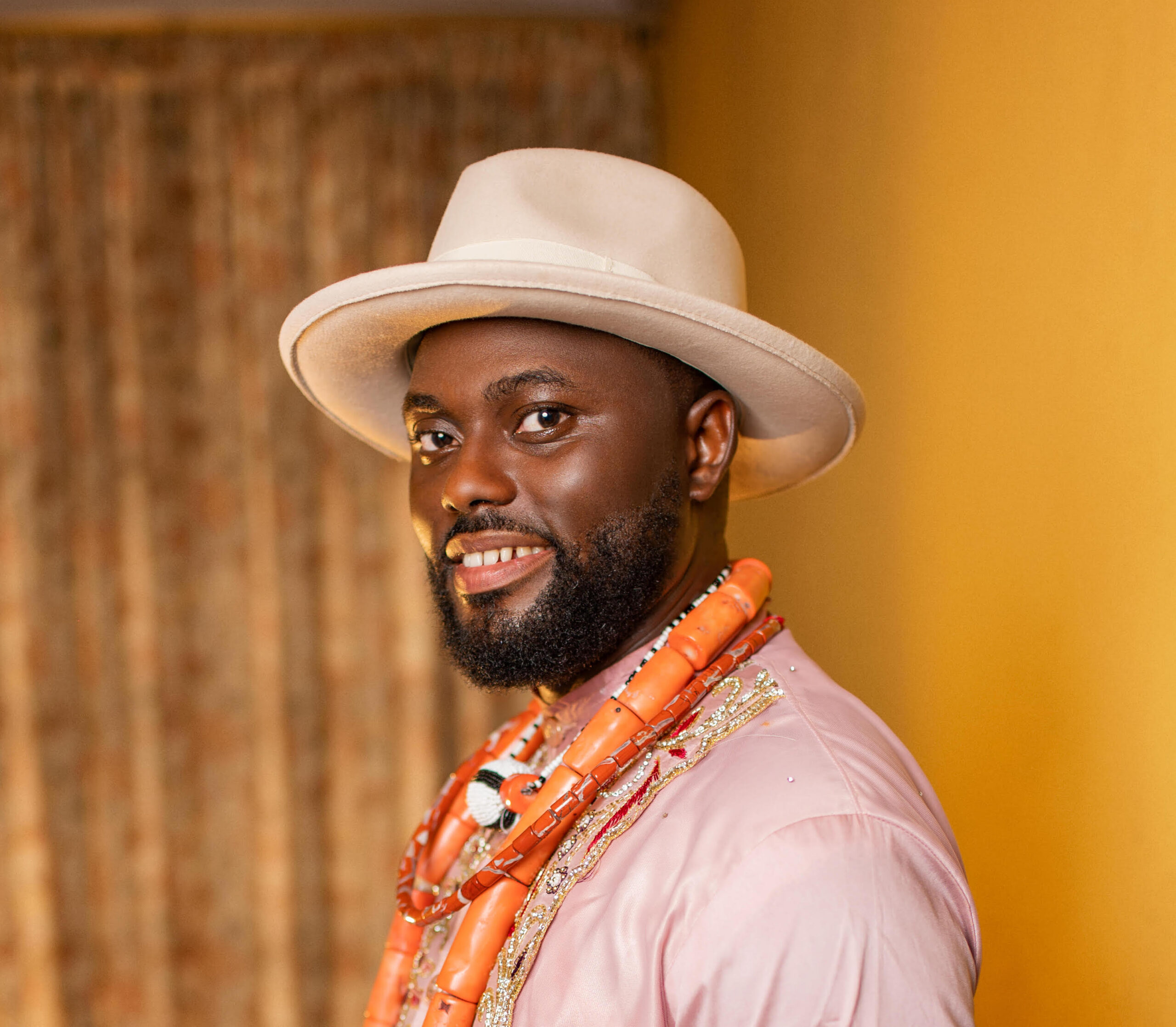
For Fortune Ileleji, beauty is not always found in perfect moments but in the way we choose to see life. This philosophy inspires La Vita e Rosa, his new body of work unveiled at a private, invitation-only art exhibition in London in November 2026. Exploring love, vulnerability, solitude and desire through expressive colours and evocative imagery, the collection invites viewers to see life differently.
In this interview with Sunday Sun, Ileleji discusses the inspiration behind the exhibition, his artistic evolution, the beauty of ordinary experiences and his quest for lasting creative relevance.
Enjoy!

You titled this new body of work ‘La Vita e Rosa’. What inspired the title, and what does it mean to you personally beyond its literal interpretation?
I chose the title because I believe life is pink. Life is not always beautiful, but it can be seen beautifully. That is a belief I want to share through my work. I see my contribution to artistic culture as a message of hope, optimism and beauty. The same thing can be seen differently simply by looking at it through a different lens.
Imagine putting on a pair of pink glasses. The world has not changed, but the way you see it has. That is essentially what I am doing with these paintings. I am looking at life through pink lenses and inviting people to experience what I see. I am not telling people what to see. I am offering them a way of seeing. I believe life should be seen pinkfully.
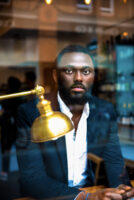
The exhibition was built around the philosophy that life is not always beautiful, but can be seen beautifully. Was there a particular experience, observation or turning point that gave birth to this idea?
It came from observing life and how differently people perceive the same things. There is beauty in having a peaceful morning, in having a restful day, in sitting quietly and enjoying your existence. Yet sometimes, when someone is quiet, we immediately assume something is wrong. Perhaps that person is simply enjoying a beautiful moment.
I began to pay more attention to these things – how much beauty exists in our lives that we fail to appreciate simply because of the way we perceive it.
We often associate beauty with extraordinary experiences, but an abundance of beauty exists in the ordinary. That observation is at the heart of La Vita e Rosa. Our circumstances do not necessarily have to change for our experience of life to become more beautiful.
Your new paintings explore tenderness, solitude, vulnerability, desire and love. Why did you choose these particular human experiences, and what do they reveal about the way you see life?
I chose the human experiences because I find them beautiful. There is something extraordinary about being human. The way we love, the way we desire, the way we experience tenderness and the moments in which we find ourselves alone. I am particularly drawn to melancholy. I find it beautiful. Melancholy is not necessarily sadness; there is a certain depth and tenderness to it.
I wanted to explore these dimensions of human experience through my paintings because they are part of life’s richness.
We do not have to be smiling or celebrating for life to be beautiful. Sometimes a woman sitting quietly, lost in thought, can communicate as much beauty as the most joyful moment.
How much of Fortune Ileleji, the man, is reflected in La Vita e Rosa?
A great deal! La Vita e Rosa reflects how I see life. I am a curious person. I am drawn to beauty, and I am interested in understanding the nature of things. I also believe in possibility. These paintings bring those aspects of my personality together. They reflect what captures my attention, what I find beautiful and what I believe is worth appreciating.
Every painting contains something of the artist. The subject, the composition, the colours and the decision to capture a particular moment — these are all expressions of the person creating the work. Through La Vita e Rosa, I am sharing something of my experience of life with the world.
How do you personally find beauty in moments of pain, disappointment or vulnerability?
By changing the lens through which I look at those experiences. When I experience disappointment, for instance, I try to look beyond the immediate feeling of loss. There may be something within that experience that is worth appreciating, something I have learned, something I have gained or something I have come to understand more deeply.
Pain can reveal the depth of love. Vulnerability can reveal the beauty of connection. Even an experience that did not turn out the way I wanted can contain moments that I will always treasure. I remind myself that my initial perception of an experience is not the only way to see it. That is how I find beauty in difficult moments. I look again, through a different lens.
Compared with your previous body of work, what makes La Vita e Rosa different in terms of artistic expression, storytelling, technique and emotional depth?
La Vita e Rosa gives a particular philosophy its own visual expression. With this body of work, I wanted to explore the beauty of human existence through the idea of seeing life pinkfully. That idea informs the subjects, compositions, atmosphere, and colour scheme of the paintings. I work between realism and abstraction. I enjoy the freedom to interpret a figure, simplifying or exaggerating a form while retaining the human presence that makes the painting recognisable.
Technically, I use colour to construct light, form, depth and atmosphere. Pinks, reds, yellows, violets, oranges, and softer peach tones appear throughout the collection. These colours allow me to express the world as I am seeing it. The storytelling is often concentrated within a figure, a gesture, an expression or a moment of stillness.
What makes this body of work distinctive is the experience it offers. Each painting presents a different aspect of life, but they are all seen through the same lens.
Do you consider yourself an optimist, a realist or an artist who deliberately challenges people’s perception of reality?
I am an optimist. I believe in possibility. I believe things can improve, and I believe we have the capacity to experience life more beautifully through the way we perceive it. As an artist, I enjoy exploring reality and presenting it from a different perspective. Something is fascinating about looking at something familiar and discovering something you have never seen in it before.
That is one of the things I love about art. It allows us to experience the world differently. My contribution through La Vita e Rosa is to offer that opportunity.
You live and work in London. How has the city influenced your artistic development, and what does presenting this new body of work in London mean to you?
London is home. It is where I live with my family, where I create and where a significant part of my life unfolds. What I find particularly beautiful about London is the diversity of human experience within it. You encounter different cultures, ideas, and ways of living. There is always something to observe, something to discover. As an artist, that richness is invaluable. The city offers an extraordinary environment for curiosity and creative exploration.
Presenting La Vita e Rosa in London is an opportunity to share my work with people in the city I call home. There is something quite special about a body of work that has developed quietly in the studio, finally entering the world and becoming part of a wider conversation.
Your paintings are characterised by a distinctive use of colour and occupy a space between realism and abstraction. How have your experiences and artistic influences shaped this visual language?
My visual language has developed through years of painting, observation and experimentation. I am fascinated by the human figure and by how much can be communicated through the relationship between colours, shapes and forms. Working between realism and abstraction gives me tremendous freedom. I can retain the presence of a human figure while interpreting its form, colours, and atmosphere in my own way.
Colour is an important part of that expression. I can use deep red to establish depth, yellow to express light and pink to introduce tenderness. Violet or peach can bring an entirely different quality to a passage of the painting. With La Vita e Rosa, there is also a very simple explanation for the colours.
Imagine that I put on a pair of pink glasses before painting the world around me. Naturally, what I see takes on the quality of that lens. The paintings become a way of sharing that experience. That is the relationship between the visual language and the philosophy of this particular body of work.
What was the most emotionally demanding or creatively challenging painting in this collection, and what made creating it particularly difficult?
In this collection, Submerged was probably the most creatively challenging painting. Some paintings come together quite naturally. Others demand much more from you as an artist. Submerged was one of those paintings that required me to push myself creatively.
The experience of making it was particularly interesting because it demanded close attention to how the different elements of the painting came together.
Sometimes the most challenging part of painting is finding that point where everything begins to work as a whole. You can have beautiful colours, interesting forms and a strong subject, but the painting only truly comes alive when all of those elements begin to work together.
There is something very rewarding about arriving at that point after a challenging creative process.
With contemporary art attracting audiences across different cultures and continents, what do you believe it takes for an artist to establish a lasting presence beyond individual exhibitions?
It will take having a distinctive artistic language, a sustained body of work and a meaningful contribution to artistic culture. I believe an artist must have something to offer, something that gives the work a reason to exist and allows people to engage with it over time.
Consistency is also essential. One exceptional painting can attract attention, but a sustained body of work establishes the depth of an artistic practice.
Beyond creating the work, documentation is incredibly important. Exhibitions, publications, critical conversations and relationships with galleries, collectors and museums all help to preserve the work and place it within a broader cultural and historical context.
There is a distinction between visibility and permanence. The ambition should be to create something that continues to have significance long after the exhibition has ended.
What has the art industry taught you about the relationship between creativity, money and recognition?
It has taught me that creating value and having that value recognised are two different things. An artist can create extraordinary work without receiving immediate recognition. Equally, commercial success and recognition do not automatically establish the significance of a work.
Money is important. It gives an artist the capacity to sustain a practice, to work on a larger scale and to pursue more ambitious ideas. Recognition brings opportunities and allows the work to reach people who might otherwise never encounter it.
Creativity, however, is where it all begins.
I believe an artist must develop an independent standard of judgment. I have to be able to stand in front of my own painting and recognise its quality before I can expect somebody else to recognise it. Ultimately, I want to create work that possesses value beyond the circumstances of its sale or the moment of its recognition.
If La Vita e Rosa were a chapter in your personal life, what chapter would it represent? And what’s next for you after this?
It would be a chapter about appreciating life. I am a very ambitious person. I am constantly thinking about what I want to create, what I want to build and what I want to accomplish. As for what comes next, I am exploring intimacy more deeply through painting. I am interested in the different ways human beings encounter one another, express affection, experience desire and share moments of connection.
I have also recently published The Law of Cohesion, a book that explores how things hold together. Both my writing and my painting emerge from a curiosity about the nature of things.