Follow Us on Google
Chevron Nigeria Limited has revealed that its pioneering Global Memorandum of Understanding (GMoU) programme served as the blueprint for Nigeria’s Petroleum Industry Act (PIA), significantly easing challenges in Niger Delta host communities.
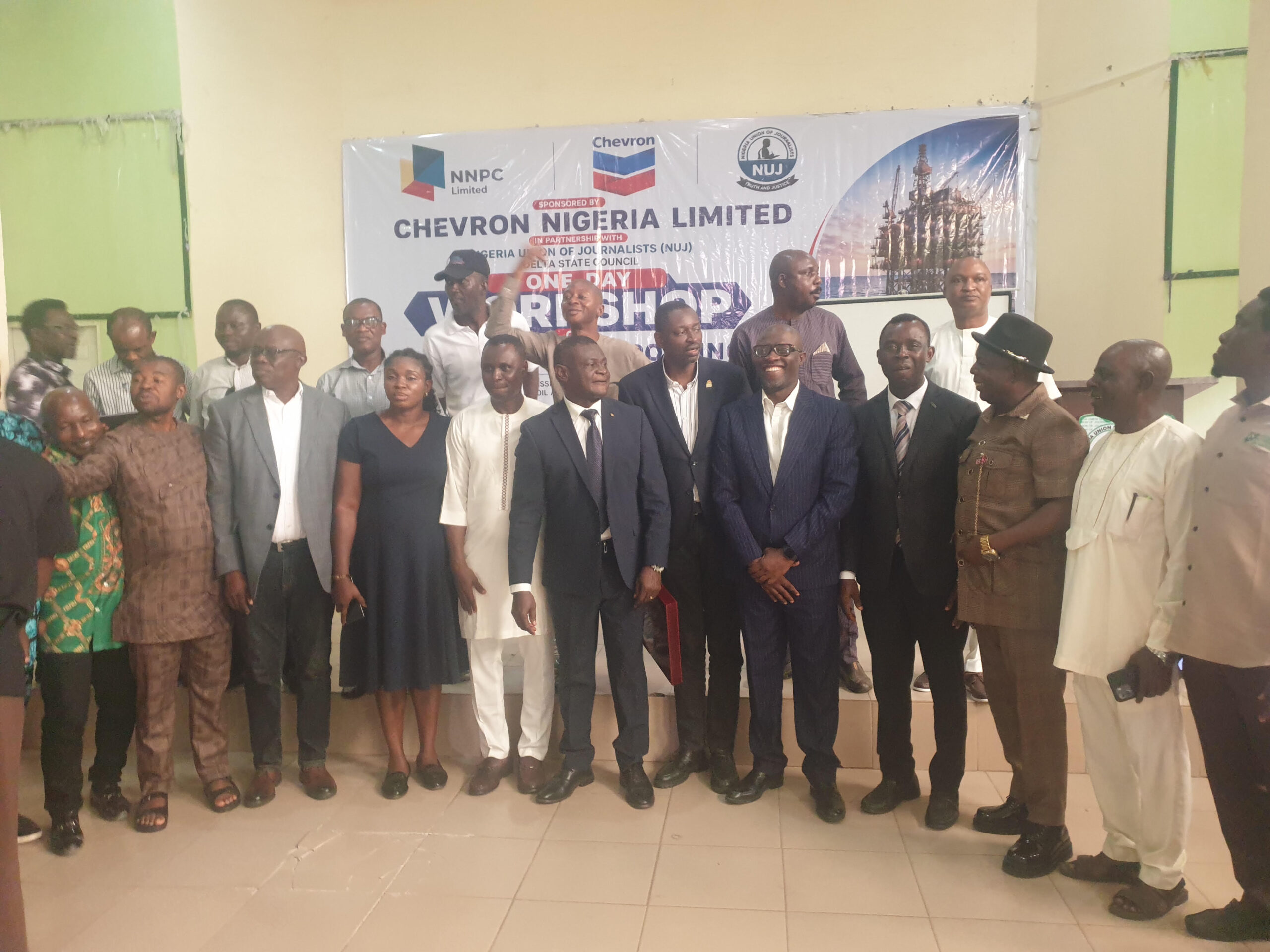
Speaking at a one-day workshop on “Enhancing Professional Skills and Ethical Standards in Oil and Gas Journalism” in Asaba, organised by Chevron in collaboration with the Delta State Council of the NUJ, Chevron’s Chief Corporate Affairs Officer, Mr Olusoga Oduselu, explained that the principles embedded in the PIA are directly drawn from Chevron’s successful community engagement framework.
Oduselu, represented by Communications Manager, Dr Victor Anyaegbudike, maintained that Chevron invests over $1 billion annually in local content and has contributed more than $10 billion over the past decade to support local communities, Nigerian companies and capacity building. “Our mission is partnership and performance, starting with the people,” he stated.
He recounted how, in response to escalating crises in the Niger Delta around 2010, Chevron redefined its community engagement strategy through the GMoU, initiated in 2005.
The programme fostered participatory partnerships, giving communities ownership of development projects and the power to determine their needs—water, electricity and education—and manage their five-year development plans.
Chevron provided funding and monitored progress through NGOs, he said.
Before the enactment of the PIA, millions of dollars had been invested in Niger Delta communities through GMoU projects.
Oduselu explained that the PIA adopted many of these principles—transparency, accountability, sustainability, participation and capacity building—verbatim from Chevron’s model.
“Before 2021, millions upon millions of dollar projects had been done in several communities around the Niger Delta region because of the GMOU. The PIA that we are running today, part of which was picked from the module of the GMOU by Chevron. The same principles. The principle of transparency and accountability, the principle of sustainability assurance, and the principles of participation and capacity building were all already embedded in the GMOU before the PIA.
Other News
“So they just picked it hook, line, and sinker from the Chevron’s module. We know that the communities are very important to us and that we have been trying to ensure that Nigerian content takes prominence.
He emphasised that the partnership built over the years has resulted in a lasting relationship with Niger Delta communities, with Chevron executing numerous projects and transitioning into the Host Community Development Trust under the PIA.
“Chevron has spent over $10 billion on Nigerian content and local capacity development, supporting contractors and communities across the country,” Oduselu added.
Dr Anyaegbudike also highlighted Chevron’s efforts to boost Nigeria’s oil production through significant investments in onshore, offshore and deep offshore platforms. The company has reduced gas flaring by 98%, with plans to eliminate it entirely, reflecting its commitment to environmental sustainability.
In addition, Chevron has supported journalism development by training over 500 journalists in advanced reporting and ethical standards, partnering with Pan-Atlantic University. The company’s efforts aim to improve the quality of information dissemination about the oil and gas sector, he said.
In his remark, NUJ Delta State Chairman, Comrade Churchill Oyowe, commended Chevron for its support, emphasising that oil and gas journalism requires industry knowledge, ethical reporting and an understanding of environmental and community issues.
He urged journalists to leverage training opportunities to ask questions and enhance their understanding.
Dr Patrick Edema, Senior Lecturer, Dennis Osadebe University (DoU), Mr Benji Binitie, Retired GM, DBS Asaba, Mr Godfrey Ubaka and Mr Lawrence Okpewho, General Manager, Cruiz FM Asaba, delivered insights into the sector’s complexities, regulatory frameworks and environmental considerations, reinforcing the importance of ethical journalism and community engagement in Nigeria’s oil industry.