Follow Us on Google
• Pfizer, NIMR teach workshop participants new strategies, way out
By Cosmas Omegoh
One day, a long time ago, a certain man, confident he had sealed his place in life, declared with a finger in the air: “I have no enemies,” leaving his listeners bewildered. The speaker was persuaded by the feeling around him that he had no foes, but friends. But how wrong he was!
Indeed, long before now, advances in Medicine had revealed that man is always under siege; man is regularly threatened by a myriad of unseen enemies.
Scientists have identified most of mankind’s enemies as micro-organisms. Micro-organisms, it was learnt, can only be painstakingly seen and identified with the aid of a microscope. Scientists call them bacteria, microbes, and pathogens, among others. They are hard to be seen, let alone identify.
Characteristically, most microbes are vicious, violent and virulent. When contracted, they can be unyielding, the same for the illnesses they cause. Only through medical help and the right application of quality drugs can the vice grip of pathogens be broken and the diseases they cause subdued to free the victim and make them well again. Otherwise, they will suffer endlessly grievously, and possibly die in the end.
Recently, a high-level five-day training was held in Yaba, Lagos, to expose new ways microbes are resisting antibiotics in Nigerians. The workshop was a collaboration of pharmaceutical giants, Pfizer, and the Nigerian Institute of Medical Research (NIMR), Yaba.
The event was attended by various professionals in the healthcare delivery chain. Among them were medical doctors, medical microbiologists, and medical laboratory scientists.
The attendees were drawn from the University of Ilorin, Olabisi Onabanjo University, Ago Iwoyi, Babcock University, University of Lagos, Lagos State University, various Catholic and General Hospitals in Lagos, as well as reputable private laboratory outfits.
Dr Chioma George, who represented Dr Kodjo Soroh, Pfizer’s Director West Africa on the occasion said “we are partnering NIMR to build capacity among the relevant stakeholders in this space – prescribers, laboratory scientists – everyone who has a stake in the industry to ensure effective and appropriate use of antibiotics.”
Pfizer, she said, was open to collaboration and capacity building in the fight against anti-microbial resistance. She disclosed that “the the goal is to have healthcare workers know the appropriate use of anti-microbial agents and to in turn, communicate that within their spaces.”
She added that “Pfizer’s position is that governments and the public health community must work together with industry to take further action and support measures that will enable continued innovation in the development of new antibiotics and vaccines to help curb the spread of AMR.”
At one of the sessions, Dr Toyin Awoderu, shocked her audience when she revealed that there are over 100 million bacteria in every spoonful of earth one might scoop up.
“There are about 10,000 known bacteria and about 100,000 unidentified ones,” she said, her voice ringing with authority. Then she added: “Every spoonful of soil contains over 100 million individual bacteria.
“Bacteria don’t live alone, they live in communities.” They live where “they have food materials required for their cultivation.”
Dr Awoderu suggested that floors as well as surfaces such as dining tables, among others are potential breeding places for microbes, and thus the need to keep them clean and germ free always.
How micro organisms resist antibiotics
Now, here is a bad news. Advances in Medicine and drug production are also seeing seemingly near corresponding resistance to drugs by disease-causing microbes.
Dr Christian, Azubuike Ewuru, the coordinator of the Pfizer/NIMR training themed “Antimicrobial Selection, Resistance Testing and Imperative Criteria Workshop,” revealed that emerging trends showed that many microbes were increasingly becoming resistant to drugs in the market.
He said that was becoming alarming because Nigerians had been unrelentingly abusing antibiotics.
He said that if the trend was not halted, the development would portend a grave future.
“WHO has declared microbial resistance as a global emergency.
“When penicillin was discovered a long time ago, it was then called ‘magic bullet.’ But it was later learnt that its efficacy was being eroded because of the emergence of resistant pathogens which the ‘magic bullet’ could no longer fight.
“It was found out that such pathogens had developed resistance as a result of misuse and abuse of anti-biotics. So, the anti-biotics then used to clear infections were no longer effective, while new ones were becoming difficult to find.
“Here at NIMR, we are addressing this issue of drug selection, testing and reporting to the clinicians so that they can make informed decisions on patient management.”
He was unhappy that “nowadays, people go straight to the patient medicine stores to purchase anti’biotics.” That should not be the case he contended.
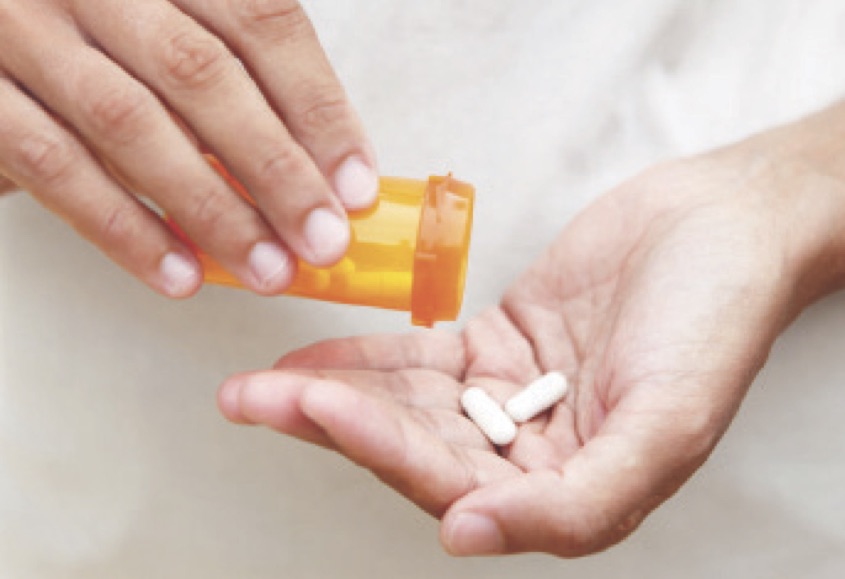
“The abuse is that when people take these drugs, they often keep the remainder without completing the dose. And when any family member takes ill, they are given the remainder of the drugs. That amounts to under-dosing, and an abuse of the drugs. That is dangerous both to the individual and medical practice as a whole.
“That is why we decided to educate medical laboratory practitioners on the best ways to carry out these tests so that their patients can be better served.”
What experts say about antimicrobial resistance (AMS)
Our correspondent learnt that a recent virtual roundtable hosted by Pfizer tried to explore the frontiers of antimicrobial resistance. It was a gathering of medical Goliaths, sight on discussing the need for antimicrobial stewardship as treatment of infections was becoming more difficult due to widespread emergence of antimicrobial resistance, as well as raising awareness and ensuring ongoing patient safety so as to maintain the future effectiveness of antibiotics.
At the event, Pfizer’s Dr. Soroh, revealed that “Antimicrobial Resistance (AMR) occurs when bacteria, viruses, fungi and parasites change over time and no longer respond to medicines making infections harder to treat and increasing the risk of disease spread, severe illness and death.:
He noted that “AMR is one of the biggest threats to global health today and can affect anyone, of any age, in any country. If it continues to rise unchecked, minor infections could become life-threatening, serious infections could become impossible to treat, and many routine medical procedures could become too risky to perform.”
Then he added: “Overuse of antibiotics is creating stronger germs. Some bacteria are already ‘resistant’ to common antibiotics. When bacteria become resistant to antibiotics, it is often harder and more expensive to treat the infection. Losing the ability to treat serious bacterial infections is a major threat to public health.”
If the foregoing narrative is not scary enough, then the next one certainly will.
Listen to Dr Soroh: “Currently, at least 700,000 people die each year due to drug-resistant diseases. More and more common diseases, including respiratory tract infections, sexually-transmitted infections and urinary tract infections, are untreatable; life-saving medical procedures are becoming much riskier, and our food systems are increasingly precarious.”
Contributing to the discussion, Professor Oyinlola Omoniyi Oduyebo of Lagos University Teaching Hospital, (LUTH) Lagos, described antimicrobial resistance as “a serious threat to global public health,” warning that “it increases morbidity and mortality, and is associated with high economic costs due to its health care burden.”
He went on to say that “infections with multidrug-resistant (MDR) bacteria also have substantial implications on clinical and economic outcomes.”
Professor Oduyebo raised the fear that “increased indiscriminate use of antibiotics during the COVID-19 pandemic will heighten bacterial resistance and ultimately lead to more deaths.”
He was of the opinion that “a holistic and multi-sectoral approach is needed to address AMR’s rising threat,” adding that “AMS practices, principles, and interventions are critical steps towards containing and mitigating AMR.”
Similarly, Prof. Kennedy Tamunoimiegbam Wariso, of University of Port Harcourt (UPTH) lamented that “with the rates of AMR is increasing worldwide, and very few new antibiotics being developed, existing antibiotics are becoming a limited resource. It is therefore essential that antibiotics only be prescribed – and that last-resort antibiotics (AWaRe RESERVE group) be reserved – for patients who truly need them. Hence, AMS and its defined set of actions for optimising antibiotic use are of paramount importance.”
The gurus were united in saying that “a robust pipeline of new antimicrobials is essential to restoring the balance against increasing rates of AMR. However, significant economic hurdles have made research and development in this area a challenge.”
They lamented that “no novel class of antibiotics has been launched for almost 40 years, and even when newly approved treatments come to market, they may be used sparingly to support good antimicrobial stewardship practices – making it difficult to recover the high cost associated with development.”
Light at end of tunnel
At the end of the Pfizer/NIMR workshop, participants were enamoured by the quantum and quality of information they received. While appreciating the organisers, they pledged to deploy what they had learnt for maximum profit.
Dr Nkechi Enwuru, an academic and researcher at University of Lagos, told our correspondent: “I had great expectation when I heard about this workshop; so I decided to be here.
“It has been illuminating. What I have learnt so far will impact my own area of research,” she promised.
Another participant, Nkoyo Imo, who works at General Hospital, Ifako, Lagos, had this to say. “I have learnt new and better ways of conducting anti-microbial testing.
“I have learnt that there are standards that are used in result evaluation because different antimicrobial disks have standards of inhibition. So what you might say is sensitive to one antimicrobial disk, might be insensitive to another one.”
Rev. Sr. Esther Osawe of the Eucharistic Heart of Jesus Hospital, Lagos, said: “In medical laboratory, there is always room for you to advance your knowledge especially when it comes to antibiotic resistance.
“It is good to have this sort of training every often because things are changing every day, same for the Nigerian environment in which we practice.”
Advice to antibiotic abusers
If you are in the habit of ingesting antibiotics at every turn, this piece of advice is for you.
Dr Ewuru warned that “it is very, very wrong for you to walk into any medical outfit to buy a drug without the guidance of any qualified healthcare professional.
“People should form the habit of finding out what is wrong with them before proceeding for treatment.
“We know that things are difficult in Nigeria at the moment, but people should be careful especially when it comes to antibiotics.”
On the part of government, Dr Soroh dropped this caveat. “Without action by governments, industry, and society, AMR is expected to cause 10 million deaths each year by 2050,” thus raising focus on the need for the challenge to be taken seriously by all and sundry.