Follow Us on Google
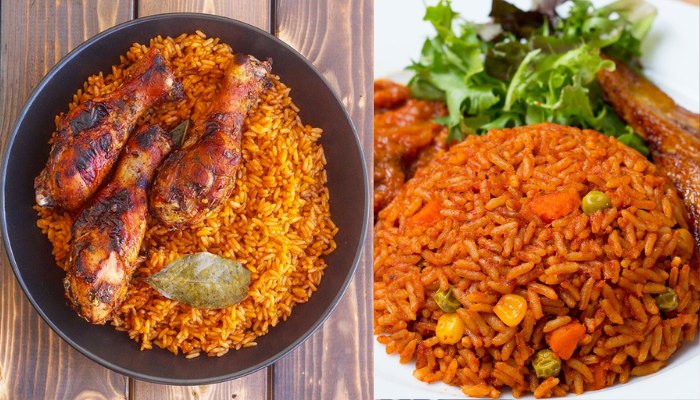
Households are facing mounting pressure from rising food prices as the cost of preparing a pot of jollof rice for a family of five has climbed to almost N30,000, according to the latest SBM Intelligence Jollof Index.
The Q2 2026 report shows that the national average cost of cooking the country’s most popular staple meal rose from N25,798 in July 2025 to N29,578 in June 2026, representing a 14.6 per cent increase in just one year.
Over the past decade, however, the increase has been far more dramatic, with the cost of a pot of jollof rising by 624 per cent nationwide.
According to the report, titled “Rebasing, Redefining and the Weather’s Toll on the Pot,” the latest edition introduces a revised methodology that better reflects how Nigerians currently cook, including replacing turkey with chicken in the ingredient basket and adopting standardised weights for each ingredient.
SBM Intelligence notes that the figures underscore the depth of Nigeria’s food inflation crisis and the growing burden on household incomes.
“The jollof pot remains West Africa’s most honest economic barometer,” the report stated. “It reveals not just prices, but priorities, substitutions and the quiet resilience of households who make do with less.”
The report attributes the surge in food prices to a combination of insecurity affecting farming communities, poor transport and market logistics, climate-related disruptions and rising protein costs.
It found that food inflation is no longer a uniform national phenomenon but a collection of localised crises driven by security challenges, weather events, infrastructure deficiencies and policy constraints.
Protein remains the biggest contributor to the rising cost of preparing jollof rice. According to the report, beef and chicken account for the largest share of the cooking basket, while consumers in some parts of the country have been forced to buy poultry in smaller portions instead of whole birds because of rising prices.
Weather has also emerged as a major driver of food inflation. Heavy rains, flooding and delayed harvests disrupted food production and transportation across several states during the review period. In Bauchi, tomato prices reportedly increased by more than 200 per cent in some markets following delayed rainfall and pest infestations.
Across Lagos and other urban centres, many households have resorted to substituting carrot-based sauces and dried peppers for fresh tomatoes to reduce cooking costs.
Regional disparities in food prices have also widened significantly. While Bauchi recorded a 16.7 per cent decline from its inflation peak following improved food supplies, Lagos experienced some of the steepest increases nationwide. Trade Fair and Balogun markets recorded a 49.6 per cent increase over the review period, driven by higher transport costs and rising prices of imported food items.
Port Harcourt on the other hand recorded an 18.2 per cent increase, while Calabar Municipal and Bayside Mbakpa markets posted increases of 36.3 per cent and 35.9 per cent respectively, reflecting changes in protein consumption and the disappearance of cheaper frozen poultry imports.
The report also found that the gap between Nigeria’s cheapest and most expensive markets has widened to N14,700, an indication that food supply chains are becoming increasingly fragmented.
Since SBM Intelligence began tracking the index in 2015, every geopolitical zone has recorded sharp increases in food costs. The Southwest recorded the highest increase at 708.2 per cent, followed by the Northcentral with 567.3 per cent, South-South with 489.9 per cent, Northeast with 467.5 per cent, Southeast with 441.3 per cent and Northwest with 428 per cent.
SBM Intelligence said addressing the country’s food inflation challenge would require more than monetary policy.
It called for improved security in farming communities, investments in climate-resilient agriculture, better transport and storage infrastructure, and measures to strengthen domestic food supply chains.
“The weather is not a new problem, but its intensity and frequency are worsening, and the food system has no buffer,” the report warned, noting that unless structural constraints are addressed, Nigerian households will continue to bear the rising cost of putting food on the table.