Follow Us on Google
…Says cargo traffic to ports now at lowest ebb
By Steve Agbota
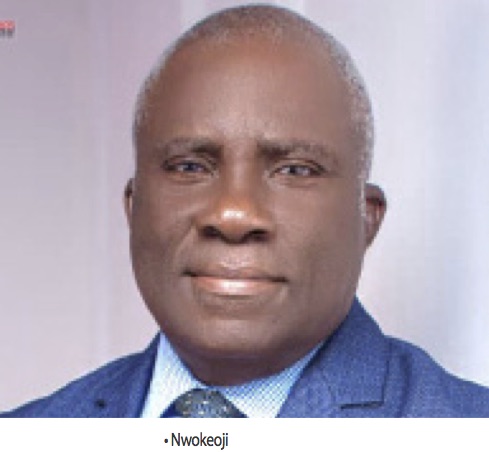
Mr Emenike Nwokeoji is the current national president of the Association of Nigerian Licensed Customs Agents (ANLCA).
In this interview with Sunday Sun, Nwokeoji spoke on various issues, including dollar fluctuation, Customs duties, and drop in cargo volume at the nation’s ports as they affect the clearing agents and port operations amid economic hardship in the country.
He noted that things are currently tough, lamenting that this is not the best time for clearing agents operating in the nation’s maritime industry.
However, he declared that the reopening of Niger Republic border was political and not economical.
This is even as he agitated for the reopening of other land borders such as Seme. Excerpts:
As the ANCLA president, looking at how licensed clearing agents are faring in the ports in the face of unstable economic situation in the country, how has fluctuating Customs duties affected their operations?
Yes, I know every aspect of the economy is affected, you can call it worldwide economic meltdown. But I think the agents are suffering it more because Nigeria being an import dependent country, so many things we use here in our everyday activities are imported. So, the cargo traffic to the ports is at one of its lowest level now. And when the shipments are not coming in, of course, the agents will not have much to do. So the agents are really going through a lot. This is not the best time for the clearing agents or Customs brokers.
What do you think the clearing agents can do in order not to give us at this hard time?
We have gone through situations like this for those of us that have been holding this business. During the sad period, we went through situations like this, the days of import license. So, only those that are able to secure license can import. So we have gone through it before. Let’s just keep hope alive. Every aspect of the economy is having one challenge or the other. So, those that are able to keep their heads above water, they will live to share the story of what we went through. We know we are going through a phase in our economic situation, or every aspect of this country. We know it’s a phase that will come and pass.
What is the volume of trade at the ports since the inception of Tinubu’s administration?
The volume of trade now, I cannot give a figure or percentage now. You are talking about maybe possibly last year. The volume of trade dropped drastically. But I don’t want to quote percentage. But I can tell you, I can only use the word, drastically. Yes, cargo traffic. The factories are not running well due to so many factors such as diesel costs and the exchange rates. Even sourcing the foreign exchange, So, it’s affecting a whole lot.
I can tell you that the volume of cargo traffic is very, very low.
Due to the low cargo volume, some importers have decided to leave Nigerian ports for those of neighbouring countries , what is your take on this?
I don’t know about that. I don’t think any genuine importer will leave Nigerian port to go and ship cargo to another port. How do you bring it back to Nigeria? Unless they want to sell it there. Otherwise, you will now start smuggling it. But if they are to come through authorised routes, all our neighboring countries now, if you put in any cargo there, you will pay duty there. And then when you are coming into this country, you will pay again.
So, nobody can pay that double taxation and yet still compete in the market.
The issue of foreign exchange is affecting clearing agents operations at the port. How are you able to survive?
It is not our duty actually to source foreign exchange for the importer. So, importers source their exchange, to do the import. Ours is to bring it out after importation. So, when they activate the importation, then the document will come forward to us for processing. But because they are having issues, it’s not easy for them. Maybe I will put it this way for you, If you have been with trading with N100 million, before now when the exchange rate was reasonable, I will use the word reasonable, N100 million might fetch you, if we use the exchange rate of, let’s say N1,000. It was N900 and something as of December. N100 million would have fetched you like 90 something thousand dollars. You know.
But now, if you are now going to source the same 90 something thousand dollars using exchange rate of N1.6, it then means you can’t import the volume that N100 million would have given you.
Because you are going to get less than 90 something thousand dollars. So, in effect, it’s going to reduce the volume of importation from that particular trader. And we also need to take this.
How did the agent receive the news of opening of the Niger Republic border and the clamour to open further land borders in the country?
The Niger border opening was political and wasn’t economical. It has nothing to do with our economy. It was due to ECOWAS sanctions of the military takeover of government. So, when they resolved it, they opened it. The borders we are more interested in is like other borders. Like Seme border, that’s the ones we have made presentations to the government on how they should open it because it’s a legitimate international route where people trade officially.
Then some of the items that were coming in from there, they said no more. If an item can come through the port, it can as well come through the border. All you need to do is to tighten your control, let the officers or agencies of government that are posted in those areas perform their duty.
And so, because those places too, they are contributing to the growth of the economy. We are still working and believing before long that other international land borders will be opened.
What advice can you give in order to help stabilise the nation’s economy?
We don’t throw out advice in the air. Once in a while, we advise the agencies of government that we are relating with like finance, Customs, Central Bank of Nigeria (CBN). Because what they know, we might not know all. But within our own little window, we push in our advice
like we have done on the stabilisation of the exchange rate. And right now, some of those things are working out. Within the past one week, we can see that the Naira is appreciating. So, all we need to do is to watch and practice it
within the next two weeks and see how it’s going and see whether there are areas that government can still do one or two things until we stabilize on that so that it can help planning.
We’re almost through with the first quarter of the year, looking at the maritime industry, what can you say about the development of the sector?
In terms of improvement, we are not pushing our luck too far. First, the beginning of every year comes with some hiccups. Secondly, I don’t know what we are comparing it. If we compare it with the activities of last year, of course, activities last year were more higher than what we are having now.
But we believe that maybe this is a new government. They were not in power as of January to the first quarter of last year. So, let’s see maybe new policies come with
some changes and effects.
Let’s hope we are seeing some changes as things are going now. So, we believe maybe
before they will do one year, then we can look back and say yes; I believe we are making progress, maybe slowly.
What is your vision for ANCLA and other clearing agents?
ANCLA is the umbrella for the association covering all the licensed Customs agents or brokers. Our vision is like what is going on from Lagos now. They are in Port Harcourt, they rounded up yesterday. It’s first of all to impact knowledge, capacity building of our members so that they can compete with one of the best anywhere. Let them train themselves so that people will stop looking down on an average agent. So, that when they are relating with other agencies of government, they can interact from the point of knowledge, not from the point of weakness.Capacity building of our members. Then the welfare of our members, we want our members to be respected as they are carrying out theur functions because we know the role we play in the economy of the nation. All the amount being declared as revenue generated by virtually all the agencies within the maritime industry are passed through the hands of clearing agents. We relate with the Shippers Council, NIMASA, NPA, Customs, Immigration, shipping companies and others. We relate with all these agencies of government. But somehow they still look down or no credit is given to an agent. That is not proper.
You know, for every small item, even if it’s these bottles of water you bring into this country, you must go through these agencies. As is water now, you go through Standard Organisation, you go through NAFDAC, then Customs, the terminal handling charge,
the Customs, whether it’s dutiable. So all these things pass through the agent. We relate with all these people. So, if we have this capacity to do this, I think we need to be recognised. We need to be appreciated for the service we are rendering to the nation.
And then, lately, those recognitions are coming gradually. Like last year, we were invited to make input
in the national budget for this 2024. These are the recognitions we are talking about. It’s not necessarily money. Where you can get us involved at the planning stage so that together we must have all energy and experience for the good of the economy and the country.
The Eastern ports are not witnessing much activities like Lagos ports, what do you think can be done to open up these eastern ports?
Okay, I like the way you put it. The activities are not like Lagos. One, Lagos is a bigger market, If you drop a container here in Lagos, one of your customers, might come from the neighbouring countries maybe Ghana, Seme, Lome. When you get to the border and
you see trailers buying goods and going out of the borders, we don’t have that luxury in Port Harcourt or the Eastern ports unless maybe you talk of Calabar where some people come from Cameron to buy that’s one, but the major issue is the freight differential. Taking cargo from any part of the world to Lagos is cheaper than taking it to eastern ports so because of that alone the importer even before the cargo leaves is already there, that is the difference and everyday the thing is widening because the turnaround of a vessel is what matters to the shipper. If we can load this vessel today within one week to go to Lagos, yes instead of keeping it for three weeks to get enough cargo that will take him to the eastern ports, but if they are to pick cargo from Lagos and then East it means they are going to call on two ports which means making double payments. You will pay for the call in Lagos and pay for the call in Port Harcourt, it still boils down to the same additional expenditure. It’s just freight differential that is the main cause. Before now it wasn’t like that, but this started just like a joke when there was structural adjustments cargo traffic to Nigeria dropped; so, the shippers will now say okay can we discount some money for you and drop it in Lagos for you. You can clock it to any part of the country that was how it started then it was compounded by insecurity during the militancy days; insecurity coming to the southern ports, some ships or ship owners said their ship will not sail to the South because of what they read about the South-south. So, the few that are determined to come claimed that they were paying a lot of money to some, what do you call them, I don’t want to call them militants they need to pay some money for unofficial security protection for them to access the ports so for that the cost of freight to the East was raised. So, up till now ships coming to Lagos bay and are faster than going to the East .because it takes longer to get enough cargo that can feed a vessel. A vessel is not like a car if you have a capacity of 400 containers, you can just put it with 100 containers going to the East, you need to get enough containers.