Follow Us on Google
From Juliana Taiwo-Obalonye
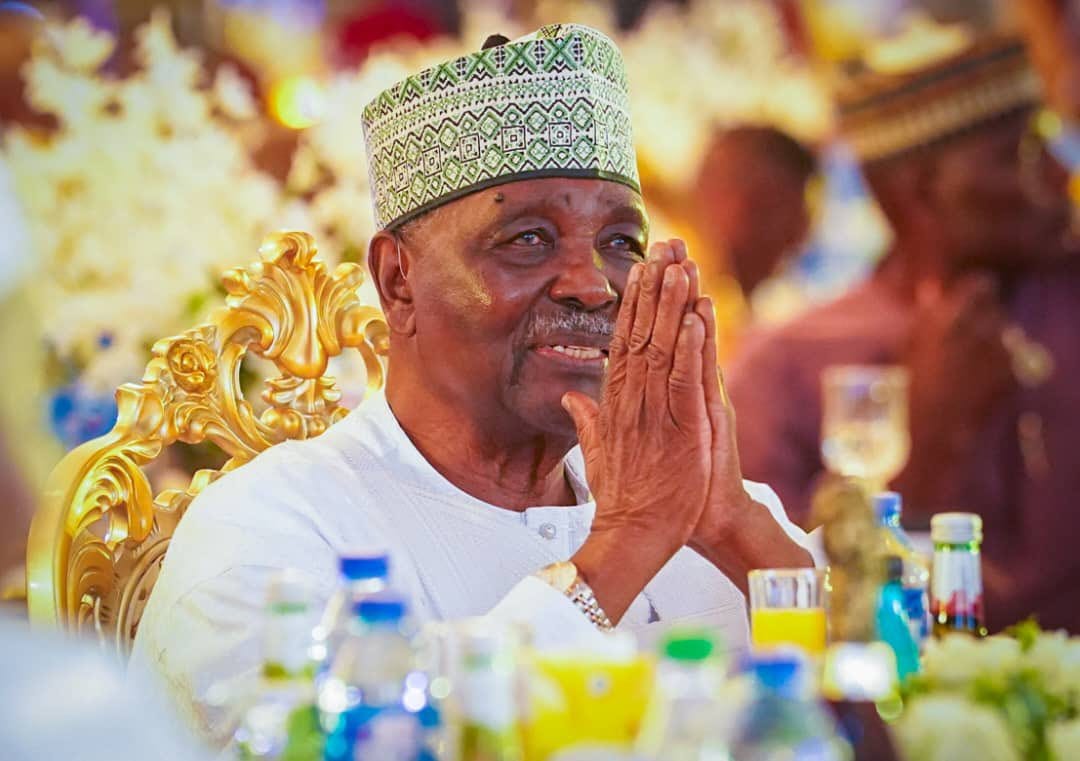
Former Head of State, General Yakubu Gowon, (rtd) has said the stewardship of former Nigerian Head of State, General Abdulsalami Abubakar at a critical moment in Nigeria’s history created the confidence that “a path forward was still possible” for Nigerians.
Speaking at the public presentation of three books honouring General Abdulsalami on the eve of his 84th birthday, Gowon described the period following the sudden death of General Sani Abacha in June 1998 as one where the country needed calm, reassurance and a clear sense of direction.
His words: “I’m delighted to join your family, friends and many admirers in celebrating you and in wishing you good health, peace and continued strength.
“You came to office at a very delicate moment for Nigeria, when the country needed calm, reassurance and a clear sense of direction. Nigerians were looking for a way forward and your stewardship at that time helped create the confidence that such a path was still possible,” he said.
Gowon said what many people remember most is that General Abdulsalami understood the weight of that moment.
He spoke further: “In choosing to organise elections and to hand over power within 11 months, you did something of lasting significance for our country. You helped restore confidence in the promise of democracy and demonstrated that leadership, especially in a time of uncertainty, must be anchored in responsibility and in the national interest.”
He noted that Abdulsalami “was able to carry both the military establishment and political leaders through that transition because your approach inspires trust.”
Gowon framed Abdulsalami’s 11‑month transition as a decisive act that restored Nigerians’ belief that democracy could return after years of military rule.
Speaking in the same vein, former President Goodluck Jonathan said that if there is any person who should be credited with stabilising democracy in Nigeria today, it is former Head of State General Abdulsalami Abubakar, praising him for surrendering power despite having “so many well‑ironed khaki people around you with assault rifles and APCs” and the ability to stay on.
Jonathan described the retired general as a rare leader whose influence “transcends the office they occupied” and whose life is a testament to “humility in leadership, patriotism in service, and wisdom in statesmanship.”
Jonathan reflected on his own loss of the 2015 election and how some people comforted him, saying he “doesn’t even deserve” to have lost.
On his part, former South African President Thabo Mbeki credited Abubakar with fast‑tracking Nigeria’s return to democracy in 1999, describing the speed and integrity of the 1998–1999 transition as an exceptional act of statesmanship that reshaped Nigeria and set a benchmark for Africa.
Other News
Speaking virtually at the public launch of the three books honouring General Abdulsalami Mbeki said the retired general’s decision to commit to an 11‑month transition after assuming power in June 1998 was not just prudent politics but a decisive break from the pattern of prolonged military rule that had long plagued the continent.
Mbeki highlighted the chaotic circumstances that brought Abdulsalami to power following the sudden death of former Head of State General Sani Abacha on 8 June 1998.
“Following his appointment as head of state by the Provisional Ruling Council, he recognized the urgent need for stability and democratic governance and hence chose to commit to a short transition period,” Mbeki said.
Unlike many military leaders who consolidate power, Mbeki argued, Abdulsalami’s response was defined by restraint and national interest.
President of the Senate, Godswill Akpabio, who also extolled Abubakar said that Nigeria’s National Assembly and the entire democratic system are “beneficiaries” of Abubakar’s sacrifice in returning democracy to the country, praising him for refusing to prolong his tenure despite having “absolute power” to do so.
In a goodwill message on behalf of the 10th Assembly at the public presentation of three books honouring General Abubakar, Akpabio described the retired general as a leader who “brought democracy back to Nigeria” and shut out those who sought to extend his rule for personal gain.
Akpabio framed General Abdulsalami’s 11‑month transition as a defining sacrifice that enabled the existence of Nigeria’s current parliament. “We are the beneficiaries of the great sacrifice done by your enhancing overpower to a democratically elected government,” Akpabio said.
“You brought democracy back to Nigeria,” he added.
President Julius Maada Bio of Sierra Leone in his remarks said his country would not exist today without the decisions taken by Abubakar during Nigeria’s 1998–1999 democratic transition, declaring himself a “grateful son of Sierra Leone” standing before the retired general.
Bio said Sierra Leone remains “deeply grateful” to Nigeria and to General Abdulsalami personally for the role ECOMOG, under Nigeria’s leadership, played in helping Sierra Leone survive its darkest chapter.
“That is why we still have a country called Sierra Leone today”, Bio said recalling how, as a former military head of state, he made several trips to Lagos when Sierra Leone needed help, and General Abdulsalami “always responded positively.”
“At a time when Sierra Leone was enduring one of the darkest chapters in its history, ECOMOG, under Nigeria’s leadership, helped create the conditions for peace, stability, and democracy,” Bio said.