Follow Us on Google
• El-rufai goofed by scrapping Information Ministry for eight years
From Noah Ebije Kaduna
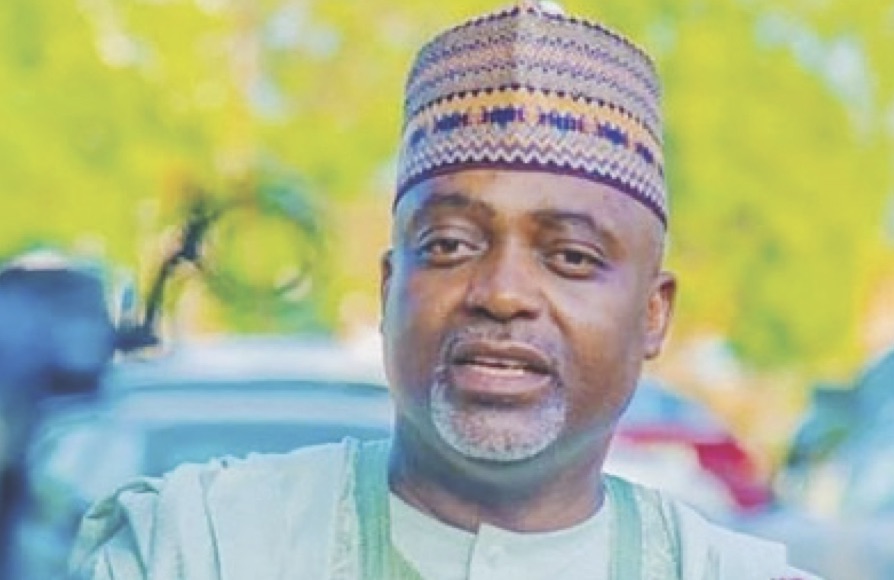
The Commissioner of Information, Kaduna State, Malam Ahmed Maiyaki has expressed delight over the return of the Ministry of Information in the state, more than eight years after it was scrapped by the immediate past administration of Governor Nasir El-rufai.
El-rufai had, on assumption of office in 2015, scrapped the ministry and vested its function in the office of the Senior Adviser to the Governor on Media and Communications.
However, after over two years in office, the incumbent governor Uba Sani re-established the Ministry, and appointed Maiyaki to head the office.
In this interview with our correspondent, the Information Commissioner spoke about the losses and gains of the Ministry following its scrapping and restoration, among other issues in the state.
What has been your experience so far as Commissioner for Information in Kaduna State?
Well, so far so good, because this appointment was done by His Excellency the Governor, Senator Uba Sani, and it was a deliberate decision, not accidental. It is a decision that the Governor has taken time to study and carry out some scientific analysis before arriving at announcing the re-establishment of this decision. You recall that the Ministry of Information was scrapped since 2015, and when the governor came, he took time to study some of the existing structures, in terms of the bureaucratic setting of a ministry that is of standard. So of course, the decision was deliberate and that is why the takeoff has been very smooth and we’ve been working with colleagues.
And one of the key reasons the ministry was restored was predicated on the transparent nature of the governor, because you cannot run a government without a ministry of information. And because the governor is committed to transparency and accountability, he re-established the Ministry of Information and repositioned the ministry vis-a-vis the current media landscape, you know, that keeps evolving in the world. For instance, the former Ministry of Information has a department, a director of information and a director of film. Of course, the current reality with the new media and media convergence requires that you have other sectors such as research because if you don’t have research, you wouldn’t know audience perception and what is the perception of the people that you’re leading.
So, we have a whole department that looks at new media, that looks at research, particularly audience research and that also looks at training, looks at partnership because you have other stakeholders that have roles to play. We have also created another department that deals with media relations and citizens’ engagement. Citizens engagement is the cornerstone of a Ministry of Information so we’ve been working with my colleagues setting up the ministry and ensuring that whatever we do is in consonance with the current reality in media practice and of course information management. It may not have been very smooth because something that has been away for 10 years, some of the staff have retired, some are not even alive, some have resigned, so it requires that we get very competent people and identifying that alone is going through a whole lot of process. And we’re doing that to ensure that the ministry is working and is working to serve the purpose for which it was created.
Now that the Ministry of Information is back, what differences are you seeing between the past and the present in terms of information management?
Well, the truth is, I may not know the reason why the Ministry of Information was scrapped, but one would think that all over the world it is very awkward to run a government without a Ministry of Information, both at the federal and sub-national levels. Funny enough, last year Kaduna State hosted the Council of Information meeting that brought all the Commissioners of Information from all the states of the federation, including the Minister of Information and National Orientation, to Kaduna. It held a meeting in Kaduna without a commissioner of information. That tells you the gap that existed. Of course, in the eight years, there was a huge gap between the governed and government. So, for the eight years there was no Ministry of Information in Kaduna. Of course, even journalists found it very ridiculous to practice. There were a lot of stepping on journalists’ rights, as well as a lot of trumped-up charges against some journalists, as well as so many things that a purposeful government that cares about the feelings of its people will not contemplate. Scrapping the ministry, you know, for eight years, you can imagine what it is or what it was without the Ministry of Information. The Ministry of Information is very critical in the running of government because it does not only inform the public about what government is doing, but also listens to feedback and to the feelings of the people. So, you can imagine running a government without getting the feedback from the people. You can imagine running a government just by sitting in government offices and taking decisions. So, government is not supposed to be reactionary. There has to be a deliberate step that seems to engage with people, particularly. Public policy communication requires that you constantly engage. It shouldn’t just be from top to bottom. It should also be from bottom to top. And that also defines the reason why the government held a town hall meeting with the people of Kaduna to talk about the budget. That engagement, based on the feedback of people and the citizens of the state, the decision to provide N100 million per ward for the 255 wards across the 23 local governments of Kaduna was taken. This 100 million naira per ward is not for government to say we are providing these services. No. It’s for the local community, the members of those wards to sit down and say, okay, we want government to provide this service. Because sometimes in government offices, you may think the need of a people is in hospital. You may think the need of a people is in health. But when you sit down with them, they will tell you their needs lie on lack of water or lack of school. So, it is one of the functional ways of ensuring that people are properly engaged. And of course, you can imagine running a government without a ministry of information that provides such platforms for people to be engaged, for feedback to be gathered from the public, for government to consider the feelings of the people before taking a decision. We have made tremendous success in Kaduna through the Kaduna Peace Model, which is anchored on community participation. Community members, you know, are part and parcel of the Kaduna Peace Model. And I can tell you, without any fear of contradiction, that the peace model is working across the state. It has been very impactful. And, of course, one of the major threats that we have, not only as a government, but even the media practices itself, is the advent of misinformation or fake news. That fake news is already threatening democracy.
How safe is Kaduna State under Gov Uba Sani compared to the immediate past administration?
It is a simple arithmetic. Even the man who travels from Abuja to Kaduna can tell you there is a difference. Even the man who travels from Kaduna to Birnin Gwari, from Birnin Gwari to Kaduna will tell you there is a huge difference. Even the person who is travelling from Kaduna to the southern part of Kaduna, travelling through Kajuru, Kachia to Jamaa, will tell you there is peace, there is security. Even the person who is travelling from Kaduna to Giwa, Giwa to Zaria will tell you there is tremendous improvement in terms of security and peace. Like I have said, through the Kaduna peace model, under the leadership of the governor, Malam Uba Sani, is working with key stakeholders, the security agencies, to ensure that we provide adequate security to the people of Kaduna State. And then ensure that, not just working through the non-kinetic approach, working with communities to ensure that they provide services.
Other News
You will recall, in recent times, in Kaduna, farmers had difficulty in going to their farms to farm, because they have to pay taxes to bandits before they go to farms. You remember businesses in the market, in some of these very difficult terrains, were also very difficult to do. You remember a number of hospitals were also closed down because of insecurity. You remember it was very difficult for anybody to travel from Kaduna to Abuja, Abuja to Kaduna.
It was nearly impossible for people to travel to Birnin Gwari or to Giwa, or people to travel to the southern part of Kaduna because it was very unsafe, due to the activities of criminals in those streets. But today, we are happy to report that people can travel from these places, from Abuja to Kaduna at any time. People can travel to Birnin Gwari, they can travel to Giwa, they can travel to Kajuru, they can travel to Zango Kataf, they can travel to Kafanchan and all the parts of Kaduna because we have had a great and tremendous success in the area of security. Over 500 schools were recovered from these areas where our children couldn’t go to school because it was unsafe to go to school. Today over 500 schools have not only been reopened but we have had children gone back to these schools. We have reopened over 200 health centres where community members can seek health services in these communities because the places are safe. Our farmers have gone back to the farms. Over 500 hectares of lands were recovered from these communities and our people are back in the farms working.
What are the benefits of this safe situation you have just painted?
We are working every day and we are sure we are going to have increased yield this agricultural season. In this period under review it is easier to travel from Kaduna to Birnin Gwari at any time of the day without any fear of being attacked. The market, the livestock market in Birnin Gwari has reopened and we have over 40 trucks every day moving from Birnin Gwari to Lagos and to the southern part of Nigeria. Our people are able to travel from one place to the other because the markets are fine. Our tomatoes farmers are working very hard because it is now safe to go to the farms. People who are doing maize production are also safe to go back to the farms because it is safe for them to go back to the farms. You remember that Kaduna is the state that produces the highest maize in Nigeria and we are reclaiming that. We are not only reclaiming that glory but we are doing it with passion.
We are doing it in confidence that the economic prosperity of our people is guaranteed. A number of communities have rekindled their lives, their economic activities, their educational enrolment has increased because it is safe to go to school. We have improved on maternal health and infant mortality that has been a major challenge because our women do not have hospitals to seek antenatal care or to seek postnatal care, antenatal care during pregnancy, and that has led to a high number of deaths among women. But with the improvement in security, we’ve been able to achieve, you know, almost progress in terms of securing their lives and ensuring that we have improved services in these communities and beyond. So I can tell you confidently that the Kaduna Peace model is working, already yielding positive outcome. It is also working for the people of Kaduna State. And our aim is to ensure that security is guaranteed.
Remember, the 1999 constitution, as amended, has clearly emphasised that the major responsibility of government is providing security for lives of its people and citizens. And that is exactly what His Excellency, Governor Uba Sani is focused on, working every day to ensure security of the people. As a pro-democracy campaigner and also a civil rights activist, His Excellency has distinguished himself as a leader who is bothered and concerned about the feelings and the aspirations of the people. Kaduna State is more than ever united. The people of Kaduna State from diverse cultural backgrounds are back again, working in unity and ensuring that, of course, we are very conscious that God created us in different tribes and diversities. But you can live side by side without having any religious conflict, and that is what we are working. The governor has demonstrated that he is a leader of all, not only with those who share the same faith with him, but even with people who differ with him in political affiliations. He’s working deliberately to ensure that we benefit, the Kaduna people benefit, and Kaduna should be good for it.
The 2027 political activities are already in the air, with the opposition, especially the Coalition of the African Democratic Congress (ADC) appearing to be leaving no stone unturned to win the governorship election. How prepared is the ruling APC?
Well, Mr. Noah, it is not yet time for politics, this is a time for work and more work. That’s why we’re focused on carrying out policies and programmes that impact on the lives of our people. We just did an assessment, which you were there. One of the government policies is to provide services for our people. In a period of five months, the government has conveyed about 1.4 million passengers from one point to the other in the state capital at no cost and saving the people of this number of passengers of over 1.3 billion naira which ordinarily would have gone into payment for transportation. This is one of the most impactful policies of government. So if at this point we’re concerned about the living standard and improving the security, the infrastructural development across the state in health, in education, in agriculture, we will not bother ourselves with the act of politicking because this is time to work. But we are ready for any political challenge because Governor Uba Sani is a politician of repute and integrity. I want to assure you, when it is time for politics, we’ll play politics. But now it is time to work.
Over the years, the governor has attended Christmas Carol and Islamic functions in the state. What is your reaction to this style of leadership?
It shows inclusivity. It shows that he is leading with the intention that focuses on people’s needs and is people-centred. He has an opportunity to lead the people of Kaduna State. You remember that Kaduna is a mini-Nigeria. You have almost all the tribes in Nigeria represented in Kaduna. You have all the major religious groups residing in Kaduna. So the governor is very mindful about that diversity. You will recall that His Excellency has had exposure working with previous people who share different religious or cultural beliefs with him. That is why he is an inclusive leader who is always willing to listen, who is always available to make amends, who is also ready to be just to all manners of people, whether they are Christians or they are Muslims, whether they are Hausa, Igbo, Igala, Yoruba, they are people that God has given him a mandate to lead. Whether they have voted for him or they have voted against him, whether they share the same political belief or not, whether they are in the same party with him or not, whether they are serving in this government or not, what is important to him is ensuring that we have a peaceful Kaduna, a secured Kaduna, a united Kaduna, that gives right to every person, irrespective of his religious or ethnic divide.
So far, what are your worries and challenges since you assumed office as Commissioner for Information?
Well, like I have said, some of the challenges lie with the advent of technology. For instance, Artificial Intelligence (AI). It’s not only a challenge to me as a commissioner of information, but of course, as a practising media and communication person. I’m very worried how the advent of technology is threatening ethical practice of journalism. I’m very worried, you know, some of the advent in technology, how they threaten journalism and the freedom of people, and how that also threatens or promotes fake news among the people. So, you know, these are some of the challenges that worry me, that I’m bothered about. The other day, the 9th national conference organised by the African Media Development Foundation started in Kaduna. I made the keynote address. And what I argued in the presentation is how journalism practice is being threatened by the activities of people who promote fake news. So I’m very worried about such issues and how that is affecting the freedom of our people. How people can sit down, through application to create videos that are not real, just to mislead the people. There is a demarcation between misinformation and disinformation. Misinformation is when information is distorted. But disinformation is when people sit down deliberately to create an information that is not true. They know it is not true. And they go out to publicise or broadcast it. And it keeps threatening the corporate existence of us as a people. So as a commissioner, if I have any challenge, this is one of the key challenges that I have. But we’re working deliberately with key industry experts so that we address this issue that has continued to pose a threat to the practice of journalism. But of course, working in the Ministry of Information, whatever threatens media practice also threatens my job as the commissioner of information.