Follow Us on Google
From Abel Leonard, Lafia
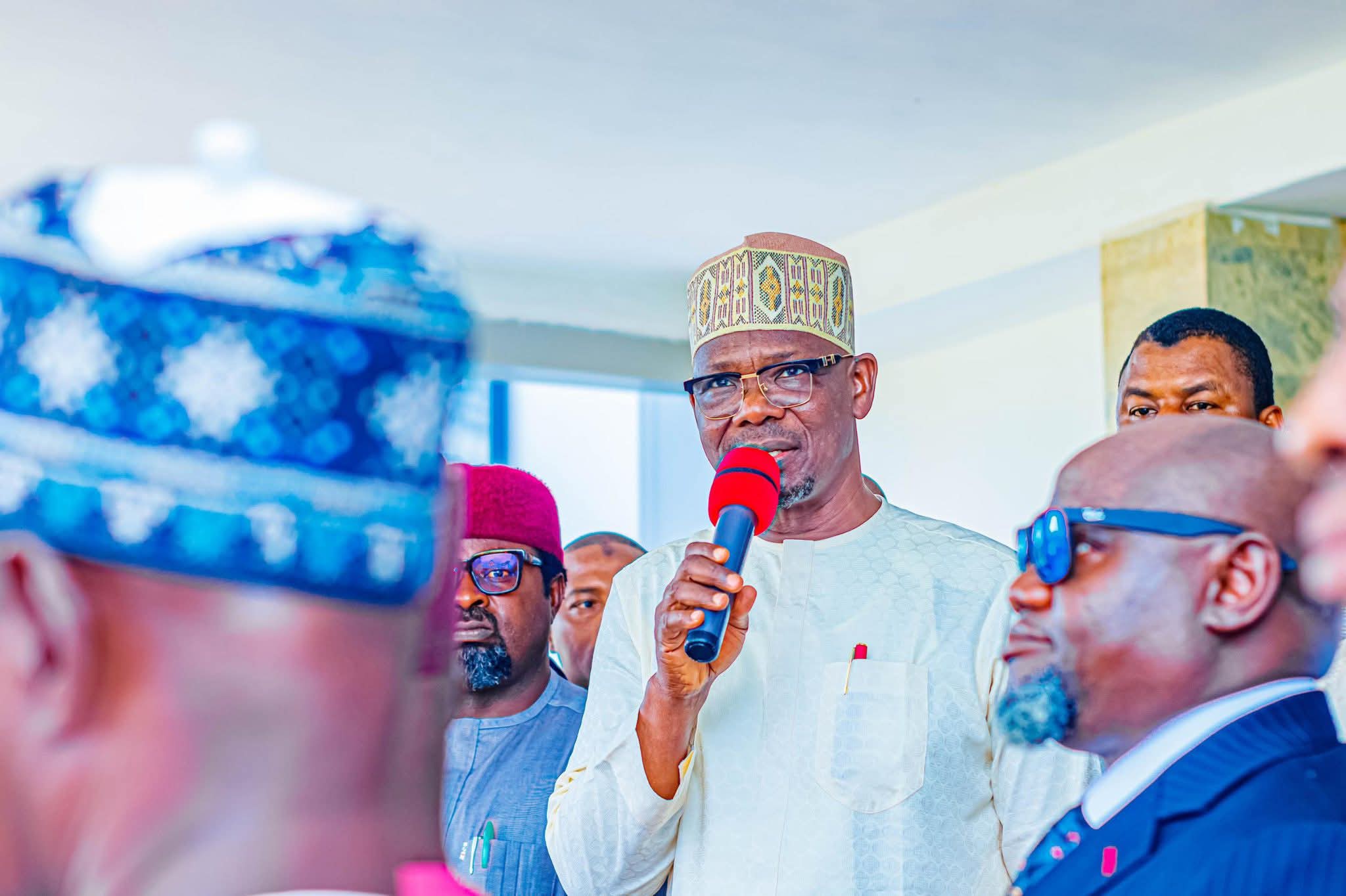
Governor Abdullahi Sule has raised serious concerns over persistent challenges crippling basic education in Nasarawa State, despite ongoing government interventions.
Speaking at the Basic Education Summit held at the Aliyu Akwe Doma Banquet Hall, Government House, Lafia, on Thursday, the Governor said the state must confront issues of diversion of school facilities, teacher truancy, lax supervision, and the failure of officials to uphold standards.
Sule, who described education as the most crucial sector for long-term development, revealed that recent findings show continued diversion of government-provided school items to private homes, poor teacher commitment, and declining learning outcomes.
He noted that while his administration has continued to invest in infrastructure, learning materials, and teacher welfare, the attitude of some officials and teachers remains a major setback.
“Whatever investment we make in education is worth it. But we cannot continue this way. Facilities meant for schools are diverted. Teachers who are promoted do not show the corresponding commitment. We must reward those who work and sanction those who do not,” he stated.
The Governor recalled the comprehensive baseline survey conducted in 2019, which exposed deep-rooted weaknesses in the system, insisting that significant progress can only be achieved through discipline, transparency, and moral responsibility.
“Education remains one of the biggest challenges in Nigeria, especially in the North. We may not achieve 100 percent results before we leave office, but we must make substantial progress,” Sule said.
Earlier in his address, the Executive Chairman of the Nasarawa State Universal Basic Education Board (NSUBEB), Dr Kassim Muhammad Kassim, presented a detailed report on the state of basic education, revealing multiple violations in the system.
According to him, two committees set up on assumption of office uncovered more than 3,000 qualified teachers illegally posted to local government education offices, illegal promotions without due process, massive teacher truancy, lack of lesson plans, widespread theft and vandalisation of school furniture, substandard construction work and poor maintenance, private schools sited illegally near public schools, a high number of out-of-school children, and pupils in Primary 5 and 6 unable to read or write.
To address these issues, he disclosed that 1,900 teachers have been redeployed back to classrooms, with 1,000 more to follow. Governor Sule approved the recruitment of an additional 1,000 teachers.
Other News
He added that a total of 30,000 tables and chairs have been procured for public schools, seven minibuses have been acquired for statewide sensitisation on compulsory education, and nine contracts were revoked for poor-quality work, saving the state over ₦101 million.
Kassim also appealed for Nasarawa State Youth Empowerment Scheme (NAYES) personnel to be stationed in urban schools to curb vandalism.
He further requested the Governor’s approval to fully enforce Sections 1–6 of the Nasarawa State Compulsory and Free Universal Basic Education Law 2005, warning parents, traditional rulers, and community leaders to ensure that children aged 4–15 are in school between 7:00 am and 1:30 pm or face sanctions.
Guest speaker and veteran broadcaster, Dr Tonnie Iredia, in his presentation, stressed the need for strict sanctions against officials diverting school facilities and teachers who fail in their duties.
He recounted incidents where government-provided materials were found in private homes and private schools, insisting that such practices persist because offenders are not punished. “If you condone wrongdoing, you cannot make progress. Anyone diverting school facilities must face consequences,” he said.
Iredia recommended weekly inspection of all schools, regular monitoring reports to the NSUBEB Chairman, commendation letters as a strong form of motivation, healthy competition among LGA schools, offices, and overseas training reserved strictly for hardworking staff.
He emphasised that human development must take precedence over physical projects.
The Basic Education Summit, regarded as a policy-defining moment, brought together policymakers, traditional rulers, education officers, and stakeholders determined to reshape the future of basic education in the state.
Governor Sule reaffirmed his administration’s commitment, urging communities and stakeholders to support government policies, not for politics, but for the future of the state.