Follow Us on Google
From Olanrewaju Lawal, Birnin Kebbi
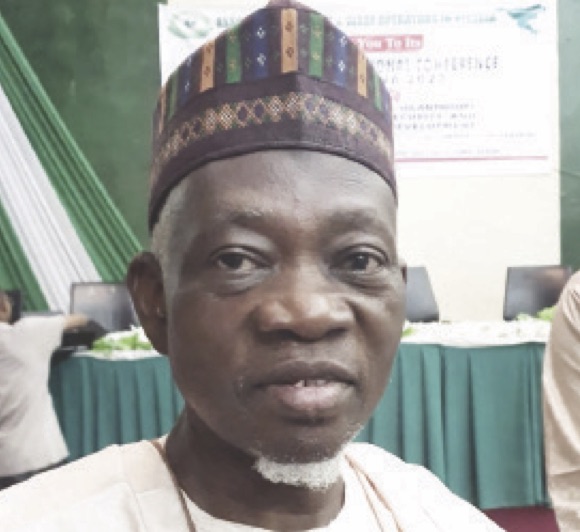
The Kebbi State Commissioner for Religious Affairs, Arch. Sani Aliyu, recently followed Governor Nasir Idris to Indonesia on the invitation of the Indonesian Ambassador. In this interview, Aliyu spoke on the trip among other issues.
What took the Kebbi State Governor, Dr. Nasir Idris and members of his cabinet to Indonesia?
We were together in Indonesia with a team from the House of Assembly, Commissioner for Education, and Commissioner for Livestock and Animal Health. The Chairman of Zakkat Board and others were with us too. And His Excellency, Governor of Kebbi State, Dr. Nasir Idris led us. We were there on the invitation of the World Zakkat Forum. It is a gathering to discuss issues relating to Zakkat collection, distribution and, management of Zakkat across the world.
What are the benefits the state would derive from this Indonesia trip?
If you could remember sometimn September this year, the government of Indonesia after discussion with the Executive Governor of Kebbi State, sponsored two of our Veterinary Doctors. They were in Indonesia; they trained them for a whole month, for good solid 30 days on artificial insemination. It was intended to provide the technical skills on how best our state could boost its livestock development. Just as you all know, Kebbi State is peculiar in the Northern part of Nigeria when it comes to Livestock production. That is one of the areas where our people have comparative advantage, prosperity.
Every household, community, those in the rural areas and other residents in the state who are rearing cattle have been doing well based on their local experience. Don’t forget, we are facing series of challenges such as cattle rustling, banditry. So, the intention is that, His Excellency wanted to utilize this opportunity to see how best our people, both at the villages and at various communities, could be strengthened on their animal husbandry ventures.
That was the reason the governor specifically sent two Veterinary Doctors to Indonesia under their Indonesian government’s sponsorship and they were trained on artificial insemination. One of the benefits of this is that, it will boost cattle reproduction and it will boost milk collection and management. It is also intended to assist farmers, villagers and those into animal husbandry generally with additional ways of improving cattle reproduction generally. And these Doctors would still go back to Indonesia where the government of that country would also tutor them on embryo transfer.
Can you shed more light on the embryo transfer?
We were together with the Commissioner of Livestock development and Animal Health; we visited their embryo transfer centre and we saw it by ourselves how great Indonesia is on the issue of both embryo and Artificial insemination. They are the best and the only centre in Asia on the embryo’s transfer. And it will also interest you to know that this collaboration has assisted us to facilitate the coming of the Ambassador of Indonesia to visit Kebbi which may materialize before the end of this month. During his visit, the Ambassador will meet our governor, our Veterinary Doctors, and facilities and also see where best they can support Kebbi State on the issue relating to national development.
Is the collaboration going to involve the transfer of skills from these trained Veterinary Doctors to others?
Yes, the essence of the visit of the Indonesian Ambassador and some key officials from Indonesia to Kebbi State is not only to see what is happening in Kebbi, not only to assist those that were trained to transfer their skills to other doctors but also to involve in the training and retraining of other Doctors that have not been opportune to go to Indonesia. Secondly, we were there to see another form of education and that is education that is related to our Almajiri system of Education.
How could Indonesia help Kebbi to solve its Alamajiri problem?
Other News
His Excellency is worried about the number of children roaming the streets. He is worried about the number of children seen on the streets begging. He is worried about the number of children seen everywhere that are neither gainfully employed nor gainfully engaged in any system. The governor was in that country to see how best to tap from the Indonesian success story of resolving Almajiri problem in their country and what kind of improvement we could bring home to solve our Almajirai system of education so that we can reduce begging on the streets to minimal level.
Did your team visit any of their Almajirai centers and what are the lessons learnt?
We visited a lot of their schools. Imagine, we saw a school with about 15,000 pupils and none of them is on the streets begging for alms. And the school is not being controlled by the government 100 percent. It is being controlled by the community and they were being taught on different kinds of entrepreneurship and businesses. What they do is to work to maintain them, taking care of their feeding, accommodation clothing them. Some of the pupils entered the system since they were in primary school. Some of them were abandoned children. And from the kindergarten stage to the university stage, they would remain there. Some of them even don’t know their parents. Those who knew their parents, they might not see their parents for a whole year when they were studying at the school. Their parents may not visit them for a year. But if you see these children, they are healthy, happy, and when you see them, you will think they are children of the rich. They were all well taken care of. Even the meal they served us was the same meal these children are eating.
I am telling you this so that you will know that, we were not in Indonesia for just merely a visit but to observe how their system is working for them and how we could tap it for the best of our societal transformation. I believe that by the time the Indonesian Ambassador visits Kebbi state with his team, our people would know that our governor really means business.
Can you shed more light on the Zakkat meeting during the governor’s visit to Indonesia?
Yes, like I said, initially, we were in Indonesia on the invitation of Zakkat World Conference and meeting. I heard some sadists saying the governor was in Indonesia to collect Zakkat. It is really unfortunate to be hearing this false rumour. Let me tell you, one, Zakkat is a pillar of our religion, next to prayer and that is why Prophet Mohammed (SAW) says that Almighty Allah has joined three things with three things and whenever decided, doing one of them without the other, Allah will not accept it from the person. Prophet told us that Almighty Allah joined Salat and Zakkat and that is why wherever you heard Allah command us to be praying five times daily in the Quran, it will be followed by saying of paying your Zakkat. So, no matter how good one is in observing salat, if you are not good in giving out Zakkat, the prayers of such person will be null and void. In short, God told us how He destroyed some people because they were not giving out Zakkat.
So, the Kebbi State governor is worried about the complaints of the Zakkat Board that our people in Kebbi are not giving out Zakkat. Even few that were giving out Zakkat, it was not regularly. As the leader, the governor is expected to draw the attention of the people, their responsibilities to their creator. In short, another essence of the trip to Indonesia is to see how the Indonesian nation, citizens are paying Zakkat. How are the other nations succeeding in collecting Zakkat, how they are using the proceeds of the Zakkat to assist the people in the society. These were the reasons behind the governor’s visit to Indonesia as well as attending the Zakkat Forum. At the end of the day, we are going to plan on how best to approach the issue of Zakkat to the Kebbi State Zakkat Board. So, he was not there to beg anybody for Zakkat, neither was he there to see how Zakkat will be collected for the people of Kebbi State. It should be clear that Zakkat is given to people living within the area where the Zakkat is collected. So, His Excellency was not in Indonesia to collect Zakkat and bring it back home, no. He was there to see how people are collecting Zakkat, how it is being administered, how it is being managed and how it is being distributed and how best the society could be uplifted through Zakkat.
On the issue of Artificial Insemination and Embryo transfer, are these systems in conformity with the culture of the people and Islamic injunction?
How many Muslims do we have in Nigeria compared to Indonesia? This is a country with over 95 percentage population as Muslims. It is the largest populated Muslim country in the world. It has the 4th largest Mosque in the world. They have many things Muslims across the world could emulate. So, their businesses are all ‘halal’ oriented. Their foods are ‘halal inclined, even all the activities not in consonance with Islam are prohibited in Indonesia. It will also interest you that the Minister of Religious Affairs who is also Chief Imam of Central Mosque of the country was the one who received His Excellency, Kebbi State Governor, Dr. Nasir Idris during his tour at the Majidi Iqlam. The governor was there and he was given an award and they interacted.
Is this collaboration with the Indonesia going to address the issue of herders migration and artificial grass for the cattle during the dry season?
Anything that is related to livestock and animal development will be discussed. And the state officers will be shown possible ways out of every possible predicament being faced in relating to cattle rearing. I know an area we visited, that is Bogor, where their embryo transfer center is located, and perhaps Malan, where artificial insemination is taking place; there are areas where it rains about 8-9 months every year. So, they have grass every time. But if it is within their wishes, they will call the attention of the Veterinary Doctors to it and those in the cattle rearing to leverage the opportunity to make it work.
What is your message to the people of the state?
The only message here is to draw the attention of our people in Kebbi to please, note that as a leader, His Excellency is really out to ensure that the standard of living of the people of the state is improved. Governor went on this tour to see how best our people could be supported and how best to encourage our people to earn genuine means of livelihood. So, it is always good to be praying for our leaders. Whatever you are seeing them doing, please, if you don’t understand, it is better for you to ask rather than condemnation. Ask, rather than castigation, ask, rather than putting people in suspense.