Follow Us on Google
From Fred Ezeh, Abuja
A group of health experts has warned against the imminent public health crisis that might accompany the increasing campaign for public acceptance of genetically modified foods, otherwise known as GMOs, in Nigeria.
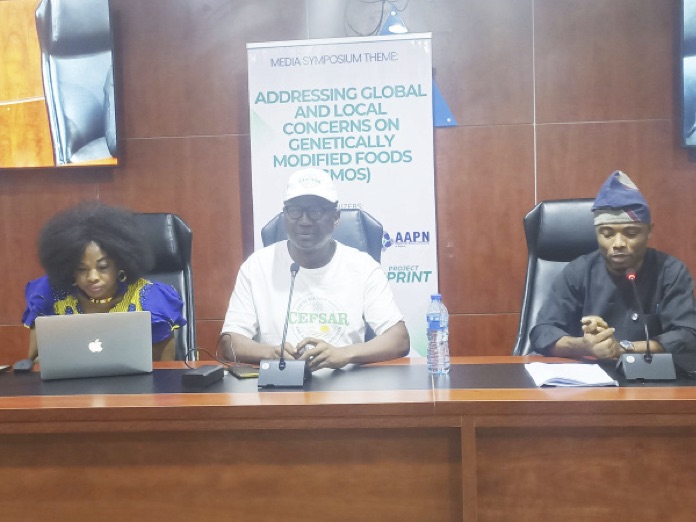
At a press conference in Abuja, the experts highlighted the outcome of some preliminary investigations that indicated that the GMO foods are extremely harmful to the body, hence they should be discouraged.
They accused foreign interests of plotting a bio war against Nigerians using the GMOs, thus calling on the Federal Government and relevant stakeholders to reject the pressure from foreign interests to approve the consumption of GMO foods in Nigeria.
Mariann Bassey-Orovwuje, Director Environmental Rights Action/Friends of the Earth Nigeria, and Coordinator Food Sovereignty Program Friends of the Earth Africa, told journalists that it’s obvious from a cursory look at the Nigerian Biosafety Management Act (NBMA) that the debate on whether or not GMOs are an appropriate development or intervention appears to be over.
“This Agency has acted more like a promoter of GMOs than as a regulator; approving virtually every application brought to it without consideration of science-based objections sent by groups of concerned Nigerians.
“The NBMA Act needs to be repealed as it is flawed with respect to the absence of provisions for strict liability and redress which mandates that the biotechnology corporations take responsibility for immediate and forthcoming negative impacts of use of their products as is the case in a similar Act in Uganda.
Other News
“Other areas of concern include lack of access to information, poor public consultation and participation, provisions for appeals and reviews, and lack of veritable provisions for the enforcement of the precautionary principle and decision making.
“The NBMA Act evidently confers enormous discretionary powers on the Agency and gives little room for oversight. The conflict of interest inherent in the NBMA Act equally raises serious red flags about the administration of biosafety in Nigeria.”
She said that Nigerians have resisted the importation of GMO foods, and their decision should be respected. “It should be noted that, usually it is genes of commercial interest that are transferred. Once these man-made organisms are released into the environment and the food chain, they reproduce and there is no way to recall them.”
Similarly, Segun Adebayo, Deputy Director, Center for Food Safety and Agricultural Research, in his submissions, also highlighted the public health dangers ahead with increasing penetration of GMOs to the society.
He said: “I used to think that the President of a country is responsible for everything that happens in that country, but more than ever before, I have come to realize that the Nigeria we have today, is the collective result of our contribution to nation building.
“Any damage to food is an attack to humanity, and therefore, it falls within the bracket of a most important resource to protect; a resource requiring utmost national security. We can politicize everything else, but food cannot be politicized.”