Follow Us on Google
• I get 3, 4 hours of sleep daily; no one pays you for sleeping
By Christy Anyanwu
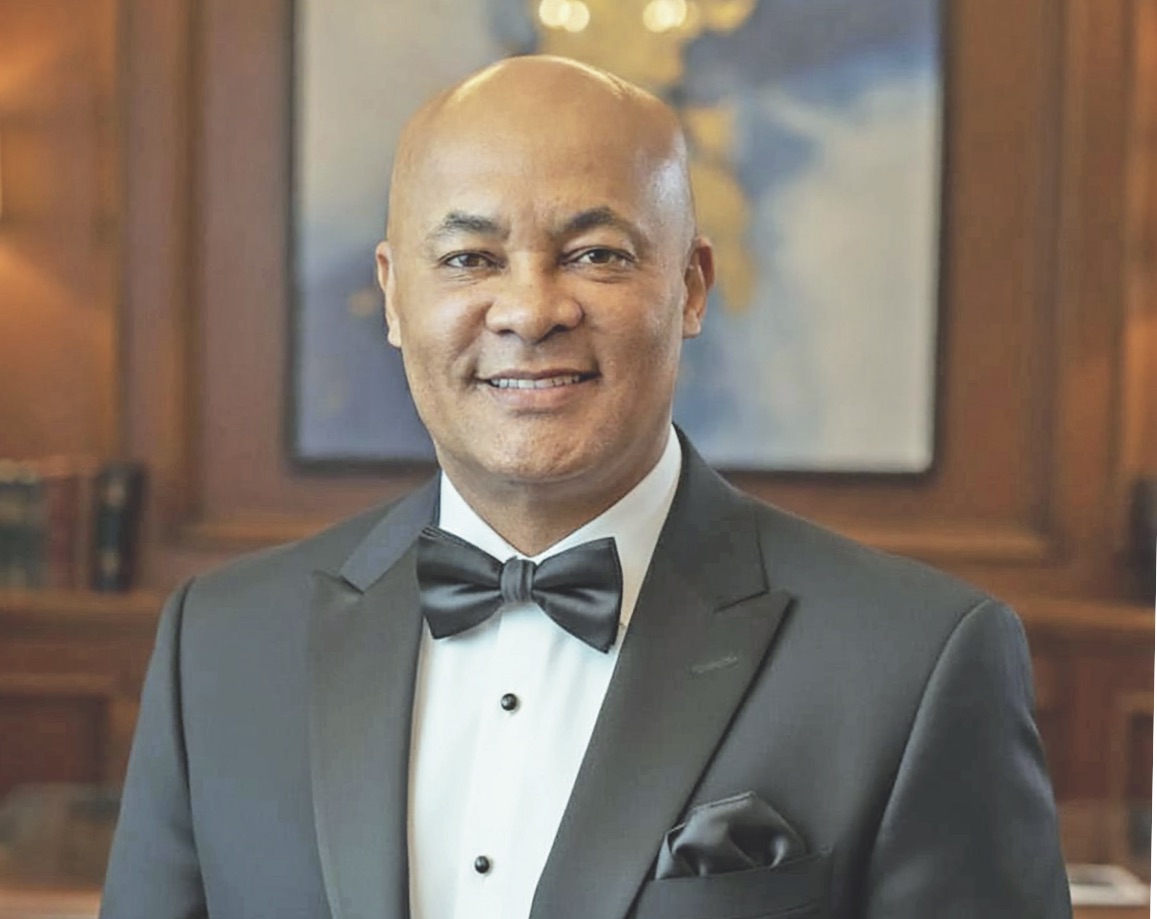
Dr Bruce Nwachie is a renowned Nigerian dermatologist and entrepreneur who’s made a name for himself in the skincare industry. He’s the founder and CEO of Skinetics, a fast-growing aesthetic and skincare brand with locations in Lagos and Abuja, Nigeria. Dr Nwachie has been practising skincare for almost four decades, and his expertise in anti-aging treatments has made him a sought-after expert in the field.
He initially launched Skin Essence in the United States in 1993 before expanding to Nigeria with Skinetics in 2015. Dr Nwachie’s passion for skincare is evident in his commitment to providing top-notch services and training aestheticians through his academy. He’s also known for his emphasis on safety and quality.
He recently spoke with Saturday Sun about his job, why the skin beauty treatment is thriving and lots more.
In the beauty industry what would you say is the in-thing people are going for?
Getting old is inevitable, looking old is a choice. Everybody wants to look young. Everybody wants to go in the mirror and what you see is what you get. So, anti-aging is the key to the industry.
Yes, people are doing BBL and rhinoplasty and big breasts and all that, but in all, anti-aging is here. Everybody wants to look good, both men and women, and the awareness is so much now with men.
In the past, a man would not come, you can’t see a man, you know, trying to look good and all that, but now people are beginning to understand that you have to, you know, self-care is the most important thing. And most men are beginning to realise that nobody will take care of them but themselves.
If you doubt it, go to Mother’s Day and go to Father’s Day, you will understand what I’m talking about.
These days a lot of doctors are moving out of the country, and here you are with your team, so contented, happy and talking loud about your profession. What is it that we ought to know?
Yes, a lot of doctors are moving out, but I’ll answer this way. I think that there are three things that should determine what you do in life. One, what you’re good at. Two, what you enjoy doing. And then three, what pays the bills.
Usually, right, most of the people you see around that look like they’re successful have maybe two. You know, either it’s paying the bills and they’re good at it or they’re good and they enjoy it and it’s paying the bills. But if you have all three, you are one of the very few people and you are blessed.
So the good news is that in Skinetics, myself, Dr Chima, Dr Mike, I don’t say we’re very blessed because we capture the three. What we’re doing, besides the satisfaction from clients and customers, what we’re doing, we get those three options. We’re good at it, if I say so myself. We enjoy it. We enjoy doing it. We enjoy what we give the clients. We enjoy the feedback. We enjoy the life-changing results. And then it also pays the bills, because it’s also very lucrative.
So we have all that three. And that’s the reason why we’re here. Talking about those leaving, one thing that is common in some of the conversations we’ve had here is that you hear that I came back, I came back, I came back.
Like I said earlier, I moved back from the United States years back. So at some point we have to recognise Nigeria as our home. We can always go away and get some skill, but that skill is needed here. I say this just to charge anyone reading this; Nigeria is so blessed. With the challenges, all you need in Nigeria is to do something well enough and long enough and when they think of that stuff they will think about you. And you will be successful.
People say plastic surgery is vain. How would people change their outlook to enhance beauty?
That’s a good question. But now, there’s a new move to what we call holistic medicine.
Holistic medicine. All right? So there’s a shift from health as to just the condition of your heart, or the condition of your liver, or your lungs, all right? There are things we start to hear about the spirituality of medicine, okay? We start to see about certain aspects of medicine. Now, I said earlier that we are addressed how we dress, okay? Also, everybody in this room would agree that confidence impacts performance. That is why if I’m in front of you wearing a white traditional and I have an oil spill, it affects the way I deliver on everything I say.
We live in a very, very impressionable world. The way you look, all right? So if you have fluoride action all over your face, it impacts your confidence, it impacts your mood, and it impacts your mental health. So we’ve moved away from just my breast, cancer, oh, my this.
Health is holistic. So to answer your question, it’s not just vanity. And I’ll give you a couple of examples.
There are lots of people in upwardly competitive spaces where if there’s going to be a reduction in force, they start to look at those that are maybe older for retirement. So some people that are looked at as older may not be older in age in terms of a number, but they just look older. We have some industries where marketing is a very big deal, right? That’s the reason why a certain guy in suit can walk up to you and market you.
But if you walk up to him, he’s going to send an outfit. You punch your back thinking it’s about to rock you, okay? Because the way you look matters, all right? Also, let’s go around. I mean, there are several conversations around this where, okay, let’s look at some people that say, okay, I want to look better and be paying for a wedding and be paying for a special event. Or somebody who has had an accident and has a scar and wants to revise that scar. But this is not all vanity. We’re looking at people’s lives, and we’re trying to impact life.
Of course, there are some people that just want to look better. Who are we to say they shouldn’t look better? You have your hair done. You have your lip-gloss.
You have your hair. But having said that, we all follow safe, FDA-approved health procedures. For example, if you come in, not all money is good money, but if you come in for a procedure that we believe you will not get medical benefits from, or we believe are not suited for you, we will decline that service. So there’s some ethics to it. But having said that, we’re not just here for vanity.
When you decline a client, do you suggest that we might give them options?
Absolutely. We do a thorough consultation where we do a needs assessment, and we check what you need and what you don’t need. And you might need something sometimes, but then you might not be seeing with your other co-existing conditions.
And that’s why we advise that it’s best to get your treatment from very trained professional medical doctors.
Do you do CSR in your organisation?
We have plans of doing all those go-to-rural areas, or go-to-areas, or equally treat people who cannot afford to get the treatment. Right now we practise that. We have people that come in and they can’t afford it.
Let’s say a young girl who is acne-prone and does not have the money to do it, and you can see the beauty in that girl just that , just that she doesn’t have the money. Skinetics does offer free consultation, you can come in.
We make it a point of duty to do one treatment free every day at Skinetics. We must treat one person daily, free.
So, in the rural areas, yes, we do offer free consultation. We have people that call us, we have people that follow us on Instagram, people that follow us on the social media, people that call on the phone, people that do video calls, and we consult.
Some rural areas, I can tell you for free, I will not go to. I will not go to Zamfara to do consultation. Because of how the country is. But in terms of offering free services to the underprivileged, or somebody who had an accident and comes in, you have a scar, and you’re looking for treatment, and they’re under consultation, you find that the person cannot do it, cannot afford it, yes, we’ve done that severally, and we still do it on a daily basis.
Tell is more about what you do at Skinetics
We are a skin care clinic, okay? Most people say we are a spa, we are a spa centre, we are a skin care clinic, where you have doctors and nurses performing procedures. We focus more on the medical aspect of it.
if you have a scar that is bothering you, but let’s say for example, some of the problems we have, it’s not normal, I don’t think. In a Nigerian society or culture, where when they have you as a baby, somebody will come and give you tribal marks, and that is not what you want. When you grow up, you realize that you have this tribal mark looking like you had a fight with a tiger, and it’s bothering you, and you want to remove it.
That’s where we come in. That’s where Dr Mike comes in as a surgeon, to say, okay, I’m going to do this and do this. At least, even if we are not able to take it out 100 per cent, at least we are able to give you something like 80 per cent that makes it look much better.
So, we are in the industry making people feel good, giving people their self-confidence back, and enhancing beauty. That’s what we’re here for.
Now, let’s not forget, this industry did not start today. Beauty industry, you can trace it back to 4 BC, where Egyptians used to take mud baths. Even in Nigeria, in the Nupe culture, in the north, where people would polish themselves with red mud and all that to look good. So, it’s not something that just started today.
The beauty industry is here to stay, and will stay. When it comes to business, the first business that will never die is food. The second business that will never die is beauty.
Give your wife N100,000 to go shopping, she will keep N5,000 -N10,000.
So, these are some of the things that we know, that, you know, it’s like a need. People want it, and it’s here to stay.
Of all the medical practice, what endears you to go abroad to study medicine and end up as a beauty doctor?
Everybody here woke up this morning and did something about beauty. Either you took a shower and shaved, either you took a shower and put on your lipstick, either you took a shower and put on makeup, something.
How many people here did brain surgery this year? So, in the medical industry, you have to find out a niche for yourself. You have to find out what is it that people actually want. I love beauty.
People say I’m vain. People have said, you know, critics can call you anything they want to call you.
Woman wrapper. And I love it. I like looking good.
To me, I tell people, looking good is good business. You know, when you look in the mirror, what you see, if you like it, it gives you the confidence to carry on. It gives you the, you know, you feel good.
At 67, yes, I’m old, but I don’t think I look 67 at all. That’s what beauty is all about. And I like to help people to look good. Because when you help somebody look good, they feel good.
Aside skincare, what other business would you have done?
Business of beauty. This is all I know. I don’t do contracts. If you call me and say, let’s go and let our president give us billions of contracts, I’ll tell you to go because I don’t know how to do it. This is all I know. This is what I speak. This is what I practise. This is all I do. I don’t do any other thing.
Where do you see yourself and Skinetics, in five years? And also, what do you think the government should do to retain the top practitioners and professionals in the country?
Now, first, in the next five years, I want to believe that Skinetics must have made enough impact in the beauty industry.
And to make that impact, that is why we’re here in this classroom. Being able to teach people so that they can also practise, impact on the general public the right way. Now, the Japa syndrome actually is relative.
In the Igbo culture, or in the Igbo, they say that he who has never been somewhere literally believes the grass is greener on the other side. If I use marriage as an example, everybody who is not married wants to get married.
And everybody that is married wants to get out of the house. So you want to go there. Then when you go there, when you get there, you realise that it’s better where you came from.
We were all living abroad and we are back. I was in the US over 30 years, Dr China was in US 12-15 years; he is back here. I can honestly tell you that I’ve lived both sides of the world.
I’ve tasted it. And I know, in Nigeria, all we need is encouragement. All we need is for the government to focus on the healthcare sector.
Focus on the school sector. Focus on the food sector. Nigerians don’t need much.
We need basic things. Basic infrastructure. Give us light. Give us water. We have brain. If you go abroad, in any field, be it engineering, be it law, be it medicine, Nigerians rank top in the industry.
We don’t have to go there if the situation here is right. It’s because things are not right here, that’s why people are moving there. We are not moving because we want to move.
And even when you get there, you’ll be, ah, I wish I was back in Nigeria. So, if you can make it here, this is the best place to be. You don’t have to travel.
How do you relax when you’re not thinking about Skinetics?
We work hard. I work hard and I play hard. Because all I need is three, four hours sleep. So, whenever I finish work, yesterday I was at the comedy club, eating, catch my drink, my whiskey sour, enjoy, listen to comedy, laugh, come back and sleep.
Today, after work, go to a lounge, relax, listen to music, catch a drink, and come back. You must, you must live life. Don’t let life live you. Live life. Enjoy life. You work hard, you play hard.
You said you sleep for three hours, four hours. But medically, they said that’s wrong. At least, seven to eight hours sleep is what the doctors recommend.
We only have 24 hours in a day. In Lagos, you spend three hours in traffic. You spend about eight hours at work. So, there’s not enough time.
I only have 24 hours. So, how can you be sleeping six hours when other people are making money? Has anybody ever paid you for sleeping?
But it is said that you might have a stroke when you sleep for fewer hours?
People don’t face the issues. First of all, you don’t eat right. Second of all, you don’t exercise.
Third of all, everything that’s supposed to give you stroke is what you do. But you say it’s because I don’t sleep.
Everybody is supposed to go for their medical check-up. When you start getting to the age of 40, it’s a must. You must do it at least every six months or at least once a year. Most people, one of our culture as genetics is when you come, you come in for a facial but we want to check your BP. And believe me, for each time we check, the blood pressure is high.
We’ve had incidents where people came for treatment, we checked their blood pressure. We’re not talking about the treatment they came for. We’re talking about their blood pressure.
And some people tell you they cannot treat you because their blood pressure is high. If your blood pressure is high, most people are scared of injections. And you’re trying to inject somebody, that will trigger it more.
So we tell you to calm down. We find ourselves giving people, trying to bring down the blood pressure, which is completely not what you came here for. When we check your BMI, we say, you know what, we have to reschedule you.
So the culture doesn’t, and some people will tell you, if you check now, you see something. Which is very ignorant. Because if you check and see something, you’re able to treat it. But when you don’t check, you wouldn’t know what to treat. And most of the times, it’s too late to treat. I’ll give you an example.
I have an air-conditioner man who constantly services my air conditioner. He came and I looked at his eyes. It looks weak, red. I said, let me check your blood pressure. He said, no, If you check now, you will see something. I said, let me check your blood. He said, no. Her removed the old AC and put the new one. I gave the old one to my PA. I said, go to his house and install it for him. He drove to my PA’s house, he was installing it he collapsed. Stroke!
If I had checked Mr Dada’s BP, Mr Dada would be alive today. Mr Dada had a stroke and died three days later.
So, from then on, I tell people, I must check your blood pressure before we start. Unless you say, no. And I’ve had people that come in, check their blood pressure.
It’s 110 over some crazy figure and I tell them, you’re not leaving this place until we bring it down. If you want to call the police that I kidnap you, call. But you are not leaving. Because if you leave here and something happens, we are liable.
What lessons have you learnt about life?
Life is something that people take to be more serious than it is. We forget the fact that this life… now you’re here, now you’re gone.
So, it’s not so much of how long you live, it’s the quality of life you live, the less stress that you give to yourself, I always tell people, before you let anybody stress you, stress them, live life, enjoy life, as if today is the last day. Life is not promising, death is not by age; it can happen to anybody. You can have a child today, the child will die tomorrow. You can live to be 100 years old, so who knows when it’s going to be? So the best thing I tell people is, live life. Enjoy life. Be happy. That’s my advice.
Before you left for the US, how were you faring in Nigeria?
I left at the age of 18, 19. I left at a very young age to the US, and I lived there for the most part of my life before coming back. But I never lost touch with reality. I never lost touch with where I’m from. I always know I’m a Nigerian. People come back and say, oh you lived there for 30 something years, you still have your accent. I never planned to lose it in the first place. Now sometimes when I get angry, the accent may come out, but I’ve never tried to lose my accent, because I’m proud to be a Nigerian.