Follow Us on Google
The digital attacks driving women out of public life
For Senator Natasha Akpoti-Uduaghan, Oby Ezekwesili and Aisha Yesufu, speaking publicly has come with a familiar consequence: the argument can quickly stop being about what they said.
Their politics, activism or public positions may trigger debate, disagreement and scrutiny. But in Nigeria’s increasingly hostile digital space, that scrutiny can rapidly become personal, shifting from policies and performance to their bodies, appearance, sexuality, relationships and private lives.
And that is the difficult question confronting journalists and women in public leadership: what happens when the price of being heard begins to include the risk of being attacked?
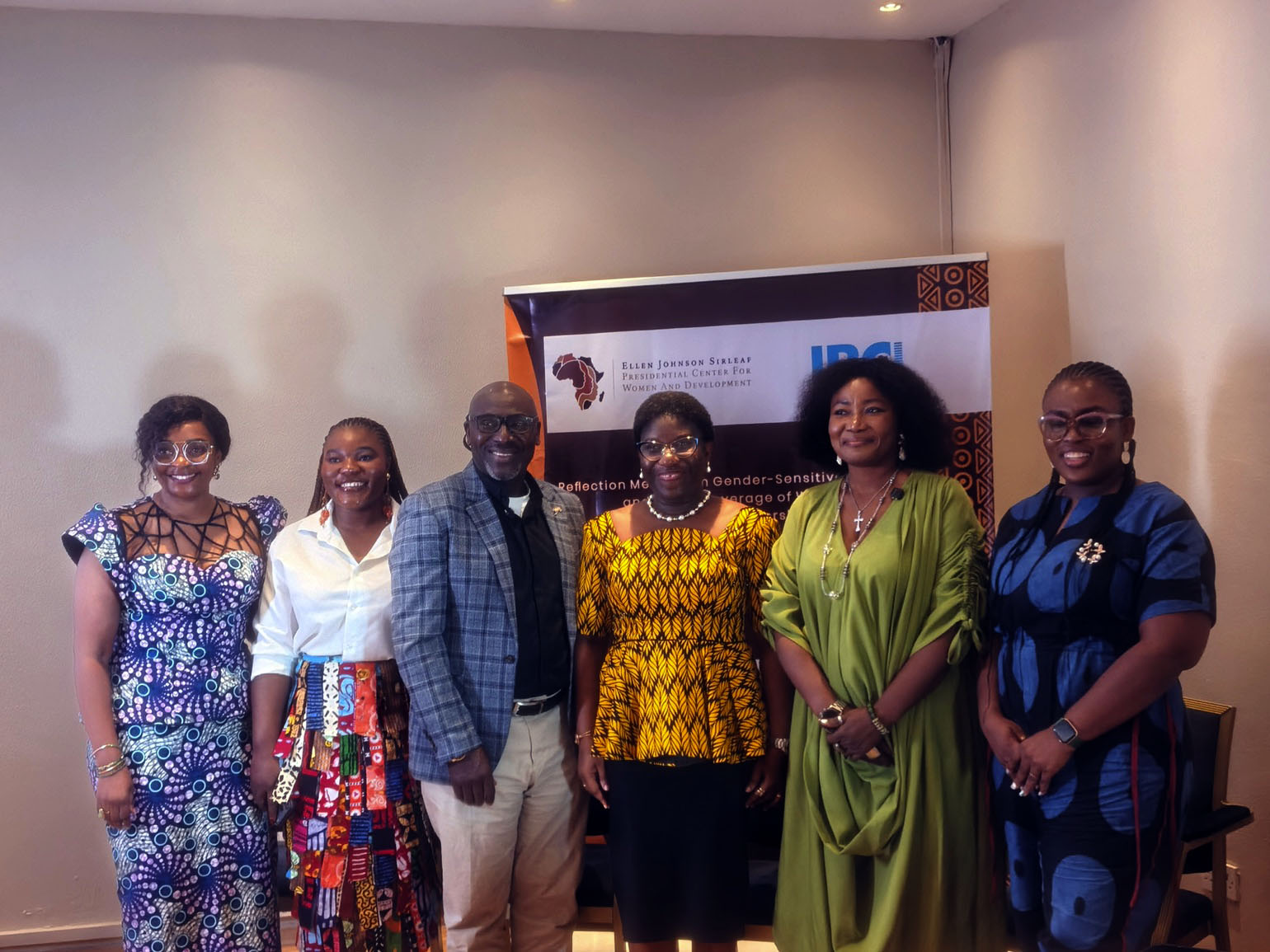
The issue came sharply into focus in Lagos during a three-day reflection meeting on gender-sensitive reporting and media coverage of women in public leadership, where journalists and media practitioners examined how technology is creating new avenues for harassment, intimidation and gendered abuse, and how the media can either challenge the problem or inadvertently amplify it.
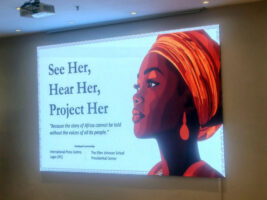
The meeting, organised by the Ellen Johnson Sirleaf Presidential Center for Women and Development (EJS Center), in partnership with the International Press Centre (IPC), held from September 16 to 18, 2026, under the theme “Reporting On Leaders: See Her, Hear Her, Project Her — A Gender-Sensitive Media Training On Covering Women In Public Leadership.”
The discussions were not a call to shield women leaders from criticism. Rather, they focused on the need to distinguish legitimate scrutiny of women in public office from attacks that exploit gender to intimidate, humiliate or silence them.

Key facilitator, Kathleen Ndongmo of News Central TV, led discussions on technology-facilitated gender-based violence, online abuse, digital safety and media responsibility. She highlighted the different ways technology can be used to target women, including cyberstalking, threats, impersonation, doxxing, non-consensual sharing of intimate material and manipulated or AI-generated sexualised content.
The examples discussed during the session brought the issue closer to home.
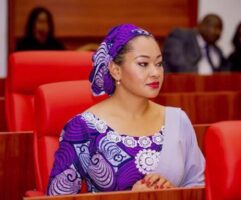
Senator Natasha Akpoti-Uduaghan featured prominently in conversations about the way political disagreements involving women can spill into highly personal online attacks. Participants referred to social media posts and campaigns targeting the senator with sexualised allegations and comments about her appearance and personality.
One of the concerns raised was that such attacks can become so widely circulated that they begin to overshadow the actual political issue that triggered the debate in the first place. Participants also discussed claims that online hostility directed at the senator was followed by threats and an attack on her residence, underscoring the concern that digital abuse can sometimes have consequences beyond the screen.
The example of Oby Ezekwesili was also used to illustrate how women who challenge powerful interests or speak forcefully in public debates can become targets of personal attacks.
Ezekwesili, a former Minister of Education and prominent public commentator, has repeatedly occupied contentious public spaces, where her positions have attracted both support and opposition. Participants recalled instances in which arguments involving her moved beyond her views and public record to comments about her appearance, relationships and personal life.
Aisha Yesufu was another example used during the discussions. Known for her outspoken views on political and social issues, Yesufu has maintained a highly visible presence online and has also faced sustained trolling and threats. Participants referred to her experiences as an illustration of how women who remain vocal in political conversations can become targets of coordinated or persistent online hostility.
For the participants, the significance of these examples lies not simply in the insults themselves but in what repeated attacks can do to women’s participation in public life.
When a woman knows that speaking on a controversial subject could expose her to sexualised abuse, threats, attacks on her family or the publication of private information, the decision to remain visible can become much more complicated. That is where online abuse moves beyond being a social media nuisance and becomes a leadership issue.
Participants, however, were careful to draw a line between criticism and gender-based abuse. A woman in public office must be subjected to scrutiny just as a man should be. Her policies can be challenged, her decisions questioned and her performance investigated.
But criticism of a policy is not the same as attacking a woman’s body. Questioning a political decision is not the same as circulating an unverified sexual allegation. Disagreeing with a woman leader is not the same as threatening her or exposing her private information. That distinction, participants said, is particularly important for journalists.
The media has the power to amplify what happens online. A post that might have remained within a small social media community can become national news once a newsroom reproduces it without sufficient context or verification. This makes editorial judgement critical.
When an abusive post becomes viral, journalists must ask whether reproducing the content serves the public interest or simply gives the abuse a larger audience. Where an allegation is relevant to a legitimate investigation, it still has to be verified, properly attributed and presented within context.
Blessing Oladunjoye, Publisher of BO News Service, challenged journalists to also rethink how they introduce women into public conversations.
“Rather than waiting until a woman becomes controversial before giving her substantial coverage, journalists can proactively profile women seeking leadership, examine their experience and report their ideas, manifestos and records.”
Such reporting, participants noted, gives citizens an opportunity to know candidates before controversies and social media narratives define them.
“It also allows women to be seen as political actors rather than through the narrow lens of their personal lives”, she said.
Melony Ishola, Head of Programmes at PUNCH Videos, was part of the panel that examined the changing media environment and the growing influence of digital platforms on the coverage of women leaders.
The traditional newsroom, she noted in the broader discussion, no longer controls the entire life cycle of a story. “A television interview can be clipped and circulated without its original context. A newspaper report can be reduced to a headline or screenshot. A journalist’s comments can become part of a social media argument far removed from the original report.”
Other News
Simbiat Bakare, Founder of Naija Feminists Media, and Jumoke Falayi-Johnson, Chairperson of NAWOJ Lagos, also participated in the panel discussion on the experiences of women navigating public spaces and the challenges created by online hostility.
The discussions revealed that the problem extends beyond politicians.
Women journalists can themselves become targets because of the stories they cover, the people they interview or the positions they take on public issues. Some participants spoke about the need for journalists to understand that digital safety is increasingly part of professional safety.
For newsrooms, this means creating systems for dealing with online threats rather than leaving journalists to manage them alone. Such systems could include procedures for preserving evidence, reporting abusive accounts, protecting sources and responding when online harassment escalates into physical security concerns.
The wider scale of digital abuse against women in Nigeria also gives context to the concerns raised at the meeting.
ActionAid Nigeria reported in December 2025 that 45 per cent of women in Nigeria had experienced cyberstalking, while 10.6 per cent had experienced doxxing. The figures were cited during discussions around the vulnerability of women in digital spaces.
Participants also examined the emerging threat posed by artificial intelligence.
With increasingly sophisticated tools capable of manipulating photographs, generating fake videos and producing sexualised content, women in public life face the possibility of being associated with material they never created or consented to.
The danger is particularly serious because false content can spread faster than corrections.
By the time a victim has established that an image or video is fake, thousands of people may already have seen it, shared it or formed an opinion based on it.
The challenge for journalists is therefore not simply to report what is trending but to determine what is true, what is relevant and what the public genuinely needs to know.
Participants urged journalists to slow down when social media is moving fast. They also encouraged media practitioners to examine their own digital footprints, search their names online and become more conscious of the personal information they make publicly available. Sharing locations in real time, exposing telephone numbers or completing forms without understanding how personal data may be used can create additional vulnerabilities.
But the burden cannot be placed on women alone. The meeting also examined the role of newsrooms, political actors, technology platforms, civil society organisations and citizens in creating a safer environment for women in public life.
The media, in particular, has a responsibility to ensure that women are not reduced to stereotypes in the course of political reporting.
Gender-sensitive reporting does not mean softer reporting. It means better reporting. It means asking the difficult questions while maintaining professional standards. It means investigating the record instead of relying on rumours. It means distinguishing allegations from established facts. And it means recognising when a personal detail is genuinely relevant to the public interest and when it is simply being used to embarrass a woman.
The discussion also returned to the importance of grassroots political participation.
Participants argued that women seeking leadership should have opportunities to build political experience from the grassroots, including through local government structures, creating a possible pathway to higher levels of leadership.
But political participation requires an environment in which people feel able to participate.
If women know that greater visibility could expose them to sustained digital harassment, the attacks may have a chilling effect on their willingness to contest, speak publicly or remain politically active.
That is why the question of online abuse cannot be separated from the broader question of women’s participation in leadership.
The example of former Liberian President Ellen Johnson Sirleaf was also referenced during the meeting as a reminder of the resistance women can encounter when they enter traditionally male-dominated leadership spaces.
Her experience was discussed as an illustration of the expectations often placed on women in leadership: they are expected to be strong enough to survive difficult political environments, yet are frequently judged through standards that extend beyond their competence and public record.
Social media has not created all these attitudes. But it has given them speed, reach and permanence.
An insult that once might have been heard by a few people can now be seen by thousands. A false allegation can be copied across platforms. A manipulated image can circulate indefinitely.
For journalists, the responsibility is therefore greater than simply deciding what gets published.
It is also about deciding what gets amplified.
As Nigeria approaches the 2027 elections, that responsibility will become even more significant.
Women candidates and leaders will need visibility, but visibility without responsible media coverage can expose them to another layer of risk.
The challenge for journalism is to create space for women to be scrutinised as leaders without making their gender the subject of the scrutiny.
That means covering the candidate before the controversy. Examining the manifesto before the marriage. Investigating the record before the rumour. Questioning the policy before commenting on the body.
The women who enter public life should not be protected from tough questions. But neither should they have to endure gendered abuse simply because they chose to answer them.
The real test for the media, participants at the Lagos meeting suggested, is whether it can help create a public conversation where women are seen, heard and covered as leaders not reduced to the stereotypes and personal attacks that too often follow them into the digital battlefield.