Follow Us on Google
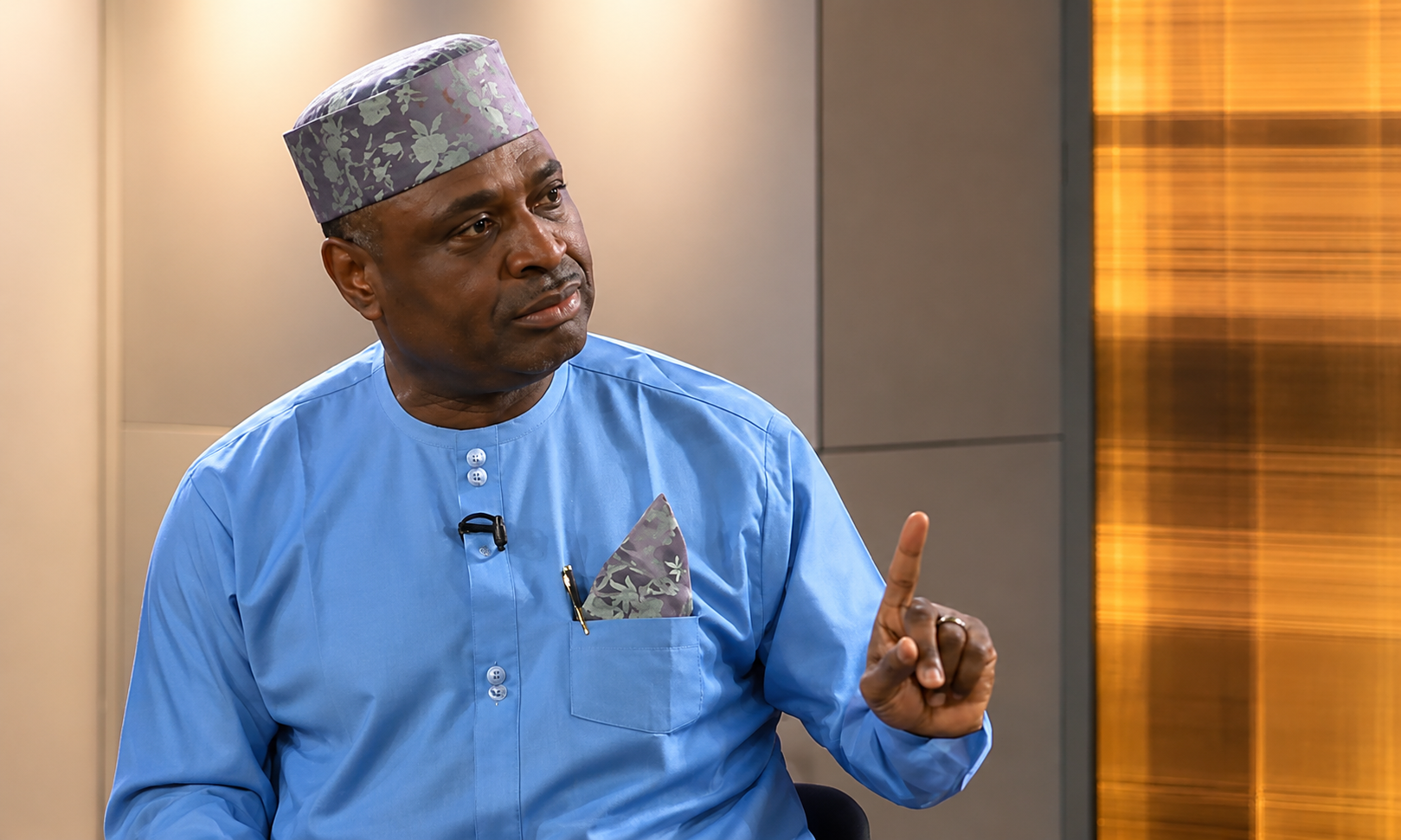
Kenneth Okonkwo has faulted the Federal Government’s decision to remove the fuel subsidy, arguing that the policy has intensified economic hardship and weakened the purchasing power of Nigerians.
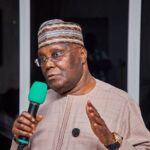
Okonkwo made the remarks during an appearance on Channels Television’s Sunday Politics, while explaining Atiku’s proposal to make petrol more affordable if elected president in 2027.
The ADC chieftain described the subsidy removal as an “ill-advised” policy, arguing that Nigerians had yet to see sufficient benefits from the savings the government says it has generated.
He pointed to the current price of petrol, which he said is around N1,300 per litre, to illustrate the pressure faced by households.
According to him, filling a vehicle with a 100-litre tank would cost about N130,000, an amount he said was almost twice the N70,000 minimum wage.
“N130,000 is almost two times the minimum wage of a Nigerian. Meaning 70,000 naira paid to a Nigerian can only afford him half a tank of his vehicle. No rent, no food, no medical, nothing,” he said.
Okonkwo stressed that Atiku’s proposal should not be interpreted as an attempt to recreate the previous subsidy regime.
He said the former vice president’s approach would instead rely on making crude oil available to domestic refineries at affordable rates, thereby reducing the cost of refined petroleum products.
“Atiku is not going back to that. And cannot even go back to that. Why? We have our local refineries now working,” he said.
The former actor also criticised the performance of the naira under President Bola Tinubu, arguing that nominal wage increases had not translated into improved living standards because of inflation and currency depreciation.
“Naira has become useless in Tinubu’s government. This government is destroying our currency, destroying our economy,” Okonkwo said.
He explained that Atiku’s proposed Atiku Fuel Affordability Plan (AFAP) would focus on lowering production costs rather than subsidising fuel consumption.
“What Atiku is talking about is that oil is our product. We do not have any basis for producing it in our land by ourselves and still selling it to Nigerians at an unaffordable price,” he said.
Other News
Asked about Atiku’s previous position on fuel subsidy, Okonkwo acknowledged that the former vice president had described the old subsidy system as unsustainable.
However, he argued that Atiku’s current proposal was different because it would seek to reduce the cost of production and make locally refined petroleum more affordable.
Okonkwo further compared the purchasing power of the minimum wage under the previous administration with its current value, arguing that Nigerians were worse off despite the increase from N30,000 to N70,000.
“50% of the 30,000 Naira people were earning before Tinubu came into office has greater value than the 70,000 he’s offering Nigerians,” he said.
He maintained that Atiku’s economic strategy would focus more on strengthening the purchasing power of the naira than simply increasing nominal wages.
“Atiku is aiming at increasing the quality of Naira, not the quantity of it,” Okonkwo said.
On how Atiku would manage the economy differently, he said the ADC candidate would draw on his experience in government and what he described as “institutional memory and experience” in tackling Nigeria’s economic and security challenges.
President Tinubu announced the removal of petrol subsidy during his inauguration on May 29, 2023. The decision triggered an immediate increase in petrol prices and has remained one of the most contentious aspects of his administration’s economic reforms.
The Federal Government has consistently defended the policy, arguing that the savings from subsidy removal have increased funds available to the government.
On Wednesday, Finance Minister and Coordinating Minister of the Economy, Taiwo Oyedele, said the removal of the petrol subsidy generated N15.8 trillion in savings for the Federation between June 2023 and December 2025.
Atiku has nevertheless said he would introduce a targeted intervention to make petrol more affordable if elected president in 2027, reigniting debate over the economic merits and consequences of subsidy removal.