Follow Us on Google
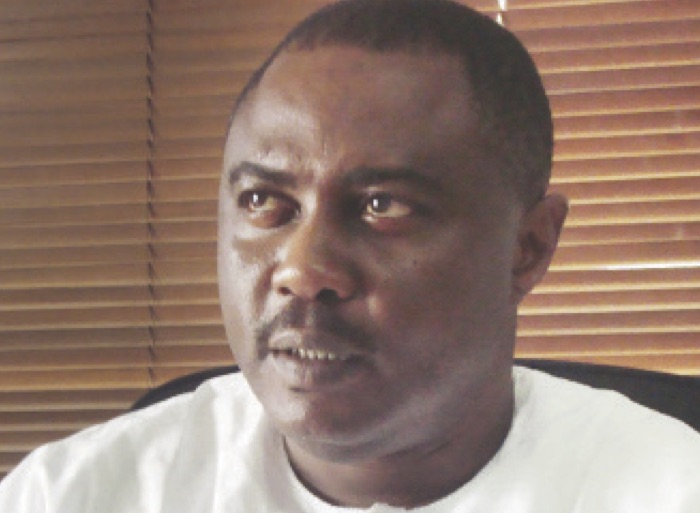
A public affairs analysts and security consultant, Dr. Ody Ajike, has described the Federal Government’s removal of fuel subsidy as a totalitarian temptation on the will of Nigerians.
In an interview with VINCENT KALU, the legal practitioner noted that the local refineries should have been fixed before the withdrawal of fuel subsidy.
The much talked about petrol subsidy removal has come to pass. What’s your view?
Subsidy and bail out policies as we should know are policies borrowed from socialism to correct the imperfections and contradictions in capitalism. However, in Nigeria, what we practise is crony capitalism and that is why corruption and corrupt practices are entwined in our institutions. More so, removal of petrol subsidy is a neoliberal economic policy propagated by Western institutions and these policies may not be best fit policies considering our milieu or the nature of the Nigerian State.
First, I am of the opinion that the removal of petrol subsidy is a national necessity and a means of plugging the holes in our national treasury. I expected the government not to have abruptly removed subsidy at this time. I view it as a totalitarian temptation on the will of the people. We have heard from the government many legal lies about petrol subsidy. Even the former President Buhari, claimed before assuming office in 2015 that there was nothing like petrol subsidy in Nigeria and called it a fraud. He ended up spending trillions of Naira in subsidising petrol for Nigerians. President Tinubu in 2012/15 claimed it was inhuman to remove subsidy and politically abused former President Jonathan. Second, the abrupt removal of petrol subsidy may be a strategy of the Tinubu government to secure the acknowledgment and support of the Western World. The West has not been so excited about the Tinubu Presidency so this could be an opportunity to convey to them that the government means business and is willing to work with them.
I expected the government, in the short term, to first reform and strengthen the oil and gas regulatory institutions, procure accurate scientific and measurable data of our daily consumption, initiate adequate social safety measures and in the mid to long terms have a plan on how to develop a credible system of mass transportation across the country. We believe that mass transit is about long buses. Mass transit is simply a cheap system of transportation that can convey many people at the same time to several destinations and only rail transport qualifies as mass transit. The development of mass transit will also impact on our dependence on petrol as our primary source of aiding intra and intercity mobility among other needs.
Another mid to long term objective should be the development of local refineries to feed local consumption. Even the Dangote Refinery is not ready for production of refined products. It is only the trading platform that is ready. This is part of the misinformation that is fed to the public and we should be very careful how we further these kinds of issues because oil is a national strategic product that impacts the lives of all and the vitality of our national economy. We require the government to be honest and avoid legal lies to the public.
It was announced without notice, except that President Tinubu mentioned it in his inaugural address. Is it a sign of boldness and courage?
Before President Tinubu mentioned removal of subsidy in his inaugural address, the former government in the 2023 budget had no funding envelope or component for subsidy after end of June 2023. As I said earlier, the reason for the president abruptly abrogating the petrol subsidy regime may be connected to external forces that he wants to satisfy and secure their support. We must understand the dynamics of the Nigerian society and further understand that the primary threat to Nigeria’s survival is economic and not religion or ethnicity. The values of our unprocessed primary products like crude oil, natural gas, palm oil and cocoa are nothing compared to the values of the processed products and the values of our primary products are determined by the Western World. Therefore, the threat to our national economic survival is that we are dependent on the West for the prices of our primary products and this economic dynamic is the key to our national security and survival. That explains the volatility of our national economic power and also the direction of conduct for any political leader in Nigeria. Permit me to state that even the West that we depend on have not solved a single global problem in about four decades.
I can only agree that President Tinubu is bold and courageous if he begins to navigate our complexities by first building up measures of strategic autonomy for our national economic independence, defence and security. Develop an articulated economy for Nigeria and freedom from external control. Boldness and courage in leadership coupled with ambitious programmes require balance and balance is the only factor that can save these qualities from excessive abuse. This is because whatever that gets too excessive will encounter resistance of a countervailing power and probable retribution possibly from the society. There is need to reinvigorate our national institutions, values of citizenship and sacrifice. This absolutely requires extraordinary leadership and political courage.
The fuel price increase is unprecedented. What are the social, security and economic implications?
The price increase is indeed unprecedented in the annals of our national socio-economic history but we must note that every society has an inherent coping mechanism for unprecedented events. So Nigerians will cope and even be greater after now. The social, economic and security implications are many and interconnected. This change may be socioeconomically destructive unless a realistic agenda for people protection is put in place. With this current development, we need a social democratic government that will enhance the provision of a variety of social services like education, healthcare, security, physical infrastructure, build the government on a tradition of merit and encourage redistributive demands of the poor. This deliberate redistribution will prevent a new breed of poor and disadvantaged Nigerians emerging below the elites and the middle class.
We are aware that the inability of governments to address the needs of the people since independence has increased popular disaffection and undermined the legitimacy of these governments and the constructive efficacy of our institutions. We must strive to restore public trust, engage in strategic economic planning on an unprecedented scale and channel electoral discontents towards reformist ends through a progressive form of populism. It is trite to state further that the greatest need of every Nigeria is security, freedom, economic progress, equality, and justice. To entrench these virtues requires a fair minded, neutral, extraordinary leadership and courage.
Insecurity, just like armed conflicts, is very dehumanizing and we need to begin a rethinking of the conduct of our war against terror, criminal insurgency and separatist agitations. If we fail, the prospects will be of an unending one involving more deaths and a bitter cycle of violence. Our security should be hinged on development and the deployment of other national elements of national power.
In the past, palliative measures were put in place, but this time, there is nothing like that. Would you say the new government is daring Nigerians?
President Tinubu, in managing audience intelligence, may be daring Nigerians and that is why I called it the totalitarian temptation on the will of the people. There should be open channels for discussion with all stakeholders and a realistic socioeconomic agenda should be put in place but only the truth and not the legal lies will soothe nerves.
Could it be said that what the past government failed to do is the reason for the suffering from this subsidy removal?
I will commend Mr. Buhari for destroying political credibility in his eight years as the president. No Nigerian has squandered enormous goodwill like him. He left Nigeria more polarised and disintegrated along ethnic and religious lines. His regime failed economically and left thousands of innocent people dead. He made several promises yet pacified Nigerians with hardship.
When former President Goodluck Jonathan attempted to remove fuel subsidy, President Tinubu was among those who opposed it then. So what has changed?
For President Tinubu, a lot may have changed. I believe he now has lots of insight into the actual working of national government in Nigeria. He needs to render a public apology to the people and that is the first step to securing a credible audience for the many economic programmes like petrol subsidy removal which he castigated Jonathan for.
The organised labour is gearing up for a fight. Do you see the government making a retreat?
I do not see the government make a retreat but rather I see the government opening up discussions with the Nigeria Labour Congress on this matter. Income is still fixed and the prices of every other product and service are aligned to the pricing of petroleum products. This will be a tall challenge for the Nigerian workers and increasing income will have inflationary indications. The serious puzzle is how we manage petrol subsidy removal, possible demand for increase in income and inflation. Tall questions but honest discussions will solve it. This is a national period for individual and collective sacrifices if the government will be honest on what to do with our resources.
Some argue that the refineries should have been fixed before subsidy removal. What is your take on this?
Yes, I agree that our refineries should be functional before the removal of petrol subsidy. We have lived with non-functional refineries for decades even as Buhari promised to build one refinery every year. He failed flat on that promise. Let us fix the refineries and ensure that local consumption is satisfied through the refineries.
What is the correlation between subsidy and the exchange rate of naira and the dollar?
There is a huge correlation between petrol subsidy and the exchange rate. Nigeria imports refined products and the CBN does not grant Form M approvals for private importers so they source foreign exchange from the parallel market. This is a demand pressure on that market and we know that free markets are demand and supply regulated. More so, many convert subsidy payments into US dollars so as to retain value and have funds available for more importations. With our refineries working, this demand for foreign exchange will be extinguished and it will impact the foreign exchange market to our gain.
Industry watchers say that with time, and market forces at play, that price of PMS will come down. What do you say to this because diesel has been deregulated, but its price is yet to come down?
Which price of any product or service has ever come down in Nigeria? Is there really a free market in the world? All around the world, even when markets are described as free, there is an invisible hand of government regulating those markets. So no market is perpetually free to any extent. The dynamics of demand and supply are somehow moderated by regulators. The NNPC has recently published approved prices for petrol and other refined products and that explains how free it is. However, with globalisation and global convergence of international rules, certain sectors within the domestic economy or society are controlled by external institutions and forces.
We do not fix the price of our crude, gas, cocoa, groundnut or cashew nuts etc.? These prices are fixed in London, Paris, and New York. It is the same with sports and aviation. International rules and order control what happens in these sectors to our greatest amazement. We do not choose which games to participate in or how our airports should operate or standard of security in our airports. These are determined by international organisations and that is same with oil.
What do citizens gain from the government economically and socially?
We tend to forget in Nigeria and in all developing countries that, the power of the state depends on its economic power, quality of population, pool of talents, level of industrial and military establishments, how best resources are equitably distributed across the classes of society and the level of protection for the citizens. This power is limited by a complicated interplay of economic, political, social and external influences. This makes stability very tough to come by but, an economic theory of the cobweb details the intersections between economy and politics and between economy and security. Economic developments are influenced by several factors operating within critically close and far ranges. However, there is a primal distinctive duality in the stability analysis when related to economic benefits for the people. This is the presence of stable governments that are effective and stable governments that are not effective in their economic planning for development. The latter make the people economically insecure despite aspirational strategies for economic security like the recent petrol subsidy removal.
Again, there is an apparent mismatch between the needs of the people and the shrinking supply from the government. It is all about the failure of the social contract responsibilities of the state. The failure of social contract is the failure of the state to function and play its part in delivering economic benefits or social services to the citizens. This could be understood as institutional weakness and it leads to socio-economic instability.
It is my contention that, socioeconomic and political stability stands on social contract between the state and the people and the people accepting state authority, so far as the state delivers public and merit goods. The capacity of the Nigerian state to provide public and merit goods and services has waned, allowing conflict onset which destabilises the entire society. We should understand that high rising levels of poverty and a decline in provision of state services would generally be expected to cause conflict onset and horizontal inequality. These challenges are associated with such social contract failure unless, accompanied by populist measures to compensate the deprived. It is therefore trite to hold that a government that will deliver efficient and effective public and merit goods must equally not forgo social justice, law and order or under-resource key institutions responsible for the well-being and protection of citizens. These will generally have far reaching advantages in its ability to provide (availability) and deliver (access) public and merit goods. This will certainly require a bottom up (whole of society) approach incorporating majority of the citizens and empowering the broadest range of the people and the vulnerable in the society.
The provision of social welfare, of which security is a core element, should be the culminating and dominating agenda in Nigeria. This is due to the privatization of violence and insurgency and we cannot distance these evils from socioeconomic crises, weak institutions, non-adherence to the rule of law, weak criminal justice system, spread of radical ideologies, growth of criminal networks, youth bulge, increased migration, rapid urbanization, and governance inadequacy. Nigeria should promote true democratic value, strengthen institutions of state for the maintenance of law and order and deliberately pursue development. We must pursue an agenda that will mitigate the insecurities that confront human lives and have sustained approaches towards provision of a slew of social amenities for the welfare of the people. Nigeria needs to urgently move from a GDP idealized growth to transformation and rework the nature of power relationships and elite bargain system. The critical masses of Nigerians are not part of the bargain for economic development. Provision of public and merit goods, rural infrastructure, economic development and social services to the population will drastically enhance socio-economic benefits and reduce poverty.