Follow Us on Google

Subsidy is a financial support granted by the state or a public body to help an industry, business, or individual to lower costs and keep prices of a commodity or service affordable to the people. There are two types of subsidies – direct subsidy and indirect subsidy. Direct subsidy means cash payments or grants given straight to a producer or consumer, while indirect subsidy is financial advantages like tax breaks, low-interest loans, or price supports that reduce expenses without a direct cash transfer. A fuel subsidy is a government programme that lowers the price of petrol for consumers by absorbing part of the real cost.
The objective of subsidy, especially fuel subsidy, is to bolster the welfare of the society by lowering transportation costs, keeping fuel, goods and services cheaper, and helping everyday people afford daily travel. Any purported subsidy paid by any government not channelled towards the welfare of the people is not subsidy; it’s a cog in the wheel of the welfare of society.
Crude petroleum oil was found in Nigeria as far back as 1958, before the independence of Nigeria. Instantly, Nigeria became the largest producer of oil in Africa and one of the largest producers in the world. In the 1970s, money from exportation of crude oil was so much that Gowon publicly declared that money was not the problem of Nigeria but how to spend it. As if demons heard him say that, they descended on Nigeria and possessed our leaders and started teaching them how to spend it. Our leaders refused, failed and neglected to invest in productive ventures that will usher in the industrialisation of the society and create employment for the youths, but rather embarked on frivolous spending on consumable goods imported from all over the world.
It’s disgraceful that they could not even invest in the oil industry, which is the goose that lays the golden eggs. From building of four refineries in the 70s, the successive governments of Nigeria, continued spending Nigeria money, without replenishment and without savings, until the fortunes of the oil industry started winding down. From four refineries down to three, down to two and down to one and yet again down to none. The saddest part is that money was appropriated every year for the turn around maintenance of these refineries but the money was continually stolen by corrupt leaders without accountability. Tinubu has invested about $3b to the turn around maintenance of the refineries that yielded nothing. The money was misappropriated, misapplied, and mismanaged.
This sorry state led to the complete importation of all the refined products needed to power our economy with the attendant consequence that the price per litre of the refined premium motor spirit (PMS) became unaffordable by the ordinary citizen of Nigeria. The process of the refined crude starts with the excavation of the crude, the exportation of the crude to foreign countries for refining, to the re-importation of the same refined oil back to Nigeria for the average Nigerian to pay for at the highly priced imported PMS. The unnecessary added cost, which would have been unnecessary, if the crude oil were refined in Nigeria, included the cost of shipping the crude abroad, the cost of refining the crude abroad, the cost of shipping the crude back to Nigeria, all the handling and packaging costs of the international transportation of our oil. The unfortunate thing was that all these costs were transferred to Nigerians to bear as pump price of the product.
Coupled with the gradual depreciation of the naira, the price of the commodity, per naira, keeps rising every day. The only choice the successive corrupt regimes had was to be subsidising the PMS just to make it affordable to the citizens in order to sustain the economy. The interest of the corrupt elite in the subsidy regime was also entrenched because they used the opportunity to inflate the prices of the commodity artificially in order to have a greater margin of illicit profit for themselves. They also inflated the quantity of the totality of the oil consumed in Nigeria so that money will be earmarked for non-existent, imaginary quantity of oil consumed, for the squandering pleasure of the oil subsidy criminal syndicate.
When Nigerians realised that their lives were not bettered by the payment of the subsidy, as the money that ought to be spent on education, health care, power, roads, railways, mechanisation of agriculture etc, was spent on the payment of the purported oil subsidy, they started gradually rejecting the idea of the subsidy. There appeared to be a consensus among the prominent contenders in the last election that the time had come for the removal of the oil subsidy, especially when the government paid more than N7 trillion a year of borrowed money for the subsidy. Nigeria was going bankrupt while the oil industry was collapsing. It was no longer debatable that subsidy must go, the only debate was on how.
Other News
Being meshed in cesspit of corruption, Nigerians realised that they were being used as excuse by the corrupt syndicate to siphon illicit money from the general purse. It is this syndicate that pressurised the government to continue paying the subsidy and blackmailed the government whenever the government threatened not to. It’s this syndicate that ensured, by their crooked ways, that the oil refineries do not work.
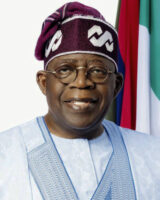
When Bola Tinubu was inaugurated as President on May 29, 2023, the idea of removing the oil subsidy was at the front burner. The previous regime of President Buhari had promulgated the Petroleum Industry Act (PIA) and made the removal of subsidy a legal requirement. It was stated therein that the subsidy shall end by the end of June and, consequently, commensurate money running into N3.36 trillion naira was appropriated for it for the six months. Unfortunately, standing on the inaugural ground at Eagle’s Square, on 29 May 2023, President Bola Tinubu released the bomb, “oil subsidy is gone” illegally before the legal date of 30 June 2023.
The pump price instantly changed from about N185.00 to about N537.00 per litre from 29 May 2023. This is about 300% increase in fuel in one fell swoop. To worsen the matter, Tinubu government, almost simultaneously, depreciated the naira which it met at an official price of about N500 per a dollar to about N1,500 per a dollar. It nearly reached the price of almost N2,000 per a dollar. This incompetent dealing with naira skyrocketed the price of fuel to almost N1,000 per litre, since all the refined fuel was imported.
The response on the economy was swift and the restiveness imposed on the society was instant. The cost of everything was jerked up from the cost of bread. Transportation cost was jerked up and the salary of civil servants became valueless. At that stage, Nigeria economy practically collapsed. The government of Tinubu turned to borrowing to survive. Today it had borrowed more money than all the previous governments put together from 1999. The promise of re-channelling the funds from removal of subsidy into better investment in public infrastructure, power, education, health care and jobs that will materially improve the lives of millions became an empty boast as more than 145 million Nigerians are wallowing in multidimensional poverty with seven million persons moving more into poverty yearly by World Bank report. The removal of subsidy became a bad policy because of its incompetent and corrupt implementation model.
Nigerians had a big relief when Dangote Refinery came on stream with about 650,000 barrels per day refining capacity, one of the biggest refineries in the world. Unfortunately, the same oil syndicate that ensured, by their crooked ways, that the oil refineries did not work, fought tooth and nail to ensure that the Dangote Refinery did not come to fruition. Thankfully, Dangote fought back and got his refinery working with a declaration that the oil cartel is more dangerous than the drug cartel.
The government of Tinubu that would have taken advantage of the arrival of Dangote Refinery to extend support to the local refineries to enable them produce refined products at affordable prices failed, refused, and neglected to do it with the attendant consequences that even with the arrival of the local refineries, fuel price is still unaffordable, because the cost of producing the fuel is high. Dangote Refinery imports most of the crude oil it uses for refining at the high international volatile price of oil. Today, the fuel price is about N1,300 per litre at the pumps. A Nigerian needs about N130,000 to fill a 100 litre fuel tank in a nation where the minimum wage is N70,000. Tinubu’s government has therefore failed to provide affordable fuel when all the fuel was imported and also failed when the fuel is locally produced.
The option of restoring targeted subsidy to the refineries in the form of supply of crude oil regularly to the refineries at affordable prices by Atiku Abubakar, if or when elected President of Nigeria, becomes a welcome relief to the strangling and choking prices of refined fuel products to Nigerians. Dangote had assured that if it receives the right quantity of crude oil it needs the price of fuel per litre can fall by almost 40 per cent immediately. From about N1,300 to about N800. If the government goes further to give the crude oil at a further reduced price, Dangote and other refineries will respond speedily and this may bring fuel pump price back to less than where it was before Tinubu assumed power. The issue of fuel subsidy is not a matter of politics; it is a matter of economic survival of the nation. Nigerians should all join hands to ensure that local refineries are supported in a manner that will enable them produce fuel at affordable price to Nigerians.
We are grateful to God and all our reading fans for the seventh anniversary of our debut in Global Square which commenced on 25 August 2019. To God be the glory.