Follow Us on Google
•Says, incumbency factor ‘ll give Tinubu edge over Obi, Atiku
•Peter Obi / Soludo rift very unnecessary
From Romanus Ugwu, Abuja
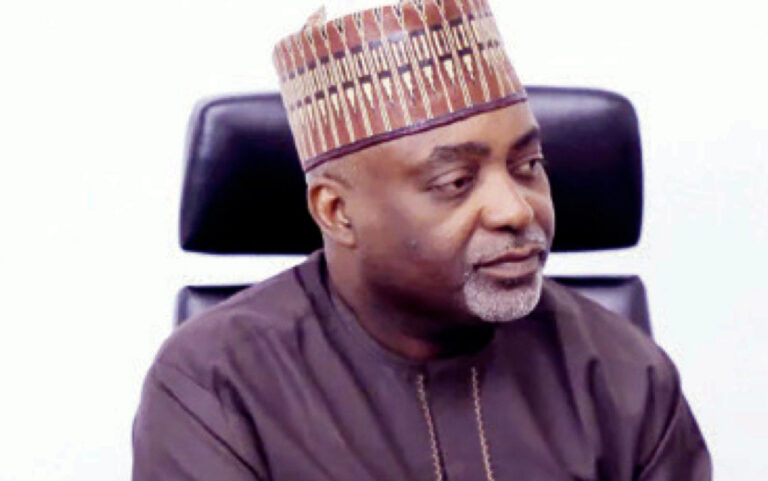
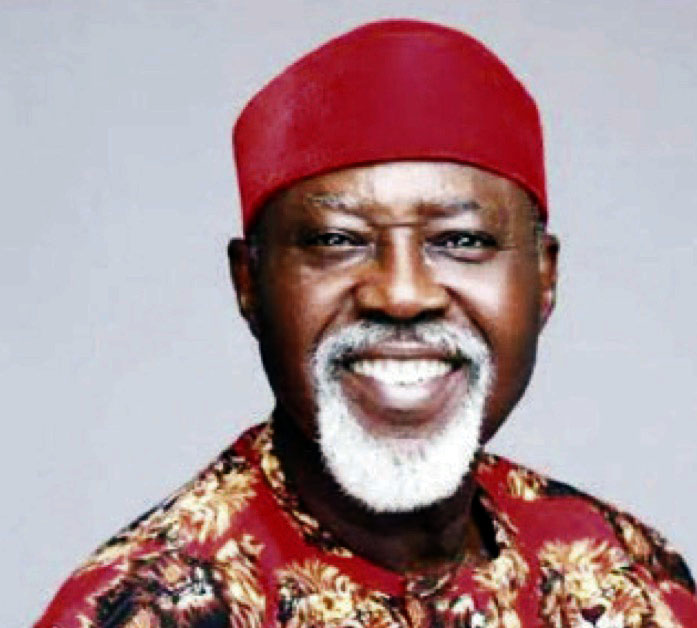
The former National Auditor of the All Progressives Congress (APC) and the 2025 Anambra State off-cycle Labour Party (LP) governorship candidate, Dr George Moghalu, has claimed that though it will be difficult to accurately predict the outcome of the 2027 presidential election, it may be in favour of the APC candidate, Bola Tinubu, due to the power of incumbency.
Speaking to Sunday Sun in Abuja, the former Managing Director of the National Inland Waterways Authority (NIWA), also expressed concerns over the rift between the governor of Anambra State, Charles Soludo, and the presidential candidate of the Nigeria Democratic Congress (NDC), Peter Obi, describing it as unnecessary.
He challenged the Independent National Electoral Commission (INEC) to surpass its achievements in the Ekiti and Osun States off-cycle governorship elections, appealing to the political actors to tone down their uncomplimentary rhetoric in the build-up to next year’s general elections.
How do you appraise the build-up to 2027 elections, especially the presidential poll?
Being honest with you, I have not actually seen serious activities. We are talking of a very crucial election just four months away, so to speak. The momentum is not yet felt in the body politic, but then let us still wait until the end of October; then we will be able to make a very fair assessment.
However, as I said in an interview recently, the presidential election next year is going to be a very strong contest. From all indications, we have returned to a three-horse race like in 2023. APC on one side, ADC and the NDC on the other. Others are on the periphery. It is still going to be a three-horse race, certainly.
It is not going to be an easy fight. You are talking of presidential power, the power of incumbency. All the candidates are determined. But my prayer, which I have always prayed, is for them to play politics on issues. We must campaign based on facts. We must campaign based on programmes, not individual attacks, not violence. Those things have no place in modern-day politics.
Let us base our campaign on verifiable facts, and on issues of contestation, taking issues of critical importance that have to do with the people, and then market it. The incumbent government will also have an opportunity to present its achievements, scorecard, so that the people can make their individual assessment and then make their judgment.
Will you say that they have adopted an issue-based campaign so far?
No, no, no, they have not. I feel a bit disappointed over an attack in Enugu recently. There was a similar attack in Benue previously and other incidents like that. Such things, for me, are not necessary.
But when the issue of sustaining or removing subsidies came up, it was a kind of issue that made political sense. We can create a forum for national debate where people can come with varied arguments to give the electorate an opportunity to make an informed assessment and judgment, and be able to make their decision.
We talk about security. If you say there is no security, this is what I want to do, this is how I am going to address the challenge, tell the electorate what you think the government has not done properly.
Such discussions can generate huge debates for people to discuss. The debate will enable politicians, the active players, to escalate the discussion and give people the opportunity to make informed judgments and make a decision to solve it.
You express concern about the slow take-off of the campaign; what must have accounted for it?
I may not really be able to say. It may be a strategy; you never can say. It may be a strategy by the various political parties. It may be how they want to do it this time around. Only that I was thinking that the earlier we start, the better, so that they can have enough time to be able to market the candidates at all levels.
Don’t forget that apart from the emphasis we placed on the presidential election, it is coming alongside the senatorial election and the House of Representatives election. It provides us with a better opportunity to be able to assess all these individuals, hear them out, see what they have in stock for us, the voters, and be able to make informed decisions.
As an indigene of Anambra State, are you happy with what is happening at home between your governor, Prof Charles Soludo, and the NDC presidential candidate, Peter Obi?
No, no, I am not happy. I am not happy because, for me, the recent rift about loans is an issue that should not even come up for discussion in the first place. Peter Obi left office 13 years ago. Why are we resurrecting what happened 13 years ago now?
If you look at it from that perspective, you may see it as a vendetta. You may see it as a personal fight. For me, that issue should not have even come into contention or discussion. Not at all. Not at all, because it is of no issue.
He borrowed. He did not borrow. He borrowed. He is accusing him of borrowing; he said he did not borrow. He is saying he borrowed. He is presenting documentary evidence; he is presenting his documentary evidence. Groups are aligning behind them, claiming and justifying the claims from each of them, but to what extent? To what end?
How do we intend to end the claims and counterclaims? You talk. I talk back. You talk. I talk back. For me, it doesn’t make any sense. It is not an issue for discussion, as far as I am concerned. That is why I ignored it.
Why has it become difficult for Anambra elders to mediate on this issue?
I wouldn’t know whether it has become difficult, but you don’t lose sight of the fact that we are a very republican society. The average Anambra person is very republican in nature. I would think that it behooves the government to create an enabling environment.
If you want to assemble critical stakeholders like us to talk about this, you have the platform to convene such meetings. You have the opportunity to call people together and then ask questions. We will discuss it, appraising it from a bipartisan perspective.
We look at it from the point of view of Anambrarians, even those who are residents. We will appraise what we want for Anambra in the Committee of States. What do you want for Anambra as we approach the main election?
Other News
Then a lot of people will air their views; you can now draw up the views of the people, see it as the opinion of state critical authorities, use it as a basis to form an opinion, and as the basis for the state position.
Are you among those Nigerians who feared the possibility of a one-party state ahead of the 2027 election, and did it come to you as a surprise when INEC released the final list of presidential candidates?
It did not come to me as a surprise. Why would the ruling party scheme out the opposition parties from contesting the election? There is no reason for such. What is democracy? Democracy is meaningful when it is flexible, when it provides opportunity for everybody to play, when the people are the ones to decide who governs them or who leads them.
You have to allow everybody to play. The sky is too wide for birds to fly. Allow everybody to come into the field of play. I was happy with INEC when it cleared the 18 presidential candidates. It provides us, the voters, an opportunity of wide choice.
Are you then passing a vote of confidence in INEC over what it has done so far?
It is quite too early. It is quite too early for anybody to pass a vote of confidence in the commission. Yes, INEC did well in the Osun State off-cycle governorship election. Yes, it also did well in Ekiti State too.
We won’t take that away from them, but they should do better in 2027 because I am confident that everything the commission needed to be able to deliver a free, fair, and credible election has been given to it.
I am looking forward to a situation where somebody loses an election, he picks up the phone and calls the winner to congratulate him. And for me, that can only come when the loser feels that the process was free and fair, and the process was very credible, resulting in the loss.
He can then return to the drawing board and ask himself why he lost the election, and plan how he will prepare for the next election. Four years is as good as six months, and before you say Jack Robinson, the four years we are talking about now would have elapsed.
By January, just four months away, when the elections would have taken place, we are done with the first tenure of this administration. For me, elections should not be a do-or-die thing but an opportunity for people to make an assessment of what truly happened.
They will ask the pertinent questions: why did I lose, why didn’t I win, how do I now avoid a repeat of those things that cost me that election. These are some of the things you look at and be able to advise yourself.
Where do you think the dice will fall in the presidential election considering the strengths and weaknesses of the candidates?
Granted, I am a politician, like you said, but I don’t know about the weight, whether it is heavy or light weight. However, I am a politician. I have never been a soothsayer, nor have I been a prophet as to be able to see and predict tomorrow.
Electoral dynamics can change in 24 hours. But a lot of issues will play out between now and January. It will be very risky for anybody to make any prediction. And as I did say, the power of incumbency has strength; it has an edge.
You can’t rule out that fact because while others are saying what they will do, the incumbent is saying what I have done and what I will do further if given the opportunity. That is a very key factor. Again, the goodwill that goes with incumbents cannot be thrown away. These are factors you must key in.
That is why I keep saying that incumbency is a strong factor, but it is not as if incumbency cannot be defeated. It has happened before in this country, so there is a reference we can make. But then it is going to be a tough fight by my own little calculation.
I think everybody has to work hard. Everybody has to reach out to the electorate, talk to the people, convince them, appeal to them, so that they can place their confidence in that candidate.
Do you have fears you are nursing for next year’s elections?
Yes, I have fears. I have fears because the rhetoric of some of the political actors is scary and very worrisome, and it shouldn’t be so. In a democracy, you see people making very unhealthy comments, like the very scary one that came from the senator from Osun State recently. Such comments shouldn’t be made.
The other day, I received a viral video of somebody in a police uniform making uncomplimentary comments. It was also very scary. It goes to expose the mindset of some people. It is very worrisome, like the complaint by Aondoakaa, the PDP Benue State governorship candidate, about the destruction of his billboards.
These are the reasons we politicians should tone down our rhetoric. We must tone it down. We should realise that this is not war. We have to live tomorrow. They must be aware that if they kill the people they want to govern, who are they going to govern if they win?
We need to turn down our rhetoric. We must understand that we are brothers and sisters. We should be our brother’s keeper. We should be able to sell ourselves. That is why I initially said that it is not about the individuals; it is not about persons, but rather it should be about issues.
The campaigns should be issue-based. If you say policy A is not good, what is the alternative, so we can look at the two issues dispassionately from different perspectives and see how much we can adopt from either? I want to be convinced by the issues, not by whether he is too tall or too short.
Are you out of sabbatical?
Of course, I am out, and I am still consulting, holding all the meetings, reaching out to friends, reaching out to political associates across the country, and then making my contribution. I am not contesting any position this time, but I have officially returned to my party, the APC.