Follow Us on Google
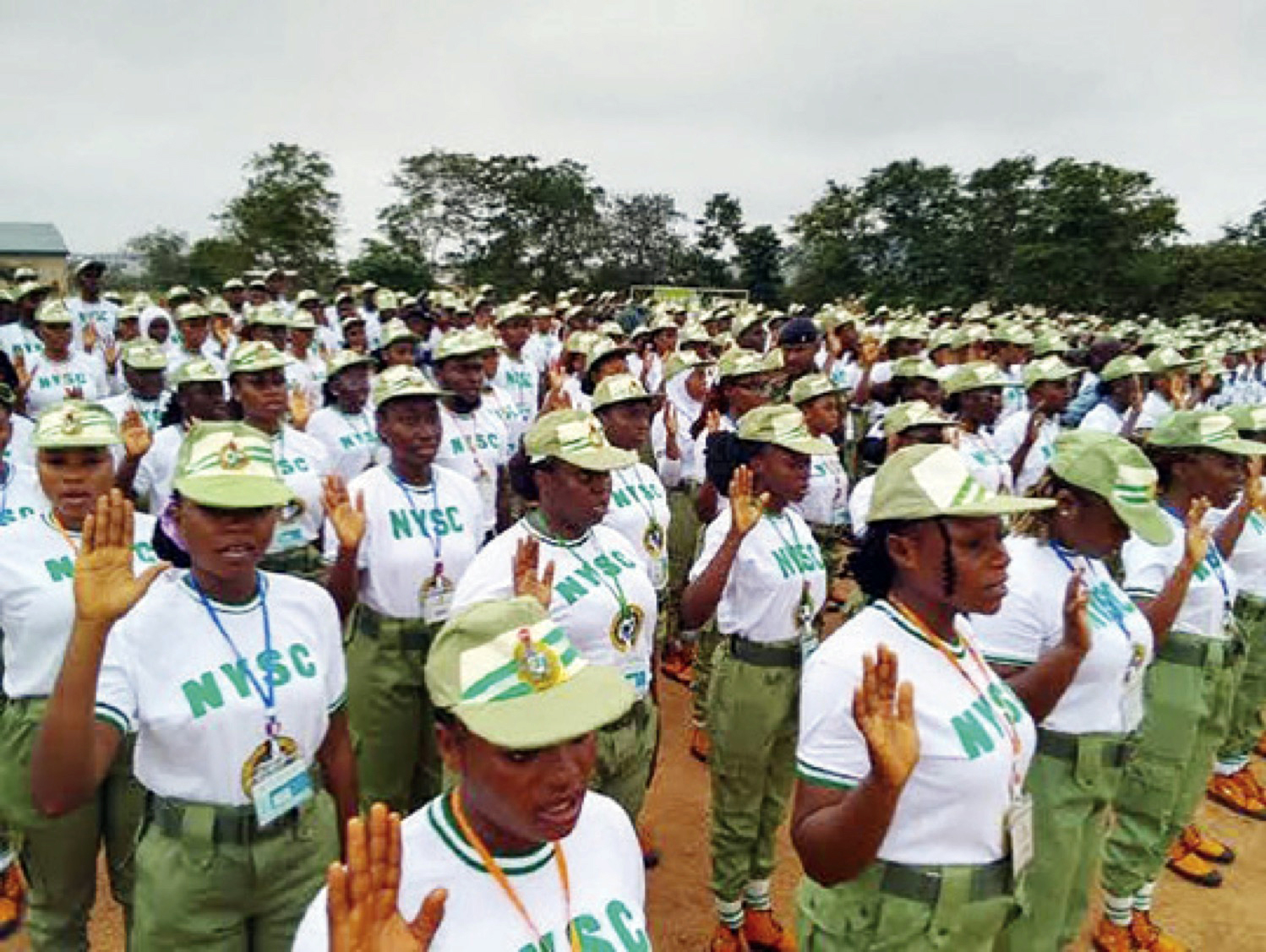
On Monday, June 29, 2026, the Federal Executive Council (FEC), at a meeting presided over by President Bola Tinubu at the Presidential Villa, Abuja, approved comprehensive reforms of the National Youth Service Corps (NYSC).
The approval was announced shortly after the meeting by the Minister of Youth Development, Ayodele Olawande
The NYSC, for more than half a century, has stood as one of Nigeria’s most enduring national institutions.

The khaki uniform being paired with a green-and-white crested vest and cap, the early morning drills, bugle calls, orientation camp rituals, Passing-Out Parade (POP), and the annual deployment of thousands of graduates across the federation have become symbols of national service, unity and the transition into adulthood.
For millions of Nigerians, the compulsory one-year service has been a defining life experience, remembered through friendships forged across ethnic and religious divides, platoon competitions, community development projects and postings to unfamiliar parts of the country.
But behind those cherished memories lies an uncomfortable reality that the Nigeria that gave birth to the NYSC in 1973 is vastly different from today’s Nigeria.
Available records showed that the country’s population has more than tripled and the economy has become increasingly technology-driven.
Also, graduate unemployment remains high, while insecurity has reshaped the geography of national service.
As gathered, employers now place a premium on digital competence, entrepreneurship and workplace readiness, rather than academic qualifications alone.
Against the backdrop, the Federal Government unveiled what many observers regard as the most far-reaching overhaul of the NYSC since its establishment 53 years ago by General Yakubu Gowon’s military regime, aftermath of the 30-month Nigerian Civil War, which began in 1967 and ended in 1970.
Unavoidable change
The NYSC was created in 1973 with a singular mission: of healing a fractured nation. Fresh graduates were posted outside their regions of origin to encourage cultural understanding, reduce ethnic prejudice and promote national unity after the devastating civil war.
For decades, the objective shaped every aspect of the scheme. And in many respects, it succeeded.
Millions of corps members learned new languages, embraced unfamiliar cultures and built friendships that transcended religion and ethnicity. Countless marriages between Nigerians from different parts of the country owe their beginnings to NYSC postings.
Schools, hospitals and public institutions across rural Nigeria also benefited immensely from the services of corps members.
But as the years passed, new realities emerged. Graduate numbers increased exponentially, while employment opportunities failed to keep pace.
Employers complained that many graduates possessed certificates but lacked practical workplace skills.
The rise of digital technology also transformed the nature of work, making innovation and adaptability essential.
Meanwhile, worsening insecurity raised difficult questions about deploying young graduates to volatile areas.
Successive administrations acknowledged the concerns, but meaningful reform remained elusive.
But the current administration argued that preserving the original spirit of the NYSC now requires reinventing it.
President Tinubu captured this thinking when he declared recently that the scheme’s historic mission of promoting national unity remains indispensable, and the demands of today’s Nigeria extend far beyond that noble objective.
“Our young people are nearly 70 per cent of our population. They are not a burden to be managed. They are the engine,” he said.
Military culture to civilian development
Since the inception of the NYSC, military officers have traditionally occupied the office of Director-General, which reinforced the scheme’s regimented culture and command structure.
However, the approved reforms might have signalled a decisive break from that tradition.
Under the new governance framework, the NYSC will be headed by a civilian Director-General that will be supported by three Executive Directors, who will be in charge of operations, finance and corporate services, as well as security services.
The military will not disappear entirely from the scheme. It will continue to provide security support, while the Executive Director in charge of Security Services is expected to come from the military or paramilitary.
Available records showed that the government wants the NYSC to be perceived less as a quasi-military institution and more as a modern youth development agency, whose priorities revolve around learning, innovation, leadership and economic empowerment.
It was further gathered that the transition will reflect global trends, where national service programmes will focus on skills development, civic engagement and workforce preparation, rather than military-style discipline.
New economic mission
The reforms, according to sources within the government circle, are closely tied to the Federal Government’s ambition of building a one-trillion-dollar economy.
According to the reform framework developed by the Federal Ministry of Youth Development, the Federal Ministry of Education and the Office of the Special Adviser to the President on Policy and Coordination, Nigeria can no longer afford to treat its annual pool of graduates as temporary volunteers, whose skills are underutilised.
Instead, every corps member should become part of a deliberate national strategy to strengthen productivity, improve service delivery and close critical manpower gaps across sectors such as agriculture, healthcare, education, technology, infrastructure, environmental management and public administration.
The reform committee repeatedly emphasised the need to align national service with human capital development.
The framework stated further that rather than measuring success solely by the number of graduates mobilised each year, the government wants future assessments to focus on employability, innovation, entrepreneurship and economic impact.
Parade ground to skills academy
For generations of Nigerians, orientation camp has followed a familiar script. The bugle sounds before dawn, a scramble out of hostels for morning drills, days punctuated by parade rehearsals, lectures on national unity, sports competitions and endless marching under the watchful eyes of military instructors.
While many former corps members look back fondly on those experiences, the Federal Government believes they are no longer sufficient for a generation expected to compete in a knowledge-driven global economy.
The thinking has produced one of the centrepieces of the reform agenda which is a complete redesign of the orientation programme.
The traditional three-week camp will now become a six-week programme built around civic education, leadership development, entrepreneurship and specialised professional training.
Rather than merely preparing graduates for one year of national service, the new orientation is expected to prepare them for life after service.
Officials argued that every corps member should leave camp not only more patriotic but also more employable.
The framework for the reforms showed that the new structure divides the orientation programme into three broad phases.
The opening weeks will concentrate on citizenship, national values, leadership, teamwork, emotional resilience, life skills, physical fitness and national cohesion.
Instead of emphasising military-style drills, the programme seeks to cultivate responsible citizenship and personal development.
The second phase shifts attention to careers and enterprise. Under the phase, graduates will receive practical training in financial literacy, business planning, entrepreneurship, career mapping and access to finance.
A structured Career Day will bring employers, financial institutions, professional bodies and enterprise support organisations directly into orientation camps, towards creating opportunities for networking, recruitment and mentorship.
The final phase will introduce perhaps the most innovative component of the reforms, which is the sector-specific professional training.
Goodbye one-size-fits-all
One of the longstanding criticisms of the NYSC has been its tendency to treat graduates from different academic backgrounds almost identically.
An engineer, pharmacist, lawyer, teacher and software developer often undergo the same orientation before being deployed to assignments bearing little relationship to their professional training.
The reform committee was of the perspective that the approach wasted valuable human capital.
Its solution, it was stated, is the creation of specialised Corps Streams that will reflect Nigeria’s priority development sectors.
Under the proposed framework, corps members will indicate career interests, while their academic qualifications and demonstrated competencies will also influence placement into designated streams.
Graduates in agriculture could join AgriCorp in order to contribute to food security, agricultural innovation and rural transformation.
Medical and allied health professionals may serve under MediCorp to strengthen healthcare delivery, particularly at the primary healthcare level.
Education graduates would be deployed through EduCorp to improve learning outcomes in schools.
Technology graduates could serve under TechCorp towards supporting digital transformation, innovation, software development and ICT services.
Other streams include LegalCorp (Justice, legal services and rule of law), PublicServiceCorp (Governance, policy support and social services; public administration, planning, finance and monitoring and evaluation) as well as InfraCorp (Construction, infrastructure, works, urban development and monitoring and evaluation),
The list also comprises GreenCorp (Environment, climate action and disaster resilience), EnterpriseCorp (Micro, small and medium enterprises, entrepreneurship, creative and sports economy), Creative Economy and Culture (Creative industries, arts, culture and media production), as well as Paramilitary or Security Corps that will focus on security, safety, emergency response and civic protection.
Matching graduates with meaningful work
Perhaps no aspect of the NYSC has generated as much frustration as primary assignment.
Stories abound of engineering graduates teaching nursery pupils, lawyers performing clerical duties and scientists assigned to offices where their knowledge is scarcely utilised.
While many corps members have adapted admirably to such situations, critics have long argued that the mismatch represents a missed opportunity for both graduates and the nation.
The reforms, the framework revealed, seek to correct that anomaly. Primary assignments will now be based on three key considerations, which are academic background, skills profile and designated Corps Stream.
The objective is to ensure that graduates contribute where their expertise is most valuable, while simultaneously gaining relevant professional experience.
Equally important, institutions requesting corps members will themselves be assessed.
Schools, hospitals, government ministries, private companies and development organisations will be expected to satisfy minimum standards regarding infrastructure, supervision, accommodation, workplace facilities and operational capacity.
The reforms will also introduce greater accountability into a system where some host organisations have historically viewed corps members simply as cheap labour.
Smarter, safer deployment system
Few aspects of the NYSC generate as much anxiety as posting. Every mobilisation season brings familiar concerns.
Other News
The common questions by critical stakeholders, especially parents include: Will graduates be sent to distant states they have never visited? Will security be guaranteed?
Will family circumstances be considered?
The new framework seeks to replace uncertainty with a more transparent, technology-driven process.
Rather than relying solely on conventional deployment procedures, a digital algorithm will consider factors, such as place of study, state of origin, permanent address and current residence.
Security considerations, however, now occupy a central place in deployment decisions. Posting to states experiencing significant security challenges will adopt what the government described as a risk-sensitive approach.
Priority will be given to graduates who are indigenes of those states, studied there, currently reside there or come from neighbouring states within the same geopolitical zone.
The intention, according to the framework, is to reduce unnecessary exposure to security risks, while ensuring that national service continues uninterrupted.
Complementing the new deployment policy are proposals for enhanced insurance coverage and improved welfare protection throughout the service year.
Many stakeholders consider the measures long overdue as a result of tragic incidents involving corps members in recent years.
New look for new era
Perhaps no symbol of the NYSC is more instantly recognisable than its khaki uniform.
For more than five decades, it has represented discipline, equality and national identity.
The reform committee, however, believed the time has come for a fresh image.
Its recommendations include replacing the familiar khaki with uniforms incorporating Adire fabric bearing the NYSC logo, thereby promoting indigenous textile production and supporting local industries.
Casual wear would combine Adire with white NYSC-branded shirts, while ceremonial attire would feature a more structured version of the fabric.
Heavy military boots, often criticised for being uncomfortable and impractical, would be replaced by lightweight trainers and crocs-style footwear suitable for everyday activities.
Supporters of the reforms have argued that the proposed redesign reflects the broader transformation of the NYSC from a regimented institution into a modern youth development platform.
From passing-Out-Parade to graduation ceremony
For many years, corps members have concluded national service with the familiar Passing-Out Parade, which is a tradition inherited from military culture.
Under the reforms, that POP ceremony will become a graduation ceremony. Graduates will no longer simply “pass out” after completing compulsory service. Instead, they will graduate as individuals who have acquired new skills, strengthened civic values and enhanced professional competence.
The reformed NYSC is expected to produce not merely former corps members but better-prepared citizens ready to contribute meaningfully to national development.
Hard questions behind big vision
The NYSC reforms have generated excitement as well as scepticism.
Supporters see them as a long-overdue response to the realities of a 21st-century economy.
Critics, however, argued that the real challenge has never been a shortage of good ideas but Nigeria’s perennial difficulty in implementing them.
But both parties agreed that the success of the reforms will depend less on the elegance of the policy document than on the government’s ability to translate lofty ambitions into measurable results.
They identified the first hurdle to be funding. They noted that transforming orientation camps into centres for leadership development, entrepreneurship, digital training and sector-specific learning will require substantial investment.
Investigation revealed that many existing facilities in many states are already stretched. Some camps struggle with inadequate hostels, unreliable electricity, poor water supply, overstretched clinics and insufficient learning spaces. They noted that extending the orientation programme to six weeks would increase operational costs.
The proposed national grading and certification of orientation camps, according to them, is both necessary and challenging.
Under the reform framework, states will be required to upgrade their camps to meet minimum standards in accommodation, healthcare, infrastructure, security, utilities and learning facilities. States that fail to comply within stipulated timelines could lose the privilege of hosting orientation exercises.
That provision may prove controversial, but it also introduces a level of accountability that has long been absent.
Another major test will be the availability of quality primary assignment opportunities.
Matching graduates to their academic backgrounds sounds attractive in principle. In practice, however, it demands a robust network of public institutions, private companies, hospitals, schools and development organisations capable of absorbing thousands of corps members across different professional streams.
The reforms also proposed stricter eligibility requirements for host organisations. Institutions will have to demonstrate adequate infrastructure, supervision, operational capacity and relevance before receiving corps members.
Balancing unity with security
Perhaps the most delicate aspect of the reforms concerns deployment.
The NYSC was founded on the principle that graduates should live and work outside their regions of origin, breaking down ethnic barriers and promoting national cohesion.
But Nigeria’s security realities have made unrestricted nationwide deployment increasingly difficult.
For years, parents have expressed anxiety whenever their children receive postings to areas affected by insurgency, banditry or other violent conflicts.
Also, many corps members have sought redeployment on security or health grounds, while some have simply declined to report at all.
Shift in national thinking
University education in Nigeria has often ended with a familiar sequence of graduation, NYSC and a prolonged search for employment.
The reformed scheme seeks to interrupt that cycle, the framework stated.
The government, as gathered, hopes to produce graduates, who are not merely job seekers but potential job creators through integration of entrepreneurship, financial literacy, career development and digital competence into national service.
It is believed that if effectively implemented, the reforms could narrow the long-standing gap between academic learning and workplace expectations.
More than uniform
Public debate has focused on the proposed replacement of khaki with Adire-inspired uniforms and the transition from heavy boots to lightweight footwear.
Those visual changes, as argued, are likely to dominate social media conversations for some weeks.
But the supporters of the reform stated that reducing the reforms to uniforms alone would miss the bigger picture.
They contended that the proposed redesign symbolises a broader attempt to redefine the identity of the Nigerian graduate.
The traditional khaki reflected an era in which national service drew heavily from military traditions.
The new identity seeks to project creativity, professionalism, innovation and confidence in indigenous enterprises.
Long road ahead
The Federal Executive Council has approved the reform framework, but the journey is far from complete.
The Attorney-General of the Federation and the Federal Ministry of Youth Development have been directed to commence the process of amending the NYSC Act and relevant regulations to give the reforms legal force.
It is worth noting that while FEC approved the reforms on June 29, 2026, those aspects that require changes to the NYSC Act will only take effect after the necessary amendments are passed by the National Assembly and signed into law by the President.
Thereafter comes the more demanding task of implementation.
Training facilitators must be prepared. Orientation curricula will need to be redesigned. Technology platforms must be developed. Partnerships with employers and professional bodies have to be established. State governments must upgrade facilities. Monitoring systems will be required to ensure that reforms do not remain attractive promises on paper.
Nigerians react
The new proposals have generated widespread public interest, with many Nigerians expressing optimism that the reforms could equip corps members with practical skills for life beyond national service while preserving the scheme’s original objective of fostering national unity.
For a human resource expert, Mr. Emmanuel Ajose, the reforms represent a welcome departure from the traditional model of national service.
“This represents a significant departure from the old order. Young graduates now have the opportunity to acquire practical and entrepreneurial skills that will empower them to become employers of labour rather than job seekers. Instead of completing their service year without meaningful vocational experience, they can emerge from the programme with the knowledge and competence needed to establish and grow their own businesses.”
While applauding the initiative, Ajose cautioned that skill acquisition alone would not guarantee success.
“The government must back the reforms with adequate funding. Corps members must have access to finance and institutional support to enable them translate acquired skills into viable enterprises. Without such support the programme may fail to achieve its intended impact despite its lofty objectives,” he stated.
Mrs. Fayo Williams, Founder and Managing Consultant, Simply Exponential Consult Limited (SECL), ILO SIYB Master Trainer and Learning and Development Specialist, believes the conversation on reforming the National Youth Service Corps (NYSC) should extend beyond debates over what should be introduced or removed from the scheme. According to her, the central issue should be the kind of graduates Nigeria hopes to produce at the end of the one-year national service.
She noted that, from a learning and development perspective, the NYSC remains one of the country’s largest structured post-tertiary learning platforms for young Nigerians. As such, Williams argued, it should be deliberately repositioned as a workforce transition programme that effectively bridges the gap between academic knowledge and the practical demands of employment, entrepreneurship and leadership.
“Achieving this objective requires far more than periodic training sessions. Rather, the scheme should embrace a competency-based learning framework built around experiential projects, mentoring, workplace immersion and continuous assessment. Such an approach will help participants develop critical thinking, problem-solving, communication, collaboration and digital competencies that are increasingly essential in today’s economy,” she said.
She noted further that getting the learning architecture right would deliver benefits that extend well beyond the service year. It would produce graduates who are more employable, adaptable and entrepreneurial, while equipping them with the skills and mindset needed to contribute meaningfully to national development.
“The success of any NYSC reform should not be measured by the number of new programmes introduced, but by the quality of capabilities developed and the long-term impact on the lives and careers of the young people who pass through the scheme,” she maintained
For many observers, the proposed changes reflect a recognition that the challenges facing today’s graduates differ significantly from those that existed when the scheme was created in 1973. With rising unemployment and increasing demand for entrepreneurial skills, many believe the NYSC must evolve beyond its traditional role to remain relevant.
However, stakeholders insist that the success of the reforms will depend not on policy announcements alone but on effective implementation. Adequate funding, competent instructors, accessible financing for young entrepreneurs and sustained political commitment are widely seen as essential ingredients for translating the reforms into tangible benefits.
As the nation awaits the implementation phase, expectations remain high that the reforms will preserve the NYSC’s historic mission of promoting unity while equipping a new generation of graduates with the skills and opportunities needed to thrive in an increasingly competitive economy.
• Additional report by Olakunle Olafioye