Follow Us on Google
• How organisation rescued child brides from illiteracy in Kaduna
From Noah Ebije, Kaduna
For years, marriage meant the end of schooling for girls in Bugau, a rural community in Kubau Local Government Area of Kaduna State. Now, a grassroots intervention is giving some of them a second chance.
The Participatory Communication for Gender Development (PAGED) Initiative has helped married adolescent girls in the community rediscover education and some of the former school dropouts are now leading other women back to the classroom.
What started with literacy training has grown into a community-led school for married women, with classes holding four times a week. From 8:30am to 10am, the women learn to read and write in Hausa and English.
Some attend classes with their babies and others have already spent years as wives and mothers. But they are back in class. And the transformation is beginning to show.
Women who once struggled to identify letters can now write their names, recognise numbers, read simple words and write shopping lists.
For 15-year-old Basira Isah, the opportunity is particularly significant. Married at 13, Basira had watched her education disappear while her brother continued to school.
“In our household, my family does not believe in educating girls. They only sent my brother to school. He has now finished secondary school and continues his education in a different town,” she said.
“When I asked why girls weren’t allowed to study, I wasn’t given a clear reason, but there was a general belief that educating girls was not useful and that it was only beneficial for boys.”
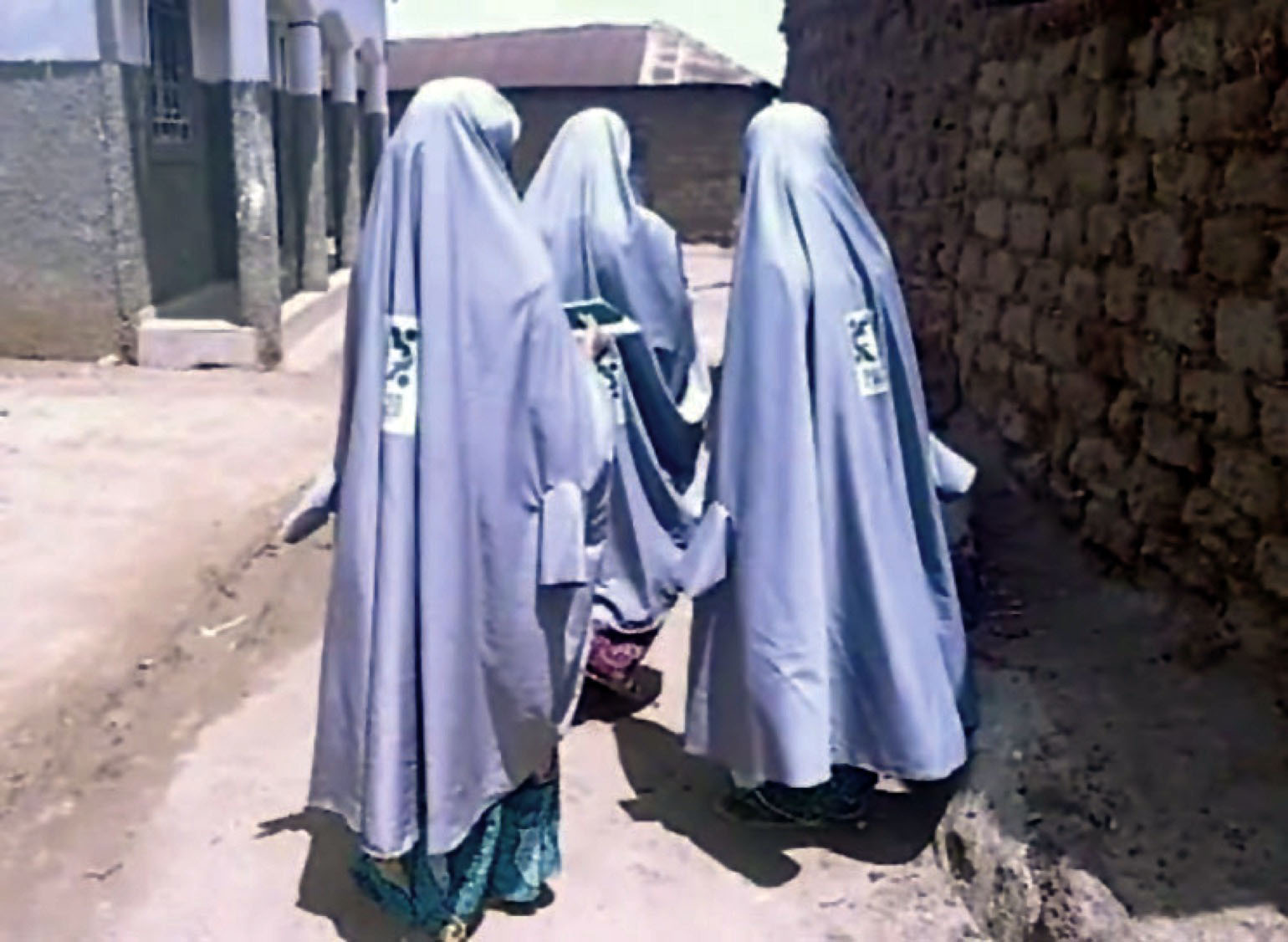
The turning point came when PAGED Initiative trained Basira, Hadiza Danjuma and Zainab Shehu in literacy and the importance of education. The training rekindled something they had almost lost: the desire to learn.
Rather than keep the opportunity to themselves, the three married adolescents took the message into the community. They went from house to house, encouraging married women who had dropped out of school because of early marriage to return to learning. They found a teacher from Bugau and started classes.
Zainab said the intervention gave them hope after years of believing that their circumstances had permanently closed the door to education.
She said: “After the meeting we had here, we saw that truly, education is very important for women. And we already had the desire, but due to our living conditions, there was nothing we could do but endure. Honestly, the arrival of this organisation renewed our hopes.”
PAGED Initiative is a non-governmental organisation focused on inclusion, gender development and empowering marginalised groups. Its wider advocacy includes calls for stronger school re-entry pathways for married adolescent girls and young mothers, as well as extending Nigeria’s Universal Basic Education policy from nine to 12 years.
With support from their husbands and the traditional leader of Bugau, the three women began mobilising others. The community’s traditional institution also threw its weight behind the initiative.
Malam Ibrahim Adamu-Bugau, the community leader, said PAGED had strengthened an educational effort already being pursued through the Bugau Educational Development Association (BEDA).
“All of them started school, but by God’s will, as rural people, they couldn’t complete even secondary school. They were married off, and now each of them has given birth,” he said.
He allowed the women to use his house as a classroom. But as the numbers soon grew, the house became too small.
The learners subsequently moved to an Islamic school near the primary school, but left after the school management was not receptive to the arrangement.
They later used a government primary school, only to encounter another problem: the adult learners and government pupils needed the same space at the same time.
Another Islamic school was eventually identified, although the women can use it only during vacation periods.
Adamu-Bugau said the community was considering how to organise a timetable that would allow the women to continue learning without disrupting regular school activities. He also said the community needed exercise books, writing materials, whiteboards and books, as well as more teachers.
For Basira, the road back to education has been long. Born and raised in Mabuga, a community near Bugau, she attended primary school but stopped in Primary 3. According to her, teachers travelled from outside the village and often came only once a week before eventually stopping altogether.
Her education ended. She stayed home and helped her mother sell kunu, a traditional drink, at the market.
Other News
Then she was married to a suitor chosen by her father, despite her resistance.
Hadiza Danjuma suffered a similar fate. She dropped out in JSS 2 and was married at 14. She attended primary school in Bugau before travelling about 10 kilometres to Damau for secondary education.
She said she met her future husband at 13, when he expressed an intention to marry her. She initially refused. But after a year of courtship, her father decided it was time for marriage.
She said: “In Bugau, honestly, not everyone finishes school; some only finish primary school. For those whose parents are resilient, and if the girls start school at an early age, they are the ones who might finish primary school, JS 1, or JS 2 before getting married.”
Zainab Shehu, 14, was the first female child in her family to reach secondary school. She, too, did not finish. She was forced out of school in JSS 2 for marriage. She was only 12 when a suitor approached her parents after seeing her on her way home from school.
“At that time, honestly, whenever a suitor came, I would just run away. I wasn’t interested in chatting with men,” she recalled with a smile.
The women’s stories reflect a much wider education and early-marriage challenge in Kaduna.
The 2021 Nigeria Multiple Indicator Cluster Survey found that 45.3 per cent of women aged 20 to 49 in Kaduna had entered marriage or union before age 18, while 18.3 per cent had married before age 15.
Findings from the Kaduna General Household Survey similarly showed that more than 30 per cent of girls in Kubau local government area were married before age 15.
The consequences extend into education. The 2026 Kaduna State Out-of-School Children Mapping identified 187,719 children aged three to 17 who were out of school across the state’s 23 local government areas.
Boys accounted for 57 per cent and girls 43 per cent. Children aged six to 11 represented 65 per cent of those identified. The mapping also found that 60.2 per cent had never enrolled in school, while 39.8 per cent had enrolled but dropped out.
Kaduna North Senatorial Zone accounted for 51 per cent of the state’s out-of-school children, the highest concentration among the three senatorial zones.
But inside the small classroom in Bugau, the figures are beginning to acquire human faces.
Habiba Ibrahim, 21, completed primary school and wanted to continue to secondary school. Customs in her village prevented her from doing so, she said, and she was eventually married.
About a year ago, she heard about an adult literacy school through a friend. She sought her husband’s permission. He agreed. Now, she can read and write.
“Before, I couldn’t read Hausa properly. But now, Alhamdulillah, I can write and read,” she said.
Her new ability has already changed ordinary household routines. When her children are sent to the shop, Habiba can write down the items she wants them to buy.
For Asiya Muhammed, who has been married for five years, the classes are opening a door that was shut during her childhood. She is learning to read, write, spell words and recognise numbers. Even the mobile phone has become part of her motivation.
Previously, women who could not read had to depend on younger relatives to identify phone numbers and tell them who had called.
“Anytime I see someone speaking English, I feel motivated; that’s why I ensure I come to school so that one day I can also speak good English,” she said.
She said the women were also learning to balance education with trading and household responsibilities. And she believes their education will benefit their children.
Muhammed said mothers often help their children with schoolwork and that she was determined not to allow her own children to repeat the mistakes of the past. She encourages them to attend school instead of spending their time playing or hawking.
The success of the Bugau experiment has also exposed its challenges. The women need a permanent learning space. They need more teachers. They need books and writing materials.
And, ultimately, they need a pathway back into formal education if their second chance is to become more than basic literacy.
PAGED has been calling for stronger, inclusive re-entry mechanisms that would allow married adolescent girls and young mothers to resume formal education rather than permanently losing their place in the school system.
In Bugau, that demand has already taken practical form. The girls who were once pushed out of school are now knocking on other women’s doors, telling them that marriage does not have to mean the end of learning.
For Basira, Hadiza and Zainab, the classroom is, therefore, more than a room with desks and a blackboard. It is a second chance. And this time, they are determined to keep the door open for others.