Follow Us on Google
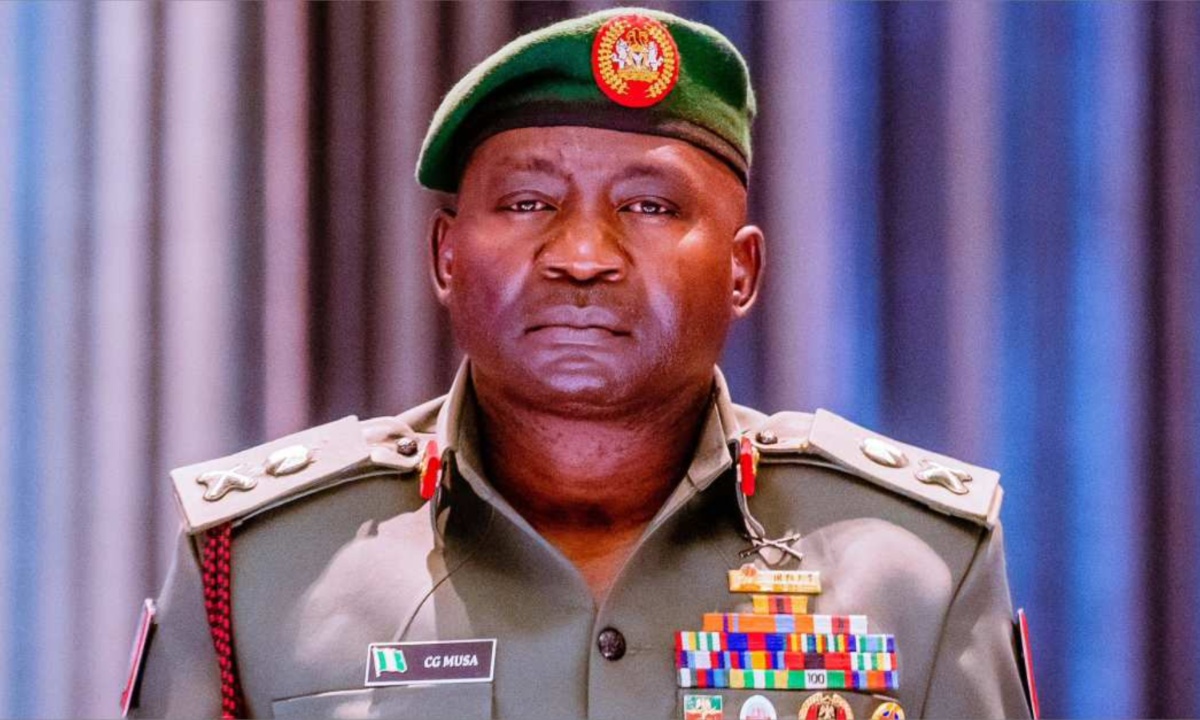
The Chief of Defence Staff (CDS), Gen. Christopher Musa, recently raised fresh concerns on the prosecution of the war against terrorists. The Army Chief chided the judiciary for allegedly sabotaging the war against the terrorists by granting bail to Boko Haram members. The CDS, who made the disclosure while appearing before the House of Representatives, argued that granting bail to Boko Haram members would put the lives of security personnel and their family members at grave risk as well as affect the war against terrorism.
Gen. Musa decried the delay in the trial of suspected Boko Haram members and called for a special court that would handle terrorism matters expeditiously. He also appealed to political leaders to provide good governance, which would also address some of the triggers of prevailing insecurity in the country. Musa lamented that about 73 unmanned forests had been taken over by bandits and called for the extradition of Simon Ekpa, the self-acclaimed leader of the Indigenous People of Biafra (IPOB), from Finland.
Similarly, the Chief of Naval Staff (CNS), Vice admiral Emmanuel Ogalla, called on the National Assembly’s intervention in enhancing surveillance at the backwaters, creeks and the coastline.
On his part, the Chief of Air Staff (CAS), Air Marshal Hassan Abubakar, claimed that the rising cost of aviation fuel was hindering the war against terrorism, while the Inspector-General of Police (IGP), Kayode Egbetokun, stated that the police were operating in a difficult environment. The police boss lamented that “the current manpower in the police is grossly inadequate and the criminals also know this.”
The presentations by the security chief are revealing enough. They contain some needed nuggets on why the war against terrorism is not yet over despite some claims in official quarters that the terrorists had been “technically degraded.” They also contain measures to address the challenge. The federal government should listen to the security chiefs and address the challenges of the war against terrorism. They must not be waved aside as we usually do in this part of the world. The troops must be adequately equipped and motivated for the war against terrorism. Their welfare should equally be given priority attention.
The issue of good governance must be frontally addressed. The rising poverty, hunger, unemployment and other triggers of insecurity can be squarely addressed through good governance. Unfortunately, all tiers of government are yet to rise to the occasion. It is sad that their poverty alleviation measures are really not enough. They are also not seamlessly implemented. The government should come up with pragmatic measures to create jobs for millions of unemployed Nigerians, especially the youths.
The judiciary should help in the war against terrorism by ensuring that suspected terrorists are not granted bail in a way that will jeopardise the war. We support the idea of establishing a special court for the trial of Boko Harm terrorists. Having such a court in place will enhance the expeditious trial of terrorism suspects.
The war against terrorism must be waged with utmost patriotism. The judiciary has been highly criticized over its handling of election petitions which most Nigerians believe left much to be desired. Therefore, the judiciary must put its house in order and curb the increasing corruption in the system. As an important arm of government, the judiciary must assert its independence.
The challenge of terrorism is so real that whatever the government is doing to woo foreign investors will remain elusive as long as insecurity persists. No investor will put his money in an insecure environment. At the same time, the judges must wake up to their responsibilities in handling terrorism and other matters.
We acknowledge the efforts of the government to curb the general insecurity. However, the monster has persisted. In virtually all parts of the country, insecurity is rife. While the Boko Haram terrorists are terrorizing the North East, the bandits are having a field day in the North West. The North Central is buffeted by herdsmen menace. The South East, the South South and the South West are not free from insecurity.
The insecurity has led to displacement of millions of Nigerians in the affected regions. It has hampered farming as many farmers could no longer access their farmlands. With reduction in food production, Nigeria has been listed among countries that will face the looming hunger. It is also described as one of the countries threatened by food insecurity. The recent killing of 15 rice farmers in Borno State has further underlined the enormity of the nation’s security challenge.