Follow Us on Google
By Taiwo Babatunde
Founder and President of the Well-being Foundation Africa, Toyin Saraki, has expressed deep concern over the rising cases of neonatal jaundice in Nigeria and its impact on infant mortality. She emphasized that neonatal jaundice, despite being preventable, continues to contribute significantly to neonatal deaths and lifelong disabilities across the country.
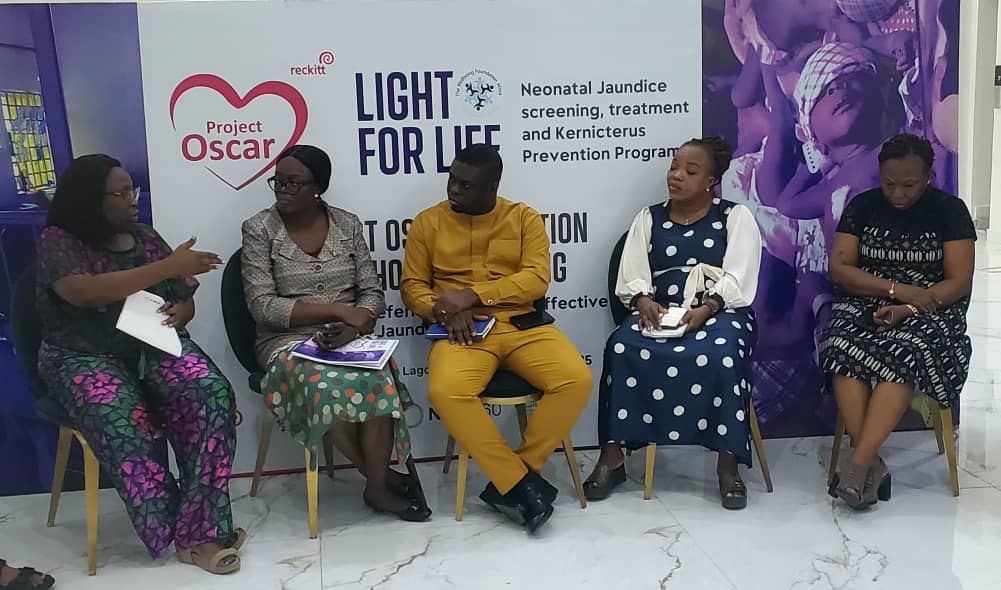
Speaking during an event themed Strengthening Neonatal Jaundice Management: Multi-stakeholder Engagement for Effective Referral and Care Coordination held in Lagos. She highlighted that neonatal jaundice affects approximately 60% of full-term newborns and nearly all preterm infants, making early detection and effective treatment crucial.
She pointed out major gaps in Nigeria’s healthcare system that put newborns at risk. These include poor early detection, lack of access to quality phototherapy treatment, and delayed referrals. If not promptly managed, neonatal jaundice can lead to severe complications such as kernicterus, cerebral palsy, and hearing loss.
“Addressing this challenge requires a coordinated, evidence-based, and systemic response,” Saraki stated. She stressed the need for a robust referral system that ensures no newborn is left behind due to delays or inefficiencies in the healthcare system.
Saraki also emphasized that technology and medical training alone are not enough to tackle neonatal jaundice effectively. Community engagement remains a key factor, as cultural beliefs and misconceptions often lead to delays in seeking medical treatment. This, she noted, makes public awareness campaigns essential in reducing the burden of the disease.
To strengthen early identification, timely referral, and effective management of neonatal jaundice, Reckitt Nigeria, in partnership with Well-being Foundation Africa recently launched Project Oscar. The initiative incorporates cultural touchpoints such as traditional eighth-day naming ceremonies, transforming them into opportunities for vital seventh-day neonatal health checks. This ensures early detection before jaundice symptoms become life-threatening.
In her remarks, Professor Chinyere Ziaka, represented at the event by Dr. Afeez Adedoyin Idowu from NEST360, buttressed the urgency of addressing neonatal jaundice.
She, however, warned that untreated cases could lead to brain damage, causing conditions like cerebral palsy, which severely affect a child’s ability to function normally. These complications can hinder mobility, speech, and overall developmental milestones.
The initiative is being implemented in collaboration with key partners, including the Lagos State Ministry of Health, NEST360, SCIDaR, and the London School of Hygiene and Tropical Medicine.
Hence, the initiatives aim to improve neonatal care through increased access to life-saving interventions. While part of the project include specialized training in neonatal jaundice management for 300 healthcare workers.
Consequently, 18 healthcare facilities will be equipped with 18 phototherapy units, 18 transcutaneous bilirubinometers, and 18 BiliDx bilirubinometers to support both hospital and home-based care, ensuring better outcomes for newborns across Lagos State.