Follow Us on Google
“The fear of error is real. Nigeria’s courts have overturned wrongful convictions years after the fact. Once a warrant is signed and carried out, there is no reversal. That legal and moral weight makes many governors pause. They would rather be accused of delay than of killing an innocent man.”
By Ngozi Nwoke
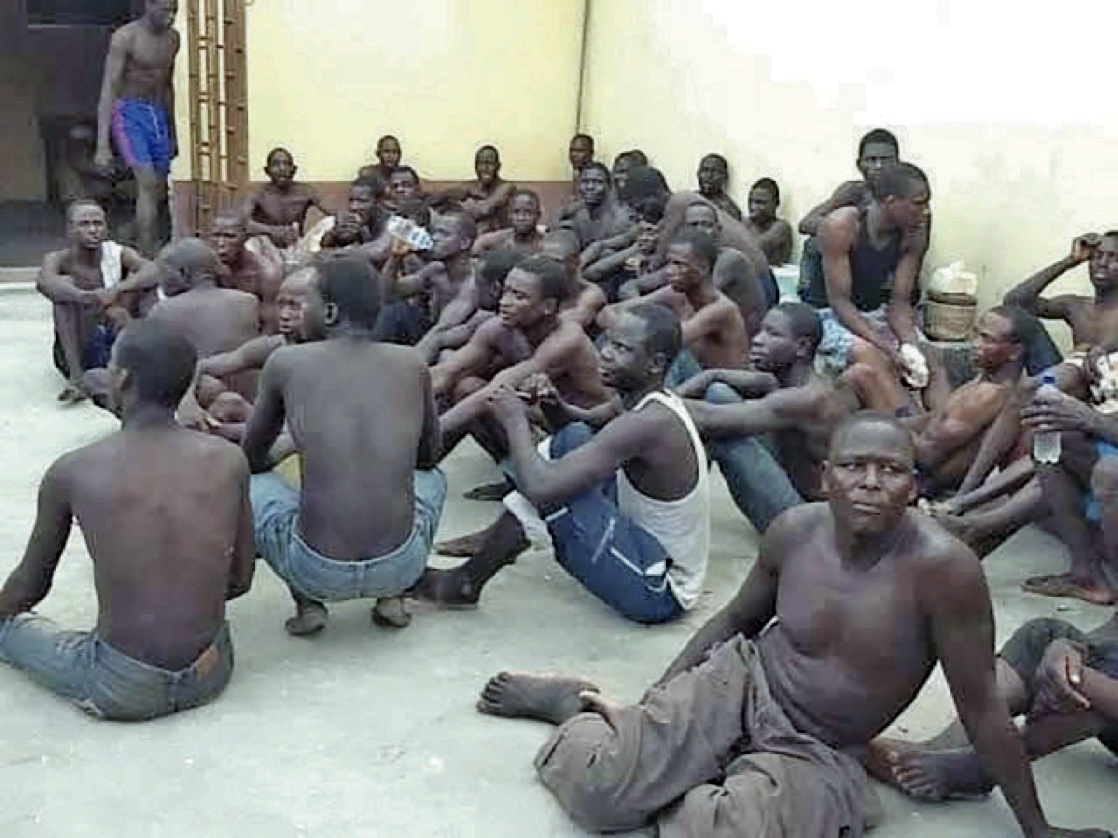
Inside the gate at Kirikiri Maximum Security Prison, men in faded uniforms move in lines to the yard. Among them are 3, 833 inmates Nigeria classifies as “Inmates on Death Row” — IDR.
They have heard the gavel fall, heard judges pronounce the ultimate sentence: “death by hanging.” But the rope never comes. The warrant that should set the machinery of execution in motion remains unsigned, year after year.
According to the Nigerian Correctional Service (NCoS), there are 3,833 inmates on death row out of a total prison population of 81, 558 as of July 22, 2025.
They have been sentenced to death by judges, but the final step never comes. The death warrant remains unsigned. Under Section 221 of the Criminal Code and state penal codes, only the governor of a state can issue a death warrant for executions to proceed after all appeals are exhausted.
Yet since 2012, no governor has been reported to have signed death warrants. The result is that years, sometimes decades, men and women live on “death row” while the state feeds, guards, and manages them.
Nigerians have asked to know the cause of the hesitation. The answer sits at the messy intersection of law, politics, morality, and money.
The journey from conviction to execution is long and deliberate. To understand why warrants stall, you must follow the paper trail.
Allwell Ogunka, a lawyer, breaks it down: “After a trial court sentences an accused to death, the sentence cannot be carried out immediately. The convict has a constitutional right to appeal at the Court of Appeal, and if dissatisfied, up to the Supreme Court. Only when all appeals are exhausted or the time to appeal lapses does the case file return to the trial court. The trial judge then forwards the record of proceedings to the Attorney-General of the state.
“The Attorney-General prepares an advisory note and sends it to the governor. The governor, acting on the prerogative of mercy, may either sign the death warrant, commute the sentence to life imprisonment, or grant a pardon. Until the governor signs, execution cannot lawfully take place.”
That single signature is where the process freezes. Governors face competing pressures: the law demands execution, public opinion often demands justice for victims, but civil society and international human rights groups push for clemency, commutation, or abolition.
Bauchi State Governor, Bala Mohammed, put it plainly while signing the VAPP bill in December 2022: “I know some governors are running away from signing the death sentences because they exercise restraints on the basis that there may be some element of error. But to me, I will leave it to my lord, the chief judge, who will prosecute. It’s not my fault. If it is brought to my attention, I will do it. And we will soon be signing some death sentences because they are many.”
The fear of error is real. Nigeria’s courts have overturned wrongful convictions years after the fact. Once a warrant is signed and carried out, there is no reversal. That legal and moral weight makes many governors pause. They would rather be accused of delay than of killing an innocent man.
Some governors have publicly promised to sign. The most cited recent examples come from Kano and Edo.
Former Kano Governor, Abdullahi Ganduje, repeatedly said he would sign without delay if the law allowed. On the case of Abdulmalik Tanko, who was convicted of killing five-year-old Hanifa Abubakar, Ganduje said: “Our constitution provides that, when a death sentence is passed, it is the constitutional power of the governor to assent for the execution of the culprit. I assure you all that, I will not waste even one second.”
On Yahaya Sharif-Aminu, sentenced for blasphemy, he said: “If the 30 days elapsed and the convict has not appealed, and there is no evidence that he has appealed, I will not waste time in signing the warrant for the execution of the man who blasphemed.”
The current Kano Governor, Abba Kabir Yusuf, made similar pledges for specific cases. He vowed to sign the death warrant for anyone convicted in the Chiranci Dorayi killings of a mother and six children, and said the same would apply to “the killers of Hanifa and the Gezawa arsonists once convicted by the court. Justice will be served in this matter. Anyone found guilty will face the full weight of the law, and I will not hesitate to sign the death warrant once the courts have concluded their work.”
In Edo, Governor Monday Okpebholo, went further during a parade of suspects at the police headquarters in Benin City: “We are going to set up a special court to try kidnappers and cultists. Within two weeks, once the court is done with proceedings. I will sign your execution. We will take you to Ring Road roundabout so that Edo people can watch. I will have no regret about it. Don’t take my simplicity for granted. I will not hesitate to sign the death warrant of any kidnapper convicted under the law.”
In 2013, Former Edo Governor, Adams Oshiomhole, signed warrants for two death row inmates described as “unmanageable” after a jailbreak. He defended it when he said: “I am convinced that those people need to die. In the interest of society, they need to die under the law. I cannot be afraid to sign the death warrant of a man who has been found guilty of murder. I will sign the death warrant of any of them, especially kidnappers, found to have killed any of their victims. I believe that those who kill by the sword should also die by the sword.”
If warrants are rarely signed, executions are rarer still. Nigeria has not carried out a mass execution since 2016. The last confirmed executions were in Edo State under Oshiomhole. That act broke a de facto moratorium that had held since the execution of four men in Lagos in 2013.
Before 2013, executions were sporadic. In 2005, six men were hanged in Benin, Edo State. In 2007, five were executed in Benin and one in Lagos. The pattern is clear: Edo has historically been the state most willing to carry out executions. Lagos followed in 2013. Other states with death row populations in the hundreds — Ogun with 568 IDRs, Rivers with 504, Enugu with 328 — have not recorded executions in over a decade.
This uneven history creates a patchwork of justice. A convict in Benin faces a different reality from one in Abeokuta or Port Harcourt. The law is national, but its final enforcement depends on geography and the temperament of the man in the Government House.
Nearly two decades after he was sentenced to death by hanging, Chukwuemeka Ezeugo, founder of Christian Praying Assembly and popularly called “Reverend King” or “His Holiness”, remains on death row in Nigeria with his sentence yet to be carried out.
Ezeugo, was convicted on January 11, 2007, by Justice Joseph Oyewole of the Lagos State High Court. The court found him guilty of murder and attempted murder after he was accused of setting fire to six members of his congregation on July 22, 2006.
According to court records and witness testimonies, Reverend King accused the six church members of fornication and adultery. He gathered them at his residence in Ikeja, Lagos, had them beaten with hard objects, forced them to kneel, ordered petrol poured over their bodies, and set them ablaze. One of the victims, Ann Uzoh, died 11 days later from third degree burns. Five others survived with severe injuries.
He was arraigned in September 2006 on six counts of attempted murder and murder and pleaded not guilty to all charges. Ten witnesses testified against him during trial.
The conviction was later upheld by the Court of Appeal in 2013 and affirmed by the Supreme Court on February 26, 2016, making it final under Nigerian law. The apex court described the facts of the case as “horrific”. Ezeugo has also faced separate allegations of sexually exploiting female inmates and visitors while in custody.
He remains in Katsina Correctional Centre after previous transfers through Kirikiri, Kuje, and Kaduna facilities. Despite the Supreme Court affirming his death sentence more than 9 years ago, no execution date has been fixed.
Also on death row is Maryam Sanda, who was sentenced to death by hanging in January 2020 by an FCT High Court in Abuja. She was convicted for killing her husband, Bilyamin Bello, in their Abuja home in November 2017.
The trial court held that she stabbed her husband multiple times following an argument. Sanda pleaded not guilty, but the prosecution presented evidence that led to her conviction for murder under Section 221 of the Penal Code.
Her appeal was dismissed by the Court of Appeal in 2021, which upheld the death sentence. She is currently held at Kirikiri Female Prison, Lagos. Like Reverend King, her sentence has been affirmed by an appellate court but has not been executed.
Both cases and more, highlight Nigeria’s growing death row population, which exceeds 3,800 inmates as of 2026, while executions have remained suspended since 2016. Under the Constitution, the power to sign execution warrants lies with state governors, and most have refrained from doing so in recent years.
For now, Reverend King and Maryam Sanda remain among the most prominent convicts whose death sentences have been confirmed by Nigeria’s highest courts but are still waiting for enforcement.
From a different perspective, civil society groups have consistently opposed mass executions. When then Minister of Interior, Rauf Aregbesola in 2021 urged governors to sign warrants to decongest prisons, many civil society organisations had disagreed with the minister, saying death penalty should be replaced with long-term imprisonment.
Human rights groups argue that Nigeria has had an unofficial moratorium since 2016 and that the death penalty does not deter crime. They also point to prison congestion, poor legal representation for poor defendants, and the risk of executing the innocent. Amnesty International called Oshiomhole’s 2013 signings “a deep disrespect for the judicial process.”
For them, the pile-up of warrants is not a failure of governance. It is evidence that Nigeria is quietly moving away from capital punishment, even without legislative abolition.
The Nigerian Correctional Service’s mandate, under the NCoS Act 2019, is to “reform and modify” inmates’ behaviour, engage them in vocational training, and manage all categories, including death row. SPRO Abubakar Umar said the service faces “serious challenges, especially in terms of congestion and financial pressure on the federal government” from managing IDRs.
The numbers are stark. As of September 2024, NCoS reported 3,590 inmates on death row, with 3,517 males and 73 females. The number rose to 3,833 by July 2025. Each IDR must be housed in maximum-security wings, under 24-hour watch. They cannot be mixed with other convicts for security reasons. That means separate cells, more officers, and higher operational costs.
Feeding, healthcare, and security for 3,833 men and women over 10, 15, even 25 years runs into billions of naira annually. In a country where prisons already struggle with overcrowding – over 53,000 awaiting trial inmates as of mid-2025 – the death row population adds another layer of strain. Officers posted to death row work under psychological stress. Families of victims ask why their killers are being fed and medicated at state expense.
A 2019 newspaper report stated that the federal government spent N17 billion annually on feeding of convicts and awaiting trial inmates in 244 prisons nationwide.
The congestion is not just physical; it is administrative. Case files grow dusty. Witnesses die or disappear. The longer a warrant waits, the harder it becomes to verify facts if a governor eventually decides to act.
In Lagos, Nedu Anyanwu, noted: “These condemned men have been eating government rice, beans, and drugs for 15, 20 years. My tax money feeds them while their victims’ families get nothing. If the judge has sentenced them, let the governor sign. We cannot keep a hotel for killers. The prison is congested because of them. Commute their sentence to life or execute, but this waiting is not fair to the state.”
Anyanwu said his anger is rooted in daily realities, noting that he pays VAT on every sack of rice he sells, he sees potholes on his street, underfunded primary health centres, and then reads that a man who murdered 20 years ago still gets three meals a day. To him, the delay is not mercy, but a waste of justice time and resources.
He also noted that signing a warrant can win applause from angry communities after a high-profile murder. Refusing can earn praise from human rights defenders and international partners.
Agnes Benjamin, an Olalenye community activist in Lagos, sees a different danger. She emphasised that when execution is delayed for 10 to15 years, prison security gets weak.
“Some of these men have been there since they were young. They know every route, every officer’s shift. If they plan together, bribe a guard, or use outside contacts, escape becomes possible. Delayed justice creates loopholes. That’s why families of victims are angry. They feel the state is protecting the killers by doing nothing.
“Governors sit at the intersection of law, politics, morality, and public pressure. The law gives them power to sign. Politics makes them hesitate. Victims’ families demand closure. Human rights groups demand mercy. The Correctional Service bears the cost of waiting.”
She shared that she works with families of kidnapped victims. She has watched cases drag for years while suspects sit in detention. To her, delay erodes deterrence. It also creates opportunities for jailbreaks. Nigerian prisons have suffered several high-profile breakouts, and intelligence reports often link them to long-term inmates who know the system better than new recruits.
Both concerned citizens want the same thing from opposite sides: closure. One wants fiscal accountability, the other wants security and justice for victims.
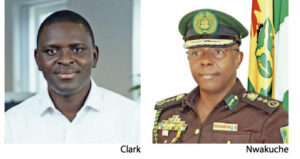
D.P Clark, a worker at the Nigerian Correctional Service, Abuja, said: “Achieving the 3Rs mandate of the Nigerian Correctional Service, which is Reformation, Rehabilitation, and Reintegration of inmates, is sometimes hampered where you have inmates on death row whose execution dates keep delaying.
“This category of inmates inadvertently has the impression that “he that is down fears no fall,” thereby having the tendency to exhibit unruly behaviour. In most of the facilities, they constitute a nuisance by either directly or instigating other category of inmates unto carrying out acts that are capable of truncating the peace and serenity of the Custodial Centres, such as escapes or attempting jail breaks.”
Many concerned citizens are alarmed that until Nigeria resolves this tension through legislative reform, faster appeals, or a national policy on executions, the convicts on death row will remain in limbo.
They asked for how long governors will continue to refuse or delay signing the death warrants and warned against the possibility of a jailbreak if delayed for too long.
In his response, the Comptroller-General of the Nigerian Correctional Service, NCoS, Sylvester Nwakuche explained that the reluctance of state governors to either execute death row inmates or commute their sentences to life imprisonment is a major reason for prison congestion.
“State governors are part of our challenges. They refuse to execute inmates on the death row; neither do they commute their death sentence to life imprisonment.”
Mr Nwakuche explained that if these sentences were commuted to life imprisonment, the NCoS could redistribute the affected inmates to rural correctional facilities, which are less congested compared to those in urban areas.
“This is because the issue of congestion is a major urban phenomenon. Our correctional facilities in urban centres are more congested than those in rural areas. If we commute them to life sentencing, we will be able to distribute them equitably,” he added.
He noted that many inmates have been held in correctional facilities for years without trial, some even beyond the sentences they would have served if convicted.
“This is very important for any establishment to forge ahead. An establishment like correctional centres cannot do anything without collaboration. We are the ones at the recipient of the products of all the prosecuting agencies.
“When I met with the Inspector-General of Police, I said some of your inmates are in our facilities. They have stayed up to five or six years. Some of them do not need to be in our facilities any longer.
“If they had been sentenced, some of them would not spend up to two to three years in prison. But they have stayed in our facilities for six years. For me, such persons should be discharged and acquitted. That is one area we must collaborate to decongest our facilities,” he said.