Follow Us on Google
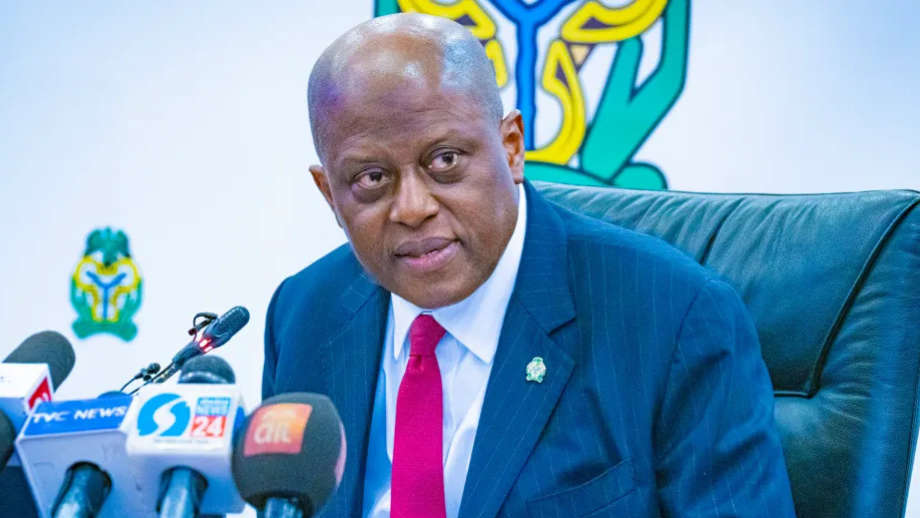
Nigeria’s foreign exchange reserves have risen to $52 billion, the highest level recorded in years, as the Governor of the Central Bank of Nigeria (CBN), Olayemi Cardoso, said strategic reforms introduced by the apex bank have restored investor confidence and strengthened the country’s external position.
Speaking at the 14th annual BusinessDay CEO Forum yesterday in Lagos, Cardoso said the country had moved from a period of severe economic uncertainty to one of growing stability, attributing the turnaround to disciplined monetary reforms, improved policy credibility and efforts to diversify foreign exchange inflows.
He recalled that Nigeria inherited a difficult economic situation marked by weak reserves, rising external obligations and widespread loss of confidence among investors.
According to him, panic had gripped the economy as businesses and individuals sought to move their assets abroad amid fears over the country’s financial outlook.
“Nigeria’s foreign reserves climbed to $52 billion, the highest level in years. It was once down to $3.something billion. We owed $7 billion. Panic set in. People looked for ways to externalise anything and run away. Zero confidence. It was a very bad situation. Many people had lost hope,” he said.
Cardoso noted that although many blamed him for the challenges facing the economy, he remained focused on restoring stability.
“People pointed fingers at me but I was not the cause. I came to solve the problem. I had to roll my sleeves and attack it with everything I could. You can’t be lily-livered. You can’t be Mr Nice Guy to save it. You need discipline. You need integrity and trust. Once trust is lost, you’re headed in the wrong direction. To rebuild the trust, you have to be courageous to do the right thing,” he stated.
On inflation, the CBN governor said Nigeria had recorded 11 consecutive months of disinflation before fresh global tensions disrupted the downward trend.
He attributed the temporary setback to external developments, particularly the conflict involving the United States and Iran, stressing that Nigeria was better positioned to absorb the shock because reforms had been implemented ahead of time.
“There were unpredictable external shocks like the US-Iran war. It affected everyone but affected us less because we undertook the reforms a lot earlier,” he said.
Cardoso expressed optimism that inflation would moderate further next year, adding that the Monetary Policy Committee (MPC) would continue to rely on economic data in determining the appropriate policy direction.
“We projected that by next year, inflation will get to moderate levels. We have independent-minded MPC members who rely strictly on data. All actions are guided by that,” he said.
The CBN governor also disclosed that the apex bank deliberately diversified the country’s sources of foreign exchange while rebuilding external reserves.
According to him, international remittances have become one of the key pillars supporting reserve growth.
Other News
“When we were building the reserves there was a lot of cynicism. I said we needed to diversify our reserves and we went into remittance inflows, gave ourselves a target and pursued it,” he said.
Cardoso revealed that monthly diaspora remittances through official channels currently stand at about $600 million, with the CBN targeting $1 billion per month by the end of the year.
He also dismissed misconceptions about the use of Nigeria’s foreign reserves, stressing that the funds were not meant for routine government spending.
“There’s a misconception about how much we have and how it’s deployed. It’s not for day-to-day operations. It’s used for interventions where necessary and we are determined to grow it to a greater margin,” he explained.
According to him, the current reserve level provides about 10 months of import cover, a key indicator closely monitored by international investors and credit institutions.
“It gives internal stakeholders confidence as well,” he added.
Speaking on the banking sector recapitalisation programme, Cardoso said the exercise was designed to strengthen lenders against emerging risks created by currency devaluation and regulatory forbearance.
He said the CBN secured the support of the banking industry after explaining the need to build stronger and more resilient financial institutions.
“We needed to build resilience in our banking system. Forbearance and devaluation conspired and made recapitalisation necessary, and the banks saw the need. We got their buy-in,” he said.
Cardoso added that stronger capital would enable Nigerian banks to compete more effectively across Africa and support larger investments.
He expressed hope that after the recapitalisation exercise, domestic investors would take advantage of the stronger banking system, saying increased local participation would also encourage foreign investors.
He further urged banks to adopt prudent lending practices, emphasising that credit decisions must be guided by sound risk assessment and adequate capital buffers.
“We’re helping local banks build capacity to ensure they operate at par with their international counterparts,” he said.