Follow Us on Google
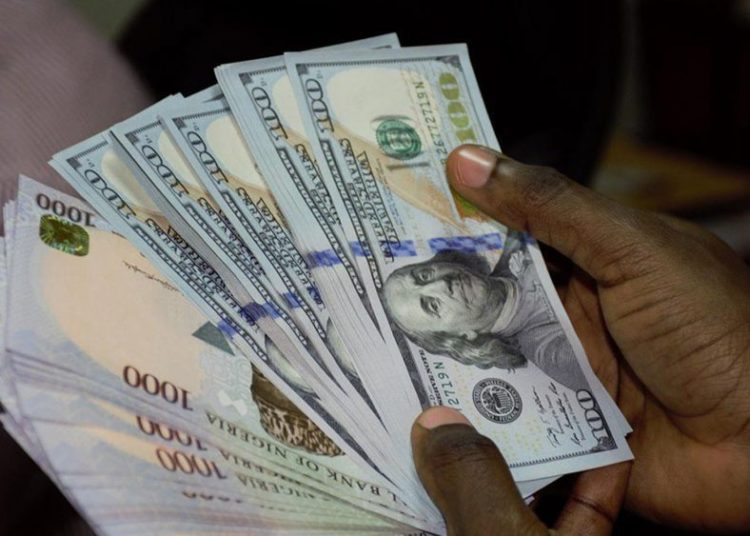
Foreign investors poured a record $3.68 billion into Nigeria’s foreign exchange market (NFEM) in August, pushing total NFEM inflows to $6.68 billion, the strongest level in 16 months, data obtained from the FMDQ revealed at the weekend.
This monthly inflow print, up 28.6 per cent from $5.20 billion in July, marks the highest reading since April 2025 and underscores how portfolio capital has become the dominant driver of FX liquidity even as long‑term foreign direct investment (FDI) remains subdued.
Foreign inflows, which accounted for 55.1 per cent of total NFEM proceeds in August, jumped 97.0 per cent m/m from $1.87 billion in July to an all‑time high of $3.68 billion. The surge was underpinned by a 113.3 per cent increase in foreign portfolio investment (FPI) and a 47.7 per cent rise in inflows from other foreign corporates, even as FDI tumbled 80.7 per cent m/m.
Within FPI, fixed‑income instruments led the charge with a 103.4 per cent m/m increase, while equity inflows exploded 438.9 per cent from July’s base.
According to market operators, the rebound is due to still‑attractive naira yields on treasury bills and other money‑market paper, which continue to offer compelling carry trade opportunities for offshore funds seeking hard‑currency returns in an emerging‑market setting.
The strength in portfolio flows also reflects growing investor comfort with the domestic market structure following reforms to the FX framework, including the FX Code, electronic trading platforms and revised manuals that have improved transparency and execution.
In contrast, local inflows fell 9.9 per cent m/m to $3.00 billion in August from $3.33 billion in July, representing 44.9 per cent of total NFEM inflows.
Other News
The decline was broad‑based: CBN inflows dropped 29.1 per cent, individuals’ inflows fell 17.2 per cent, and exporters’ proceeds edged down 1.8 per cent, even as non‑bank corporates increased their supply by 15.4 per cent.
The pullback in CBN supply is consistent with the apex bank’s stated shift away from heavy‑handed interventions toward a more market‑driven FX regime. Its Governor, Olayemi Cardoso has previously noted that direct CBN interventions now account for only about 1.2 per cent to 1.3 per cent of total FX turnover, as the bank focuses on improving market functioning rather than defending specific exchange‑rate levels.
The influx of foreign capital has already begun to show up in the exchange rate. The naira strengthened to as low as N1,337/$1 in the official market in late August, supported by improved FX liquidity and higher reserves, which climbed to $53.11 billion.
Analysts say the combination of robust FPI inflows, modest CBN sales and stronger autonomous supply from corporates has created a more stable liquidity backdrop, reducing the frequency of sharp intraday swings.
However, the heavy reliance on short‑term portfolio flows leaves the market exposed to sudden shifts in global risk sentiment. While carry trade returns remain attractive, any escalation in geopolitical tensions or a sharp repricing of emerging‑market risk could trigger outflows and reintroduce volatility into the NFEM.
Cordros Research in an emailed note, while reacting to the development, said, “We expect FX inflows from both foreign and local sources to remain resilient in the near term, supported by sustained confidence in domestic financial markets and still‑attractive yield differentials.
Yet, with FDI still weak and global uncertainties lingering, policymakers face the task of converting this portfolio‑led liquidity into deeper, longer‑term investment that can durably support the naira and external buffers”.