Follow Us on Google

By Chinenye Anuforo
Africa’s efforts to build inclusive digital payment systems still face significant gaps, with 10 instant payment systems on the continent yet to be ranked on an inclusivity spectrum developed by AfricaNenda Foundation.
The assessment also showed that only one instant payment system in the continent had attained the mature level of inclusivity as of 2025, highlighting the need for payment infrastructure that makes digital transactions affordable, accessible and convenient for individuals and businesses.
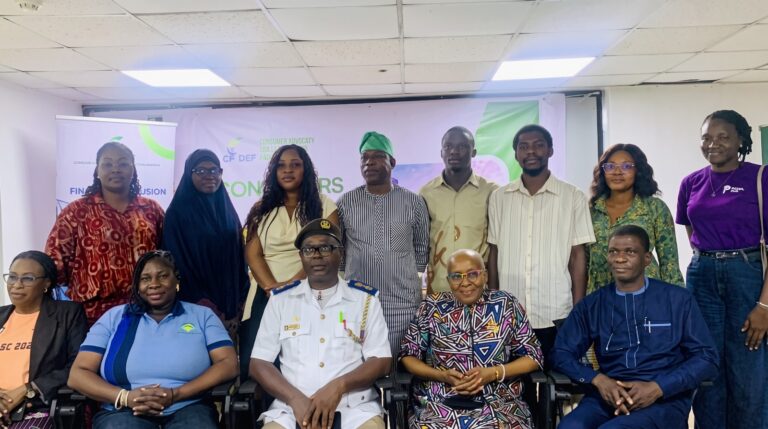
The findings were contained in a presentation by Serge Moungnanou Ambadiang, Partnership, Advocacy and Capacity Building Specialist at AfricaNenda Foundation, during a media training organised by the foundation in Nairobi, Kenya.
According to the presentation on AfricaNenda’s Instant Payment Systems (IPS) Inclusivity Spectrum, 36 systems were classified across four categories, with 10 unranked, 15 at the basic level, 10 at the progressed level and only one at the mature level.
Nigeria’s Inter-Bank Settlement System Plc (NIBSS) Instant Payment System was identified as the only system to have attained the mature level, placing the country’s payment infrastructure at the highest category of inclusivity under the framework.
The assessment evaluated instant payment systems based on their ability to support affordable digital transactions, accommodate different payment service providers, provide effective consumer protection and facilitate a broad range of payment use cases.
AfricaNenda defines inclusive instant payment systems as infrastructure that enables low-value, low-cost digital transactions in near real-time, ideally operating 24 hours a day throughout the year.
The systems are expected to support interoperability, allowing users of different financial service providers to transact without being restricted by the platforms through which they access financial services.
The foundation’s framework classifies payment systems into basic, progressed and mature levels, alongside systems that have not been ranked.
At the basic level, systems are expected to support the payment channels most commonly used by people within their operating environments, alongside person-to-person (P2P) transfers and person-to-business (P2B) payments.
These transactions are considered important for encouraging digital payment adoption, particularly for domestic transfers, which can otherwise involve transportation expenses and safety concerns when cash is used.
At the progressed level, payment systems are expected to allow all licensed payment service providers to participate, including commercial banks, mobile money operators, microfinance institutions and fintech companies.
The framework also requires governance arrangements that enable participants to contribute to decisions on system design and operation, as well as the involvement of the central bank in governance.
At the mature level, the requirements extend beyond basic transfers to cover a wider range of transactions, including government-to-person, person-to-government, business-to-business, business-to-person, business-to-government and government-to-business payments.
This broader coverage is intended to support a digital payment ecosystem in which individuals, businesses and government institutions can transact through digital channels.
Consumer protection is another major requirement. According to the framework, mature systems should provide transparent and effective mechanisms for resolving complaints, while ensuring that participants comply with relevant consumer protection, data privacy and cybersecurity requirements.
The framework also emphasises affordability, recommending that systems operate on cost-recovery or not-for-loss principles to keep transaction charges as low as practicable for end users.
Beyond Nigeria, the presentation identified payment systems at different stages of inclusivity across the continent, including Ghana’s GIP, Egypt’s IPN, Ethiopia’s EthSwitch, Tanzania’s TIPS, Rwanda’s eKash and South Africa’s PayShap.
It also listed Nigeria’s eNaira and Nigeria Mobile Money at the basic level, distinct from the NIBSS Instant Payment System, which was placed in the mature category.
AfricaNenda’s inclusivity spectrum is designed to track the progress of instant payment systems across Africa and identify areas requiring improvement.
The assessment highlights that the development of digital payment infrastructure goes beyond the availability of electronic transfers. It also involves ensuring that different providers can participate, transactions remain affordable, users have access to effective complaint-resolution mechanisms and payment services support a wide range of needs.
For African countries seeking to deepen digital financial inclusion, these factors are central to ensuring that instant payment systems serve not only financial institutions and technology providers but also ordinary consumers and small businesses.
The classification provides a framework for assessing how far payment systems have progressed towards that objective and the areas where further development may be required.