Follow Us on Google
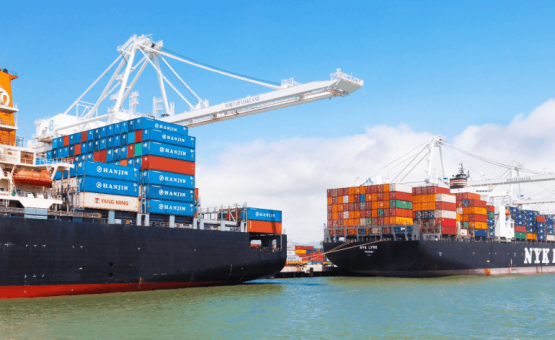
Stakeholders in the maritime industry have lamented that the increasing dominance of foreign players in the freight forwarding business is swelling the unemployment crisis, encouraging capital flight and posing serious national security risks.
From all indications, the Nigerian maritime sector is losing over N130 billion annually to foreign freight operators, while an estimated 10,000 indigenous freight forwarding jobs are now at stake as foreign shipping lines may have taken over freight forwarding businesses in the country, according to stakeholders.
Freight forwarding, as one of the most successful sub-sectors of the logistics industry, is said to have contributed significantly to the country’s economic development over the years.
Customs brokers who spoke with the Daily Sun said that Nigerian freight forwarders are helping the Nigeria Customs Service (NCS) realise its annual target, estimated at over trillions of naira.
But today the profession is being dominated by foreigners such as the Chinese, Indians, Lebanese and other foreigners to the detriment of the economy that is losing over N130 billion annually.
Against this background, the services of freight forwarders cannot be overemphasized and left in the hands of foreigners, as they have direct responsibility to ensure service, speed, and accuracy with every shipment because they are the backbone of the transport and logistics industry in the business of transporting goods and services.
The freight forwarding industry provides companies with the most efficient solution to the shipping process. Without freight forwarders, the entire shipment process may not only be slowed down, but can experience many complications that are simply too much for companies to handle.
For example, the process of moving cargo overseas involves several different foreign transport protocols and regulations.
Companies that are unfamiliar with this can find themselves in a challenging spot when dealing with foreign customers, and in some countries, including the Republic of Benin, freight forwarding practice is only meant for their indigenes as a way of creating jobs for their citizens.
Daily Sun learnt that foreign shipping lines could not go to Cotonou, Republic of Benin, and attempt to take freight forwarding jobs from the citizens. If they try such in the Republic of Benin, they would be dealt with.
With all sincerity, freight forwarding in Nigeria should be an exclusive business to Nigerians, as it is done in the Republic of Benin. But in reality, foreigners have taken over almost all the processing of cargo clearance at the ports, leaving their Nigerian counterparts idle.
Speaking with Daily Sun, a foremost Customs broker and Managing Director of Mikky Excellency Nigeria Limited, Alhaji Abdulazeez Babatunde Mukaila, has warned that the increasing involvement of foreigners in Nigeria’s freight-forwarding industry could trigger serious unrest if the Federal Government fails to urgently address the concerns of indigenous practitioners.
Mukaila said freight forwarders had for years been clamouring for the indigenisation of freight-forwarding practice in Nigeria, alleging that foreign operators were increasingly taking over businesses traditionally controlled by Nigerian practitioners.
He warned that the growing frustration among indigenous operators could eventually result in a situation similar to a xenophobic attack if the government failed to intervene.
Mukaila also raised concerns over what he described as the growing access of foreign operators to sensitive areas of the nation’s ports, linking the development to broader security concerns.
“Besides that, foreigners are the ones having access to the most secure parts of the ports. And what do you have? Insecurity. The situation becomes more concerning where foreign businesses involved in the manufacture of ammunition are also able to operate within Nigeria’s customs-clearing system.
“When foreigners manufacture ammunition, and they are equally licensed to clear it in our country, this has been the doing of Nigerian society presently,” he added.
He urged the Federal Government to examine the growing presence of foreign interests across different segments of Nigeria’s maritime and logistics industry, saying the matter had gone beyond economic competition to issues of national security.
“I think government needs to look into our plight. Even if not for anything, for security concerns, as foreigners were increasingly obtaining customs-clearing licences and becoming involved in haulage and terminal operations. We now have foreigners having a customs-clearing license. They are into haulage, they are into terminal operations,” he said.
“Chinese are doing door-to-door freight forwarding business in Nigeria. Foreign companies and terminal operators were now running customs-licensed businesses as well as haulage-related operations, describing the development as a major challenge that required government attention,” he added.
“We are not saying we don’t want to compete; the professional practice of freight forwarding should be reserved for indigenous practitioners. That is how it ought to be,” he said.
According to him, however, foreign operators enjoy significant financial advantages because of their ability to access cheaper financing from their home countries.
He claimed that some Chinese companies could source funds from China at interest rates as low as 0.5 per cent or 1 per cent equity, allowing them to deploy substantial capital into the Nigerian market.
“They are coming into Nigeria; they can source funds from China at 0.5 percent, 1 percent equity. And they will bring such money here and take over the stage. This is supposed to be reserved for indigenous,” he said.
Mukaila argued that Nigerian operators could not compete effectively under such circumstances without deliberate government policies aimed at strengthening indigenous businesses.
He also pointed to neighbouring Benin Republic, particularly the port city of Cotonou, as an example of what he described as stronger protection of indigenous participation in customs clearing.
He claimed that foreigners were not permitted to obtain clearing licences in the same manner as Nigerians, arguing that foreign operators were required to work through citizens.
Other News
“Go across the border, like Cotonou, no foreigner can have a clearing license, not even an African person and not even a Nigerian, because they must go through the citizens,” he said.
He questioned why Nigeria should adopt what he sees as a more open arrangement while indigenous operators struggle to maintain their businesses.
“Chinese are placing their future on our Form C-30s and running through Nigerian Customs Service; if something is not done urgently, I foresee a big uprising in the industry,” he warned.
Addressing the National Assembly recently, former Acting National President of the Association of Nigerian Licensed Customs Agents (ANLCA), Dr. Kayode Farinto, said there is a need to urgently initiate legislation that would reserve critical aspects of Nigeria’s freight forwarding and customs brokerage business for indigenous operators. Beyond economic consequences, he said the increasing foreign participation in customs brokerage raises national security concerns because operators in that segment have unrestricted access to sensitive cargo information and import documentation.
According to him, Nigeria cannot afford to leave strategic logistics activities in the hands of foreign interests at a time when the country is battling insecurity, arms smuggling and transnational crimes.
He recalled instances where prohibited items, including arms and explosives, were intercepted at the nation’s ports, arguing that greater indigenous participation would strengthen accountability within the system.
Farinto said customs brokerage should be regarded as a strategic national service because practitioners have access to cargo manifests, shipping documents and sensitive information relating to imports into the country.
He also identified the growing adoption of door-to-door logistics services by foreign companies as another major factor undermining indigenous freight forwarders.
According to him, the arrangement enables foreign firms to originate shipments overseas and deliver them directly to customers in Nigeria without involving local freight forwarders, effectively transferring business opportunities that ordinarily belong to Nigerians.
“The concept of door-to-door logistics has inadvertently taken away the rights of Nigerian freight forwarders because foreign companies now control the movement of cargo from origin to final destination,” he stated.
Farinto dismissed suggestions that Nigerian operators lack the technical competence to manage sophisticated logistics operations, insisting that the country has developed sufficient human capacity over the years.
He blamed weak policy implementation rather than lack of expertise for the continued dominance of foreign operators, pointing to the Cabotage Act as an example of legislation whose objectives have been undermined by indiscriminate waivers granted to foreign companies.
“There is no capacity problem in Nigeria. If countries like Ghana and Benin Republic can successfully empower indigenous operators, there is no reason Nigeria cannot achieve the same thing,” he argued.
Meanwhile, the National President of the Africa Association of Professional Freight Forwarders and Logistics of Nigeria (APFFLON) called on the Federal Government to take urgent steps to protect indigenous freight forwarders amid concerns over the growing involvement of foreign nationals, particularly Chinese operators, in Nigeria’s freight-forwarding business.
He said that APFFLON is deeply concerned by reports that foreign nationals, particularly Chinese operators, are increasingly taking over significant aspects of Nigeria’s freight forwarding business and allegedly repatriating about ₦130 billion annually.
According to him, APFFLON said it was not opposed to legitimate foreign investment or the participation of international businesses in Nigeria’s trade ecosystem.
However, he warned that foreign participation should not result in the displacement of duly licensed Nigerian freight-forwarding practitioners.
He urged the Federal Government to clearly distinguish between legitimate import and export businesses and the professional practice of freight forwarding, stressing that the latter must be conducted in compliance with Nigerian laws and under the appropriate regulatory framework.
“Failure to properly regulate foreign participation could threaten indigenous entrepreneurship, employment and the development of a Nigerian-controlled maritime and logistics industry,” he said.
He called for strict enforcement of existing laws governing Customs brokerage and freight forwarding, including proper verification of practitioners and their beneficial owners.
He also urged the Council for the Regulation of Freight Forwarding in Nigeria (CRFFN) and the Nigeria Customs Service (NCS) to strengthen registration, licensing and compliance monitoring at ports and border stations.
“We demanded a comprehensive investigation into the alleged ₦130 billion annual repatriation, including an examination of whether all applicable taxes, duties and regulatory obligations are being fulfilled. Such an investigation should provide clarity on the scale of foreign participation in the sector and ensure that businesses operating in Nigeria comply fully with the country’s laws,” he added.
Beyond enforcement, he called for stronger government support for indigenous freight-forwarding companies through improved access to finance, technology and professional training.
He also advocated government-supported trade facilitation programmes designed to enable Nigerian operators to compete more effectively in an increasingly globalised logistics industry.
APFFLON further called for greater transparency in port operations, warning against the use of informal arrangements or local fronts by foreign-owned businesses to circumvent Nigerian regulations.
He emphasised that APFFLON’s position should not be interpreted as opposition to Chinese investors or foreign investors generally, adding that Nigeria must remain open to investment without surrendering opportunities meant for its own citizens.
He warned that if the alleged trend continues unchecked, indigenous freight forwarders could be pushed out of a profession in which they have historically played a central role.