Follow Us on Google
By Adebowale Johnson
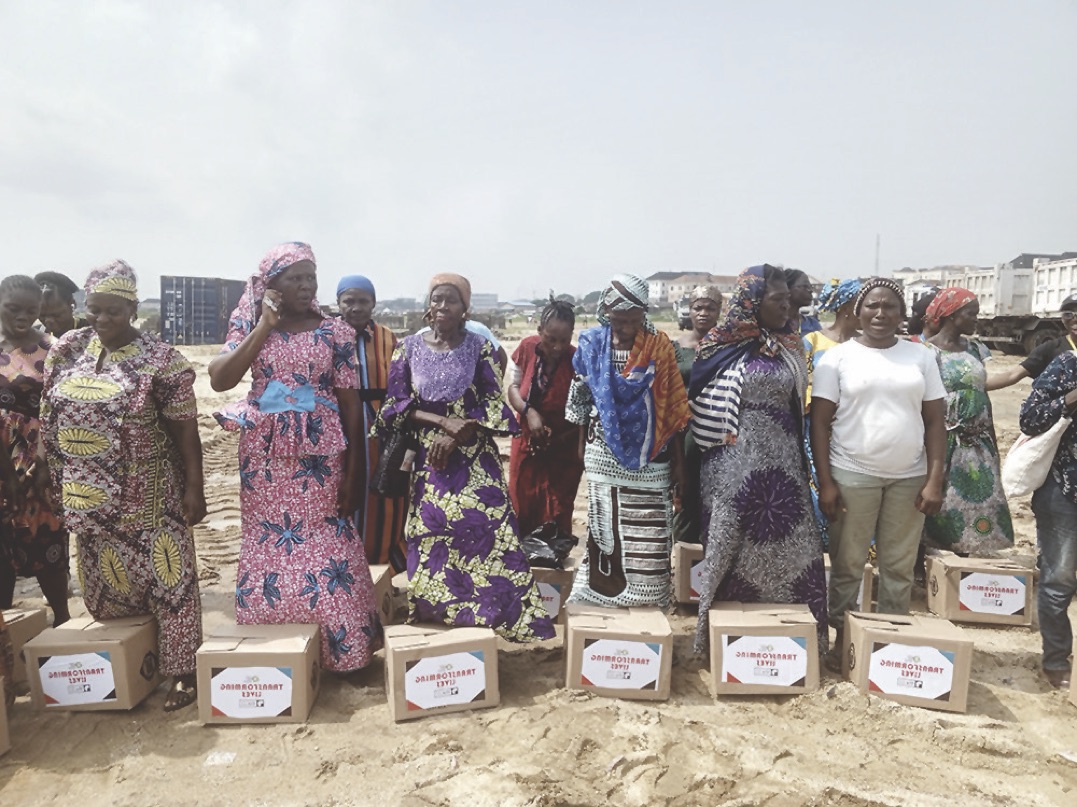
In a season defined by rising prices, shrinking household incomes and deepening food insecurity, a quiet act of relief unfolded in Ebute Metta, one of Lagos Mainland’s oldest communities. For hundreds of families, the distribution of food supplies on December 12 offered more than temporary nourishment; it provided reassurance that they had not been forgotten.
The outreach, carried out under the Temporary Food Assistance Programme (TEFAP), reached 200 households identified as among the most vulnerable in the community. Beneficiaries included retirees, widows, informal workers and low-income earners who have borne the brunt of Nigeria’s prolonged economic strain.
At the centre of the operation was the Lagos Food Bank Initiative (LFBI), an organisation that has spent more than seven years building networks across underserved communities in the state. Its executive director, Michael Sunbola, described the intervention as timely, given the sharp rise in food prices and the added pressure many families experience during the festive season.
Despite Lagos’ reputation as Nigeria’s economic nerve centre, Sunbola noted that hardship is widespread. A significant proportion of residents, he said, live with overlapping forms of deprivation that make consistent access to food increasingly difficult. In such circumstances, he argued, food assistance is not charity but a necessary response to an urgent social need.
The distribution was deliberately structured to avoid chaos. LFBI relied on a pre-registration system familiar to residents, a process designed to ensure transparency, dignity and order. Long before the distribution date, beneficiaries had been identified and informed, helping to prevent crowd-related incidents that often plague food relief efforts.
Other News
Each food box contained staple items intended to support a family of five for several days. While modest in scale relative to the level of need, the supplies provided immediate relief at a time when many households face difficult choices between food, transport costs and other basic necessities.
Ebute Metta was selected because of its dense concentration of at-risk residents. Split into East and West, the neighbourhood is historically significant and commercially active, with busy markets, small-scale food processing and textile trading. Yet behind this activity lies persistent economic vulnerability, particularly among older residents and informal workers.
For many recipients, the assistance eased both financial and emotional strain. Mrs. Silifat Opeyemi, one of the beneficiaries, said the food items would help her family manage through the festive period. She described the gesture as a rare moment of relief amid ongoing hardship.
Beyond individual stories, the exercise highlighted broader questions around food security and social responsibility. Food, as LFBI has often emphasised, is not only about survival. Adequate nutrition supports health, preserves dignity and contributes to social stability, especially in densely populated urban communities.
The organisers of the outreach indicated that similar initiatives may continue in the future, with an expanded reach, if resources allow. While such interventions cannot resolve systemic poverty, they demonstrate how coordinated action between community organisations and private entities can offer practical support where it is most urgently needed.
In a period marked by economic uncertainty, the Ebute Metta distribution stood as a reminder that targeted, well-organised relief can make a tangible difference, one household at a time.