Follow Us on Google
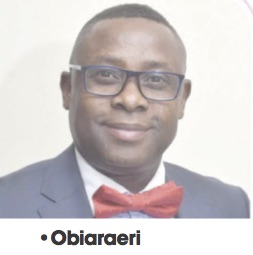
From Juliana Taiwo-Obalonye
Dr. Nnaemeka Obiaraeri, a development economist and investment banking executive has picked holes in the explanation given by the Federal Government on the emergency $3.3 billion loan secured by the Nigerian National Petroleum Company Limited (NNPLC), saying it is weird and makes no sense.
Also, the former vice president, Atiku Abubakar, is calling on President Bola Tinubu, to clarify the humongous sum emphasising that the money, with an interest rate not exceeding 12% is expected to be repaid with the nation’s crude oil valued at $12 billion. He insisted that an explanation by the Tinubu administration for such a significant financial undertaking is needed.
In this Interview with Arise News Television, Obiareri speaks more onthe money.
Excepts:
What’s your thinking about the some of the answers provided to the questions raised by the main opposition leader about the $3.3 billion emergency loan and repayment plan of $12 billion worth of crude?
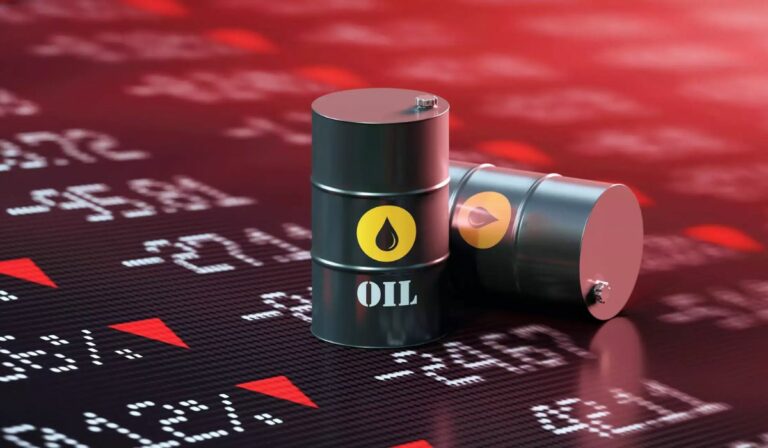
The answers provided does not make any rational sense to any honest and sincere investment banking executive, or even a normal person that reasons rationally. What are we talking about here? Nigeria wanted to borrow $3 billion from Afriexmbank, to shore up our reserves to help protect the naira from the downward spiral that it has been going over the last six months. And then somebody is telling us that they’re going to secure it with 167 million barrels of crude oil, valued at today’s market price at $12 billion. Somebody needs to make that make sense to me. Is the crude oil part of a collateral that will be returned to Nigeria? Or are we exchanging $12 billion worth of crude oil in today’s market value for $3 billion at 12% interest rate? It does not make sense.
Nigeria is a sovereign nation, Nigeria is not one special purpose vehicle that was incorporated somewhere in Somalia or Yemen. 12% interest rate to a sovereign nation like Nigeria as interest rate and of course, there are been hush sounds that fees in excess of over $100 billion were paid, that one had not been clarified. It does not make sense. Nigeria, as at today, has capacity to borrow $3 billion without the kind of convoluted structure that they put in place just like what they did over this.
The other day they told us they wanted to structure $7 billion against dividend receivables of Nigeria’s shares in the Nigerian Liquefied Natural Gas, which is okay. Borrowing against dividend payments which simply means of course, the LNG have been very profitable over time. And that is what we are also expected of the NNPCL. If the federal government of Nigeria is very sincere, they should divest at least 55% of their holdings from the NNPC and allow private sector investors so the NNPC can become more transparently run without interference from the political cycle, National Assembly, everybody inviting them to harass them. In such a way we can also be talking about borrowing against NNPC dividends, but the truth of the matter is that it does not make sense.
Remember that our daily output now is about 1.3 million barrels. We’re even projecting to increase 1.7, 1.8 million barrels a day. That simply means we get over 35% of our annual crude oil output just to secure $3 billion loan, it does not make sense at 12%. In fact, that structure, whatever arrangement that they’ve made, does not make sense to national reasoning Nigerian, it does not make sense.
What do you make of the $65 per barrel used to calculate the allocated 90,000 barrels of oil per day, which will be used daily until we’re able to get the total that have been calculated? Is that very reasonable or do you think it should have been higher than that to reflect the current prices?
Let me tell you, it is very unreasonable. What has been the average price of the crude oil daily prices over the last one year? Let us do some trend analysis simulation. And what is the projection going into the next two, three, five years depending on the tenure of the arrangement? Come on. Look at it from May 29 2023, the naira has crashed from N765 to $1 when it was devalued, to date close at 1,515 to $1 in the parrell market and it is something dangerous that we’re seeing here. There’s no liquidity in the market, dollar liquidity. Let me explain to you what is happening here, a serious country, a serious government, we would have done simple things.
Why are we having so much pressure on the dollar, it simply means that the demand for the dollar far outweighs the supply.
And what is driving this demand? We have outstanding obligations within the banking system. Outstanding LC obligations that are even ranking over the last three years of almost about $8 billion. Even the airlines have over $700 million out there. A serious government would have simply done an inquest. Okay. The bank what do we have? We have in the portfolio $8.5 billion that had to be liquidated, these are lawful, fully transacted obligations that are being owed by enterpreneurs in Nigeria through the banking system. How do we raise money to wipe this out? When you clear these obligations, you set the ground floor at the same level and people begin to plan their purchases, manufacturing, their raw material purchases on an even scale.
Today, we have three issues pursuing the dollar. We have a speculating demand, and the speculative demand here is because most investors, even Nigerians, have lost confidence and trust on the ability of those who purport to govern it and even the institutions to stabilize this market.
Two, which is the most dangerous, the corruption demand for the dollar, which is very dangerous. Look at it nation wide from the federal government to the state government total budgetary expenditure provision they’ve made is about 40 to 45 trillion if the aggregate 28.7 trillion budget proposal by the federal government had been passed and the states. And I tell you, over 60% of this monies annually are stolen. So we’re looking at critically over $24 trillion that have been taken out.
When you say 60% of this budget has been stolen you what do you mean?
Okay so, let me give you a practical example. The EFCC Chairman told us on national TV during his screening that between 2008 and 2020 over N2.9 trillion was stolen, fraudulently taken through contract over-invoicing that is just one overhead. Well, let me explain to you what is happening here. Do you think that the naira is going where it is going because it is being demanded by those seeking for lawful transaction? The answer is no. In 2022, we imported $53 billion worth of goods into this country, calculated. Now, is Nigeria a country that cannot easily generate between $100 to $200 billion on an annual basis? The answer is no. But the question is what are we doing to shore up the supply of the dollar. From the foreign diaspora alone, we can easily get claims of up to $50 billion. But we need to put in place the right constitutional, fiscal structures in place to allow this thing happen.
I listened to your last guest that left your studio, Nigeria is one country that can produce over $200 billion of agro commodities across the value chains from the upstream and the downstream areas. But why are we not producing even enough to feed this country? Because of insecurity, because of structural deformities, because of corruption in the public sector.
I give you one example on rice value chain, in 2015, a bag of rice was selling for 8,500 of 50kg. Today, it is N45,000, N50,000 and we were being regaled with stories of how CBN gave out N1.3 trillion to rice farmers. Today in Nigeria, we consume about 7.4 million tons of rice every year. We got about 3.8 million. Rice is something you can grow twice in a year for us to cover the supply gap domically in Nigeria, all we need to do is scientifically and structurally over the 8,809 electoral wards in Nigeria, cultivate one million hectares of the new giri specie rice, farm under a structured arrangement in one year, we will cover the supply gap, when supply is more than demand, prices will come down.
Very interesting perspective you’ve got there but back to this $3.3 billion loan. We thought that the federal government having access this money and had it and with what we heard yesterday that $500 million was released to shore up the issues of the forex that by now, the naira to dollar exchange rates should been in favour of the naira. But you and I know that it’s about 1,500 plus at the moment. So can we actually say that the federal government has answered Atiku Abubakar’s question about if the money has been assessed by the government?
They’ve not answered the question. Okay, I am saying this you know, actually that there are over $8 billion letter of credit obligations in the banking system, transaction that were consummated when the naira to the dollar was at N430. Manufacturers have imported raw materials, they’ve produced, they’ve sold. So the margins already determine, taxes paid. Now, these are obligations. Today, dollar is going for N1,515, which simply means the average manufacturer already exposed this thing will be wiped out. Basically, if you have these obligations, what do you do as a government that is right thinking that has very creative minded? You would think about how you can ensure supply of the dollar to be able to clear that obligation that are existing and provide a level playing ground for every productive entrepreneur within the system. Borrowing $3 billion under a convoluted and structured arrangement that will cost Nigeria $12 billion worth of crude oil almost 30% of our annual outputs when they are still obligations outstanding let me tell you, it will not solve the problem. Even if they pump the whole $3 billion into the system. There is still about $5 billion left.