Follow Us on Google
The federal government has renewed its push for stronger strategic partnerships to unlock Nigeria’s livestock potential as it moves to expand fodder production and strengthen value chains across the sector.
The Minister of Livestock Development, Alhaji Idi Maiha, gave this indication in Abuja during a meeting with an international delegation led by Safia Boly, Senior Vice President for Africa at Heifer International.
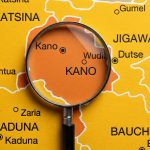
The minister said Nigeria’s abundant natural resources, including major dams in Kano State such as the Challawa and Bagauda, could support large-scale fodder cultivation, and disclosed that the ministry was considering dedicating some of the water resources exclusively to fodder production.
He said the ministry was also working to resolve challenges around quality seed acquisition through partnerships with development organisations, while drawing lessons from successful livestock models in East Africa, particularly Kigali, to adapt to Nigeria’s local realities.
Maiha called on the delegation to reconsider supporting the forthcoming National Livestock Education and Business (NLEB) initiative, describing it as a cross-cutting programme capable of leaving a lasting legacy in the country’s agricultural transformation.
He disclosed that Nigeria was witnessing growing investor confidence in the livestock sector, citing a $490 million dairy financing initiative backed by the Nigeria Sovereign Investment Authority, which followed President Bola Tinubu’s state visit to the United Kingdom.
The minister also revealed that a private investor was working with the ministry to establish a 10,000-head cattle project on more than 6,000 hectares of land, which would include a livestock training institution alongside commercial farming operations.
According to him, discussions were ongoing to position Nigeria as a major supplier of livestock products to Gulf countries, an advantage he linked to the country’s proximity — about five hours’ flight time — compared to competing exporting nations, alongside its natural resources, affordable labour, and political support.
Maiha further highlighted the hides and skins industry, noting that tanneries in Kano process as many as 50,000 goat skins daily, with similar operations in Sokoto and Maiduguri. He directed ministry officials to begin re-establishing a dedicated Hides and Skins Desk to strengthen the value chain, saying organised collection and processing of hides and skins could create thousands of jobs, particularly for young people.
Earlier, Boly told the minister that the delegation’s visit was aimed at deepening strategic alignment and institutionalising a government-led co-investment framework, reaffirming Heifer International’s role as a technical co-investment partner in advancing Nigeria’s livestock and development goals. She proposed a policy alignment mechanism and a direct co-investment arrangement with the ministry.
This was contained in a statement issued by the Deputy Director, Press and Public Relations, Henrietta Okokon.