Follow Us on Google
- As 41.5% met clinical threshold for post-traumatic stress disorder
From Okwe Obi, Abuja
The Federal Government has sought integrated psychosocial and mental health support as a humanitarian response for children affected by conflict, with renewed commitments to community referral pathways, frontline capacity, coordinated data systems and a stronger national response.
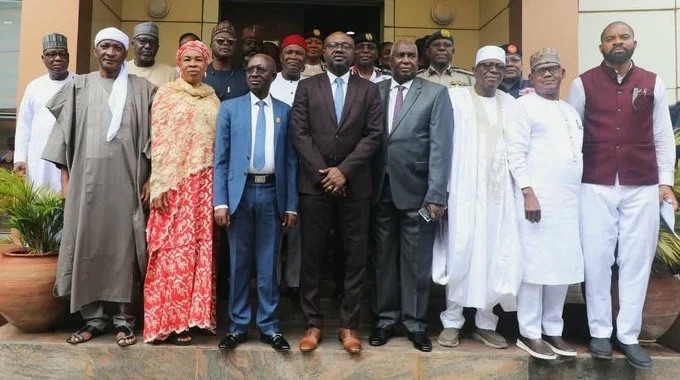
Minister of Humanitarian Affairs and Poverty Reduction, Bernard Doro, made the appeal at the National Policy Dialogue on the Psychosocial Impact of Conflicts on Children in Nigeria, at the University of Maiduguri, Borno State.
Doro, in a statement yesterday by Dr. Abimbola Fasanu, Senior Technical Adviser on Information Systems and Data Analysis, reaffirmed the government’s poise to ensuring that the psychological consequences of conflict received greater attention within humanitarian interventions.
Speaking on ‘the State of Children’s Mental Health in Conflict-Affected Regions of Nigeria,’ the minister said humanitarian response must go beyond meeting the immediate physical needs of children to addressing the psychological wounds left by conflict.
He said: “Our Ministry treats psychosocial wellbeing as central to humanitarian response, not a side issue, connected, through our Humanitarian-Development-Peace approach, to protection, education, nutrition and household stability.
“A child who has been fed but not healed in mind has not truly been rescued.”
According to him, the scale of psychological distress among children exposed to conflict demands deliberate and coordinated action.
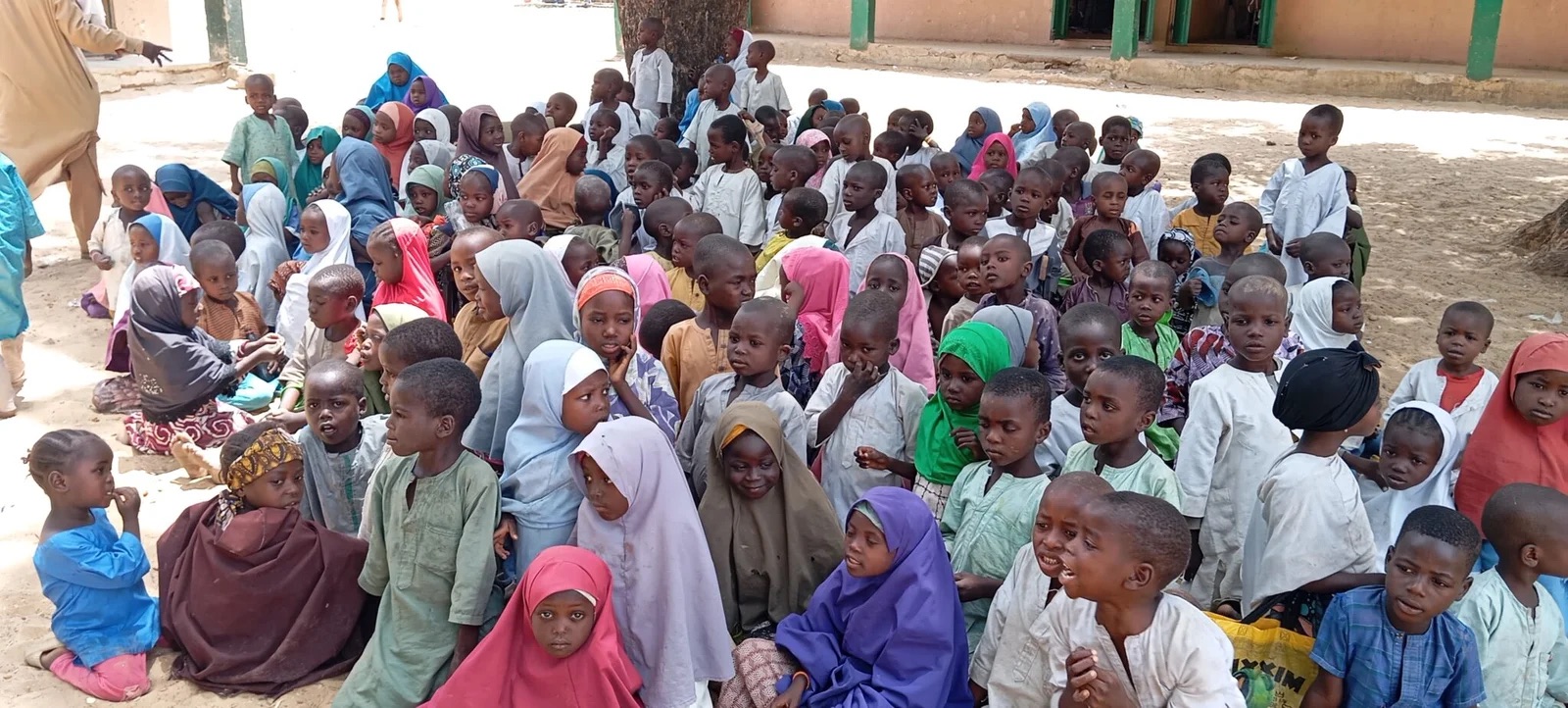
Citing research findings, Doro said a field study among children in Chibok found that 41.5 per cent of children exposed to the Boko Haram insurgency met the clinical threshold for post-traumatic stress disorder.
He added that a separate national study of displaced Nigerian children reported PTSD at 79.7 per cent, depression at 84.8 per cent and functional impairment at 90.7 per cent, while a continent-wide analysis placed PTSD among conflict-exposed African children at approximately 36 per cent.
“This is a documented, measurable pattern, not an isolated tragedy,” the Minister said.
Doro said the consequences behind the statistics could be seen in children experiencing anxiety, anger and persistent hyper-vigilance, particularly across conflict-affected communities in Borno State and other parts of the country.
He said the challenge reinforces the need for the One Humanitarian, One Poverty Response System (OHOPRS), which is being developed to strengthen coordination across humanitarian response, social protection and poverty reduction systems.
“This is why we are building One Humanitarian, One Poverty Response System (OHOPRS), so a distressed child identified in a Maiduguri school is not lost in a system that does not talk to itself,” he said.
The Minister announced four areas of commitment arising from the dialogue.
He said the Ministry would work with the Office of the Special Adviser to the President on Health (OSAP-H) and the health sector to strengthen community referral pathways, ensuring that psychological distress identified in schools, camps and communities becomes a pathway to appropriate care.
He also said that through OHOPRS and the National Social Registry, the Government would work to better identify trauma exposure alongside economic vulnerability, while supporting the training of frontline humanitarian workers and teachers to recognise and appropriately respond to children experiencing distress.
“A child spends more hours with a teacher than a therapist,” Doro said.
The Minister further committed to driving, in collaboration with relevant institutions, a coordinated national response and supporting the implementation of strong policy outcomes arising from the dialogue to change the state of children’s mental health in conflict-affected regions of Nigeria.
Doro stressed that investment in children’s psychological recovery should not be regarded as charity, but as an investment in Nigeria’s long-term social stability, education, health and security.
“Untreated trauma in a generation of children is a cost that returns to our schools, our clinics and our security for decades. Every naira spent healing a child’s mind today is one we will not spend containing that wound twenty years from now.
“Behind forty-one per cent, seventy-nine per cent, ninety per cent, is a specific child with a name, waiting to see if we mean what we say.
“Let this dialogue mark the point where we stopped naming this burden and started, deliberately, to lift it,” the Minister stated.
He thanked Salma Ibrahim Anas, Special Adviser to the President on Health, for convening the dialogue, as well as the Office of the National Security Adviser, North East Development Commission, Federal Ministry of Humanitarian Affairs and Poverty Reduction, Governor Babagana Zulum of Borno State and the University of Maiduguri for their roles in the engagement.