Follow Us on Google

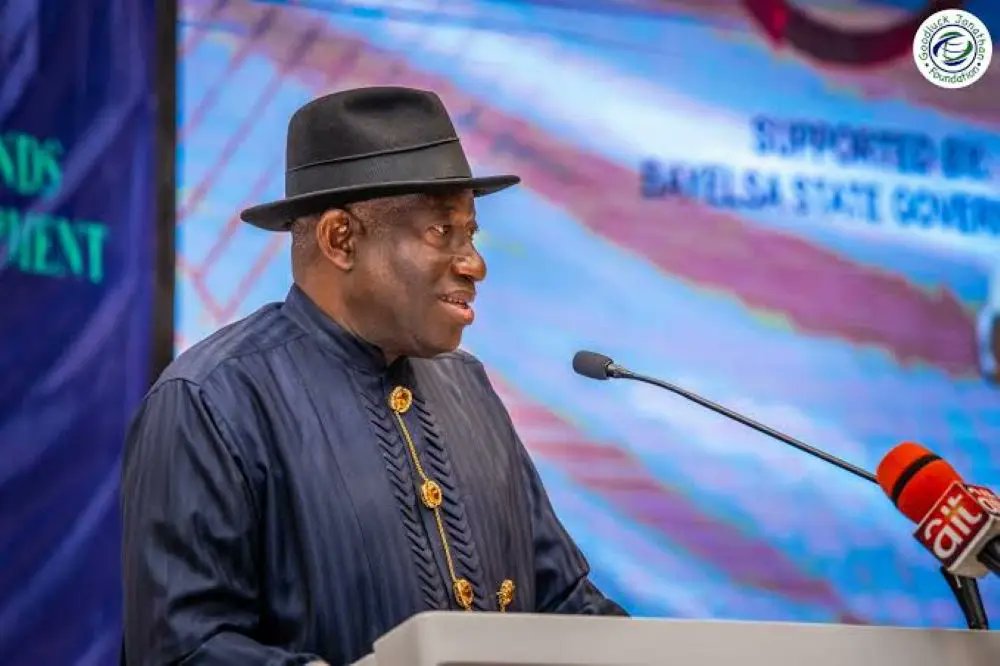
Former President Goodluck Jonathan has warned politicians against allowing their ambitions for power to threaten Nigeria’s unity, urging them to embrace tolerance, peaceful competition and respect for democratic principles ahead of the 2027 general elections.
He cautioned that political intolerance, ethnic rivalry and electoral violence could plunge the country into crisis, expressing concern over the growing use of youths as instruments of political thuggery.
Jonathan spoke at the third edition of the Peace and Security Conference organised by the Goodluck Jonathan Foundation in Abuja, with the theme, “Safeguarding Peace and Strengthening Social Cohesion in a Competitive Political Environment.”
“We must never allow political ambition to undermine the bonds that hold us together as one nation and in our states,” he said.
The former president also expressed concern over controversies surrounding judicial pronouncements, particularly conflicting decisions by courts of coordinate jurisdiction, warning that such developments could erode public confidence in the judiciary and encourage citizens to resort to self-help.
“When citizens begin to lose faith in the courts and resort to self-help, the consequences can be disastrous. The descent from a loss of confidence in institutions to anarchy is a danger we must collectively prevent,” he said.
He urged political actors to respect opposing views and recognise the right of others to seek political office, calling on Nigerians to prioritise competence, national interest and service over prejudice and personal ambition in choosing their leaders.
Meanwhile, the Chairman of the Independent National Electoral Commission (INEC), Prof. Joash Amupitan, threatened legal action against political parties, candidates and their supporters involved in violence, intimidation and inflammatory campaigns ahead of the elections.
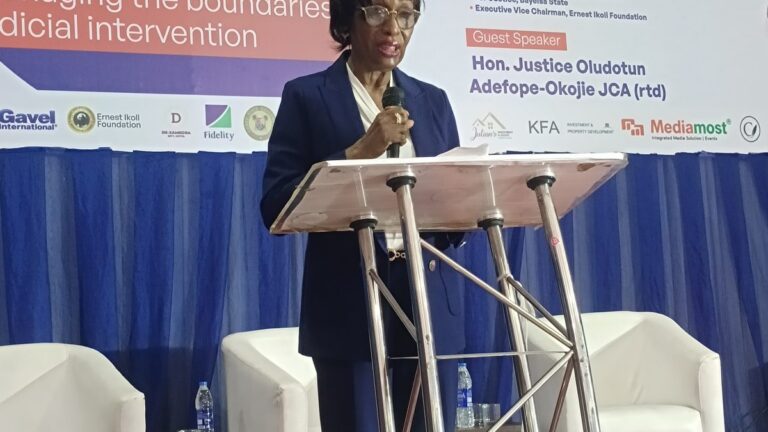
Represented by INEC National Commissioner, May Agbamuche-Mbu, Amupitan said political competition naturally involved vigorous debates, sharp disagreements and passionate mobilisation, but warned against allowing these to degenerate into violence and lawlessness.
He also warned against harassment, intimidation and physical attacks on INEC officials and ad hoc election workers, insisting that offenders would face legal consequences.
“I must sound a stern warning against any form of harassment, intimidation, or physical attack directed at the leadership, staff, or ad hoc workers of INEC by supporters of any political party—whether within Nigeria or abroad.
“Election officials are public servants discharging a sacred constitutional duty; assaulting or threatening them is an assault on the Nigerian state and will be met with decisive legal consequences,” he said.
Amupitan identified misinformation, disinformation, artificial intelligence-generated content, deepfake videos and cloned voices as emerging threats to peaceful elections, warning that fabricated information could trigger unrest within minutes.
He disclosed that INEC had established a dedicated Artificial Intelligence Division within its ICT department to monitor digital threats and verify online information.
The INEC chairman reaffirmed the commission’s commitment to neutrality and peaceful, credible and inclusive elections. The presidential and National Assembly elections are scheduled for January 16, 2027, while the governorship and state assembly elections will hold on February 6, 2027.
In his keynote address, former President of the ECOWAS Commission, Dr Omar Alieu Touray, warned against allowing political competition in Africa to degenerate into ethnic, religious and regional divisions.
He argued that democracy should be driven by competing ideas and development programmes rather than identity politics.
“Competition is the lifeblood of democracy. It is the mechanism through which citizens express preferences, debate ideas and hold leaders accountable. We must never confuse political competition with political conflict,” Touray said.
He said there was a fundamental difference between disagreeing with an opponent’s policies and denying the person the right to govern on the basis of ethnic, religious or regional identity.
“There is a profound difference between saying, ‘I disagree with your policies,’ and saying, ‘Because you belong to a different ethnic, religious or regional community, you do not have the right to govern me.’ The first is democracy. The second is exclusion masquerading as democracy,” he said.
In a goodwill message, the Minister of Defence, Gen. Christopher Musa (retd.), urged political leaders to demonstrate restraint, maturity and statesmanship, warning against hate speech, misinformation and inflammatory narratives capable of exploiting the country’s ethnic, religious and political divisions.
Represented by his Special Adviser on Strategic Communication, Mercy Ndi Bala, the minister said national security went beyond military deployment and equipment, stressing that public trust, social cohesion and cooperation between communities and security agencies were equally critical to maintaining stability.
He called for a whole-of-government and whole-of-society approach to security involving government institutions, traditional and religious leaders, civil society organisations, the media and young people.
Earlier, the Executive Director of the Goodluck Jonathan Foundation, Ann Iyonu, raised concerns over declining public confidence in Nigeria’s electoral process.
She cited a 2026 Afrobarometer survey released on November 11, which indicated that fewer than four in 10 Nigerians believed the 2027 elections would be free and fair.
Iyonu warned that the credibility of the elections would have implications beyond Nigeria, given the country’s economic influence and strategic importance to regional security.