Follow Us on Google

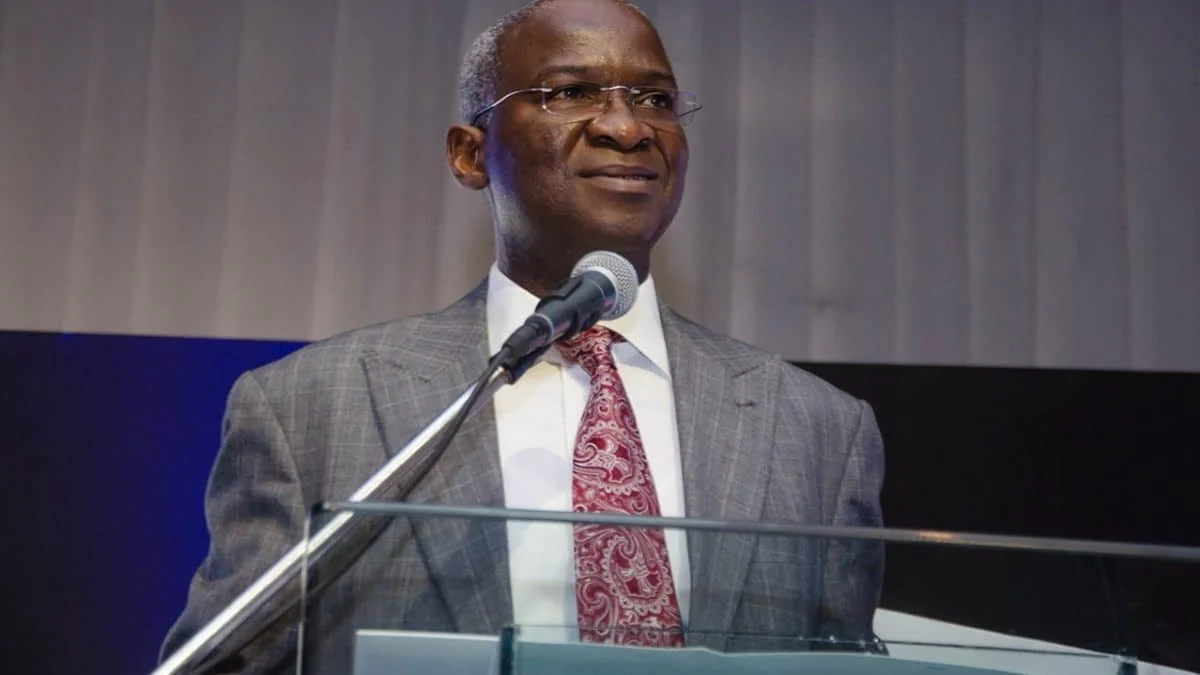
Former Lagos State Governor, Babatunde Fashola, has attributed part of Nigeria’s cost-of-living challenges to global economic pressures, pointing to the effects of the COVID-19 pandemic, the Russia-Ukraine war and conflicts in the Middle East.
Fashola argued that rising living costs were not peculiar to Nigeria, noting that disruptions to international energy and food supply chains had affected economies across the world.
He made the remarks on Tuesday while appearing on Channels Television’s Politics Today, where he defended the economic policies of President Bola Tinubu’s administration.
“There is no need to deny that the cost of living is now a global challenge. Any right-thinking person will concede to that, and Nigeria is not immune to that challenge,” he said.
The former Minister of Works and Housing explained that the global economy was still dealing with the consequences of the COVID-19 pandemic, which disrupted production and supply chains.
He also identified the Russia-Ukraine war as a factor affecting the availability and prices of essential commodities, particularly energy and food products.
Fashola further pointed to tensions and conflicts in the Middle East, arguing that developments in the region had implications for international energy markets and the cost of transporting goods.
To illustrate how global events influence local prices, he referred to the Strait of Hormuz, a major international shipping route for petroleum products.
Other News
“Even the tomato seller knows the Strait of Hormuz and prices his or her goods according to replacement costs now,” he said.
His comment suggested that traders were adjusting prices based on the cost of replacing goods, which could be influenced by developments in international markets.
Fashola also defended some of the Tinubu administration’s measures to ease the pressure on households, including the minimum wage review, the Nigerian Education Loan Fund (NELFUND), tax reforms and the introduction of compressed natural gas (CNG).
He said the interventions were intended to address expenses affecting families, including transportation, education and other basic needs.
However, the former governor acknowledged that the measures had not yet provided sufficient relief to Nigerians, stressing that there was a difference between announcing policies and delivering their intended benefits.
“I’m not saying it is enough. There are initiatives like the introduction of CNG, but there’s a distance between policy, between programme, between projects and resources,” he said.
Fashola added that the implementation of the programmes was progressing gradually and expressed confidence that their effects would become more visible over time.