Follow Us on Google

From Juliana Taiwo-Obalonye, Abuja
The Federal Government has announced plans to establish at least one Sexual Assault Referral Centre in each of Nigeria’s 774 local government areas, amid concerns that only 52 such facilities currently serve a population of more than 240 million people.
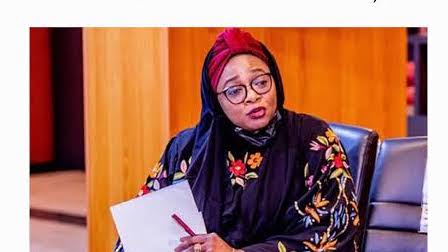
Minister of Women Affairs and Social Development, Imaan Sulaiman-Ibrahim, disclosed this in Abuja yesterday at a press conference to launch the 2026 edition of the 16 Days of Activism Against Gender-Based Violence.
She said the existing facilities were grossly inadequate to meet the needs of survivors of sexual and gender-based violence, many of whom lacked access to medical treatment, psychosocial support and justice.
The minister said the Federal Government was working with state governments to establish the centres nationwide, with the possibility of extending the facilities to all electoral wards. “For a nation of over 240 million people, 52 centres are grossly inadequate. We are actively working with state governments to ensure that at least one Sexual Assault Referral Centre is established in every local government area across the country.
“Indeed, nothing stops us from eventual establishment of a sexual assault centre in every ward,” she said.
Sulaiman-Ibrahim disclosed that gender-based violence was costing Nigeria an estimated 1.5 per cent of its Gross Domestic Product, equivalent to approximately $3 billion annually, through lost productivity, healthcare expenses and disrupted livelihoods.
She cited national data indicating that nearly one in three Nigerian women aged between 18 and 49 had experienced physical or sexual violence, while more than 27,000 cases of sexual and gender-based violence were documented during a recent reporting period, with many others believed to have gone unreported.
Describing the situation as a national emergency, the minister said the country must move beyond annual awareness campaigns to ensure effective protection for survivors, prosecution of offenders and accountability for institutions responsible for enforcing existing laws.
“This is not just another global slogan or call. It is a clear demand to move beyond empty awareness and deliver real justice, real protection for survivors and an absolute end to impunity across our beloved country,” she said. The 2026 campaign, themed “Unite to End Violence Against Women and Girls: Ensure Justice, Protect Survivors and End Impunity,” runs from November 25 to December 10.
The minister said the government was pursuing a coordinated response through the Renewed Hope Social Impact Intervention 774, a nine-pillar framework designed to reach 50 million women, children and vulnerable Nigerians across the country’s 774 local government areas.
She identified economic inclusion, clean energy, digital literacy, agriculture, healthcare, social protection, affirmative procurement, leadership and family development as the major intervention areas.
Under the initiative, she said the government planned to empower five million women through the Nigerian for Women Programme, while the Happy Women Platform and App would enrol 10 million women to improve financial literacy, savings and enterprise development.
She added that the Digital Harmony initiative would train five million women in essential digital skills, while the Women Rise, Innovate and Create programme would support three million women in the creative economy.
The minister also highlighted the Power of 10 Million initiative, designed to organise women into grassroots groups for savings, credit access, cooperative enterprises, mutual protection and civic participation.
On legal protection, Sulaiman-Ibrahim said the Child Rights Act had been domesticated in all 36 states, while the Violence Against Persons (Prohibition) Act had been domesticated in 35 states.
She said the ministry was working to strengthen enforcement, address implementation gaps and review the National Gender Policy, which expires this year.
The minister also announced efforts to strengthen the National Boy Child Policy, arguing that protecting boys alongside girls was necessary to break the cycle of intergenerational violence.
“For decades, social interventions have largely focused on the girl child. Yet, we can no longer ignore the rising school dropout rates, substance abuse, street vulnerabilities and social neglect confronting our boys.
Other News
“By intentionally mentoring, protecting and empowering the boy child alongside the girl child, we are breaking the cycle of intergenerational violence at its roots and raising responsible men who will become true partners in building peaceful homes and a secure nation,” she said.
She further disclosed that the Federal Executive Council had approved the National Strategy and Costed Action Plan on Ending Child Marriage in Nigeria, 2025–2030; the National Policy on Menstrual Health and Hygiene Management, 2026–2030; and the National Care Policy and Implementation Plan, 2026–2030.
According to her, incentives approved by President Bola Tinubu for local manufacturers of sanitary products would help reduce dependence on imported menstrual hygiene materials.
Sulaiman-Ibrahim also announced that the national Gender-Based Violence Electronic Dashboard and Situation Room had become operational to strengthen data collection, coordination, evidence-based interventions and accountability.
“The time for silence is over. The time for collective action is now. Let us unite to end violence against women and girls, ensure justice, protect survivors and end impunity,” she said.
In separate goodwill messages, representatives of United Nations agencies and development partners called for stronger enforcement of existing laws, adequate funding and improved survivor-centred services.
UN Women Country Representative to Nigeria and ECOWAS, Beatrice Eyong, represented at the event, reaffirmed the organisation’s commitment to supporting the Federal Government, noting that approximately 840 million women globally, representing one in three, had experienced physical or sexual violence.
She identified intimate partner violence, rape, sexual assault, child marriage, female genital mutilation, trafficking, sexual harassment, harmful traditional practices and technology-facilitated violence as major forms of abuse.
A representative of International IDEA, speaking on behalf of its Head of Programmes in Nigeria, Danladi Plang, said the fight against gender-based violence must extend beyond the annual campaign.
She condemned the tendency to blame rape survivors for their dressing, pressure abused women to remain in violent relationships and force girls into early marriage.
The representative urged the government to ensure that justice did not depend on survivors’ social or economic status.
The United Nations Population Fund (UNFPA) representative called for stronger implementation of existing laws, prevention programmes and improved access to essential services.
She disclosed that UNFPA had worked with universities to institutionalise training on gender-based violence in emergencies, with 28 participants completing the programme the previous week.
The United Nations Children’s Fund (UNICEF) representative, Wafaa Abdelatef, who was also represented, urged the media to protect survivors’ identities and dignity, challenge the normalisation of violence and hold institutions accountable.
The SPRiNG Programme team leader said conflict, displacement and climate pressures continued to expose women and girls to abuse by disrupting livelihoods and weakening community protection systems.
He disclosed that the programme was collaborating with community leaders, legal practitioners and the Nigeria Police Force to improve referrals, provide free legal assistance and strengthen forensic evidence gathering.
Similarly, Programme Director of Daisy Hope Foundation, Kiema Ogunlana, called for improved services for women and girls in underserved communities, particularly persons with disabilities.
Director-General of the Maryam Babangida National Centre for Women Development, Adedayo Benjamins-Laniyi, stressed the need to translate existing laws into practical protection at the grassroots, citing the centre’s collaboration with UN Women on a 220-hour Guinness World Record attempt involving the reading of African laws against sexual and gender-based violence.
The minister urged stakeholders to sustain the campaign beyond its 16-day duration, insisting that the country needed 365 days of action against gender-based violence.