Follow Us on Google
From Fred Ezeh, Abuja
The Federal Ministry of Health and Social Welfare has announced that it’s spearheading the national rollout of the Pluslife Mini Dock diagnostic platform for Tuberculosis (TB) testing in the country.
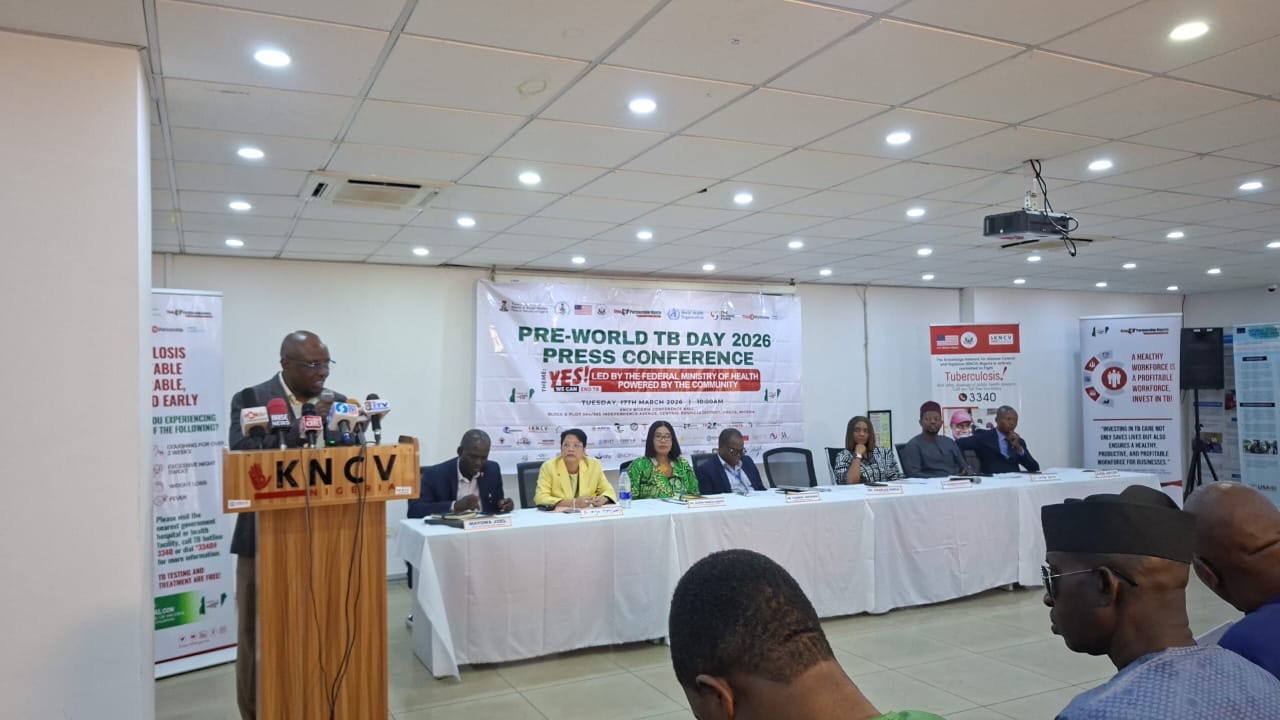
Director of Public Health in the Ministry, Dr.Charles Nzelu, stated this at a press conference to herald the 2026 World TB Day with theme “Yes! We Can End TB” in Abuja, on Tuesday.
He explained that the near-point-of-care technology is a game-changer that allow care givers to bring molecular-grade testing to the most remote communities, ensuring that no Nigerian is left behind due to location.
He said: “Nigeria is rolling out over a thousand of this diagnostic equipment. But technology is only as strong as the systems that support it. We are currently focused on strengthening our electronic reporting systems to ensure real-time data flow from the facility level to the national dashboard.
“This transparency allows us to manage our supply chain effectively and prevent stock-outs of lifesaving medicines. Our progress is ‘Powered by People’ notably, the community health workers, the brave TB survivors who act as treatment supporters, and the journalists who help to fight the stigma that still prevents many from seeking care.”
He further challenged the media to spread the information that TB diagnosis and treatment in Nigeria are free, hence no Nigerian should pay for the services at any government-approved facility. “TB is curable, and the medicine is available.”
He also appreciated the support of all the partners through the Global Fund and other channels. “We must continue to accelerate our investments in local manufacturing and sustainable systems.”
Other News
The Board Chairman, Stop TB Partnership Nigeria, Dr. Queen Ogbuji-Ladipo, in her remarks noted that TB remains one of the leading infectious diseases globally, and Nigeria continues to bear a significant share of the burden. “But despite the challenges, we have made important progress through partnerships, innovation, and sustained advocacy.
“In Nigeria, the fight against TB has been strengthened through the collective efforts of the Federal Government, the National TB Program, development partners, civil society organisations, community groups, healthcare workers, researchers, and the media. Their dedication has expanded TB detection, improved access to diagnosis and treatment, and strengthened community engagement across the country.
“Stop TB Partnership Nigeria has also played a catalytic role through high-level advocacy, stakeholder engagement, and strategic partnerships. In recent years, we have witnessed remarkable milestones. These include the mobilization and engagement of high-level TB champions at the national, state, and local levels; strengthened collaboration with government and private-sector actors; increased advocacy for domestic financing; and expanded public awareness of TB prevention and care.
“We have also seen growing commitment from state governments, parliamentarians, and community leaders who are increasingly recognising TB not only as a health issue but also as a development and economic challenge that requires urgent and sustained action.
“However, while we celebrate these achievements, we must also acknowledge that much more still needs to be done. The global health financing landscape is changing, and donor support is becoming increasingly constrained. This reality makes domestic resource mobilization for TB more important than ever before. Sustainable financing from government budgets, private sector contributions, and innovative financing mechanisms will be critical to sustaining TB programs and ensuring that no Nigerian is left behind in accessing TB prevention, diagnosis, and treatment services.
Meanwhile, the Acting National Coordinator, National TB, Leprosy and Buruli Ulcer Control Programme, Dr. Clement Adesigbin, in his presentation noted that more cases of TB are being discovered particularly among the children.
He restated the fact that Nigeria has the highest burden of TB in Africa, and sixth in the world. “Nigeria has TB incident of 219/100, 000. An estimated 510, 000 TB cases occurred in 2025 indicating 20 per cent of TB burden in Africa.”