Follow Us on Google


Before the commencement of political campaigns ahead of the 2027 general election, Nigerians had looked forward to a robust, issue-based electoral contest in which political parties and their candidates would engage the electorate on the critical challenges confronting the country and offer credible solutions. At a time when economic hardship, insecurity, unemployment, rising public debt, ethnic divisions and declining public confidence in governance continue to trouble the nation, Nigerians expected those seeking their votes to demonstrate a clear understanding of these challenges and present workable plans to address them.
This expectation is neither unreasonable nor asking too much. Indeed, it is the minimum citizens should demand from anyone seeking the enormous responsibility of governing a country as complex as Nigeria. Those aspiring to public office should be prepared to explain not just what is wrong with the country but what they intend to do about it. Their policies, programmes, ideas, records and capacity to deliver should form the substance of their campaigns.
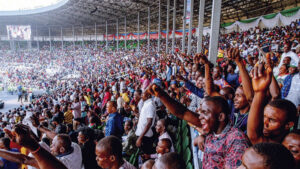
Unfortunately, what is unfolding is a source of considerable disappointment. Rather than seize the opportunity to engage Nigerians on issues that matter to their lives, politicians appear to be drifting towards the familiar and unproductive terrain of personal attacks, insults, mudslinging and political name-calling. The campaign conversation is increasingly being dominated by questions about the health of political opponents, allegations about their past, attacks on their personalities and attempts to ridicule their competence. Those in government are quick to dismiss opposition figures as political rookies, while opposition politicians appear more interested in discrediting the President and his administration than explaining what they would do differently.
This is hardly the kind of political engagement Nigerians need or deserve. It is particularly disappointing that, despite the enormous challenges facing the country, political actors seem more preoccupied with winning arguments against their opponents than presenting ideas that could improve the lives of citizens. Ethnic mobilisation, religious sentiments, personality clashes and political theatrics are once again threatening to overshadow the substantive issues that should define an election of such consequence.
Beyond political rallies, grandstanding and the exchange of insults, voters want to know what each candidate intends to do differently. They want to understand the policies that will drive economic recovery, improve security, create employment, strengthen institutions and restore confidence in government. The central question should not be who can insult an opponent most effectively or attract the loudest applause at a rally, but who has the clearest vision, the most credible programme and the competence to deliver on promises.
By the time Nigerians go to the polls in 2027, they will not merely be choosing a President, governors and legislators. They will be making a critical decision about the future and direction of their country. The election must, therefore, be more than another cycle of familiar political rituals in which candidates spend more time attacking one another than explaining how they intend to govern.
The country’s challenges are too serious, and the consequences of poor leadership too costly, for another election to be reduced to personalities, ethnic calculations, religious sentiments and accusations and counter-accusations. The 2027 election should be a contest of ideas, programmes, records, competence and capacity. It should provide an opportunity for candidates to convince Nigerians that they understand the problems confronting the nation and have realistic, measurable and sustainable solutions.
Candidates must tell Nigerians what they intend to do, how they intend to do it, how much their programmes will cost, where the resources will come from and how their performance will be measured. Campaign promises must go beyond attractive slogans and carefully choreographed speeches. Nigerians deserve specific commitments and practical explanations. Anything less amounts to asking citizens to vote blindly.
For millions of ordinary Nigerians, the economy is not an abstract subject discussed in government policy documents or economic conferences. It is experienced daily at the market, in the cost of transportation, at the filling station, in rent payments, school fees, electricity bills and hospital bills. It is reflected in the purchasing power of workers, the struggles of small businesses, the inability of many families to afford decent meals and the growing number of young people without meaningful employment.
Candidates must, therefore, speak directly to the economic realities confronting citizens. Nigerians want to know what each candidate proposes to do about inflation, food production, the value of the naira, fuel prices, taxation, interest rates, public debt, wages, unemployment and the general cost of living.
It is not enough to promise economic prosperity. Candidates must explain the policies and practical measures through which prosperity will be achieved, the sacrifices involved, the expected outcomes and the safeguards that will protect the most vulnerable.
Other News
The debate must also move beyond simplistic arguments about whether the economic reforms of the Tinubu administration are good or bad. The ruling party has a responsibility to present verifiable evidence of the results of its policies, explain the hardships associated with them and demonstrate how the benefits will ultimately reach ordinary Nigerians. It must be prepared to answer difficult questions about the cost of living, the impact of its reforms on businesses and households and the measures being taken to cushion the effects of economic adjustment.
The opposition, on its part, must do more than condemn the government’s policies. It should tell Nigerians which policies it intends to retain, which it would modify or reverse and what credible alternatives it proposes. Simply declaring that the current administration has failed without presenting a convincing alternative is not a policy position. Nigerians need to know what an alternative government would do differently and why its proposed approach would produce better results.
The persistent threats posed by terrorism, banditry, kidnapping, communal violence and other forms of criminality remain a major source of anxiety. Nigerians want to live, travel, farm, trade and conduct their daily activities without fear. Farmers should be able to access their farmlands, businesses should operate without threats of extortion and communities should not live under the constant fear of attacks.
Those seeking political office must explain their security strategies, including how they intend to strengthen intelligence gathering, improve inter-agency coordination, equip security personnel, address the underlying causes of violence and ensure that perpetrators are brought to justice. Security should not be treated as a convenient campaign slogan or an opportunity to score political points. It is a fundamental responsibility of government.
Unemployment, particularly among young Nigerians, is another issue that deserves serious attention. The country’s youthful population should be an asset for national development, not a source of frustration and hopelessness. Candidates must explain how they intend to stimulate productive investments, support entrepreneurship, improve access to quality education and skills acquisition and create sustainable employment opportunities. Nigerians need jobs that provide dignity and economic independence, not promises of empowerment that disappear after elections.
Equally important are education, healthcare, infrastructure, electricity, agriculture and the overall quality of public services. Nigerians want functional schools, accessible and affordable healthcare, reliable electricity, good roads and an environment in which businesses can thrive. They want a government that recognises the connection between human development and national prosperity.
There is also the critical question of governance, accountability and national cohesion. Nigerians want institutions that work, public officials who are accountable and a political system that serves the collective interest rather than the ambitions of a privileged few. They want to know how candidates intend to tackle corruption, reduce the cost of governance, strengthen the independence of institutions and ensure that public resources are deployed for the benefit of citizens.
The country’s growing debt burden also demands serious attention. Candidates should explain their positions on borrowing, debt servicing, revenue generation and fiscal discipline. Nigerians deserve to know how governments intend to finance development without placing an unbearable burden on future generations.
Beyond these issues, the 2027 campaign should provide an opportunity for candidates to demonstrate their commitment to national unity. Nigeria’s diversity should be a source of strength, not a weapon for political mobilisation. Candidates must resist the temptation to exploit ethnic and religious differences for electoral advantage. The country needs leaders who can rise above sectional interests and inspire a shared sense of national purpose.
This is also where the media and other democratic institutions have an important responsibility. Political parties and candidates should be encouraged to participate in credible public debates where their ideas, policies, records and competence can be subjected to rigorous scrutiny. Nigerians should have opportunities to compare candidates on the substance of their programmes rather than rely on propaganda, sponsored narratives and the noise of political rallies.
A presidential debate, in particular, should be an important feature of the electoral process. It provides an opportunity for candidates to speak directly to the electorate, respond to critical questions and demonstrate their understanding of the issues. It also allows voters to assess not just what candidates promise, but how they think, reason and respond under scrutiny.
Political parties must understand that Nigerians are not merely spectators in a contest for power. They are the people whose lives will be affected by the decisions of whoever emerges victorious. They have a right to demand explanations, question campaign promises and insist on accountability.
The 2027 election should therefore be an opportunity for a serious national conversation about the future of Nigeria. It should compel political parties and candidates to engage with the electorate on the country’s most pressing challenges and offer credible pathways to recovery and development.