Follow Us on Google

By Maduka Nweke
The Federal Government has issued a three-month ultimatum to contractors handling approximately 260 emergency road projects across various states in Nigeria, warning that failure to meet the deadline will result in the revocation of their contracts. The affected projects span across Yobe, Jigawa, Zamfara, Benue, Kogi, Abia, Anambra, Imo, Akwa Ibom, Bayelsa, Cross River, and Rivers States.
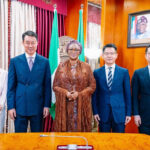
Minister of Works, David Umahi, emphasized the urgency of these projects during a recent meeting with the contractors and the Federal Controllers of Works at the Ministry’s headquarters in Mabushi, Abuja. The Minister noted that these projects, awarded under the Renewed Hope administration of President Bola Ahmed Tinubu, are part of the 2023 Supplementary Budget aimed at providing immediate interventions on severely damaged sections of critical federal roads nationwide.
Umahi stated, “Contractors handling these 260 emergency projects have a deadline of three months to complete and deliver the projects as stipulated by the Standard Conditions of Contract of the Federal Ministry of Works or face contract termination.” He highlighted that this directive comes in response to numerous contractors showing little to no progress on their projects, despite the critical nature of the works.
The Minister outlined specific expectations for the contractors, including the immediate mobilization to project sites by July 10, 2024. Failure to comply with this directive would result in automatic contract termination. Contractors whose projects exceed the three-month completion timeframe must seek and obtain approval for an extension from the Federal Ministry of Works.
Other News
Umahi further warned that excuses such as security challenges or lack of mobilization funds would not be tolerated. “The suffering of road users cannot be justified by such excuses. Contractors who delay projects are a hindrance to the Renewed Hope administration’s efforts to revolutionize road infrastructure for Nigeria’s economic prosperity,” he stated. He expressed frustration with contractors who have historically delayed projects while holding on to mobilization funds under the guise of security issues.
To ensure accountability and progress, the Minister directed the Federal Controllers of Works to supervise projects rigorously. They are to keep detailed records of each contract, including the award amount, date of award, timeline, review dates, and any granted extensions. Controllers are also tasked with verifying whether contractors are actively on site.
In addressing the issue of mobilization funding, Umahi clarified that under the Standard Conditions of Contract, mobilization funding is not a prerequisite for beginning work. Instead, it is at the discretion of the Federal Ministry of Works and will be provided only to contractors who commit to completing their projects within the specified three-month period. “Our new policy requires that if contractors seek mobilization funding, they must agree to specific conditions: no review of the mobilization amount, 30 per cent of the work must be completed before receiving further payments, and no initial mobilization for emergency projects,” he explained.
Contractors will receive 80 per cent payment upon completing the project, with the remaining 20 per cent paid after approval from the Bureau of Public Procurement (BPP).
Permanent Secretary Yakubu Adam Kofarmata, PhD, echoed the Minister’s sentiments, emphasizing the importance of a “Nigeria first” approach. He criticized the practice of contractors delaying project completion while benefiting from the Variation of Price (VOP) and augmentation. “The era of taking the country for granted is over. Contractors must deliver on time and prioritize national interest. Let us put Nigeria first, and progress will follow,” Kofarmata stated.
The Federal Government’s firm stance on these projects underscores its commitment to improving road infrastructure and ensuring that contractors fulfill their obligations promptly and efficiently.