Follow Us on Google
From Juliana Taiwo-Obalonye, Abuja
The Federal Government has inaugurated a Joint Implementation Committee (JIC) to plan a National Digital Literacy Conference and oversee the training and certification of one million Nigerians in digital and emerging skills, saying it aligns with the target of 95 per cent digital literacy by 2030 and strengthening national workforce readiness.
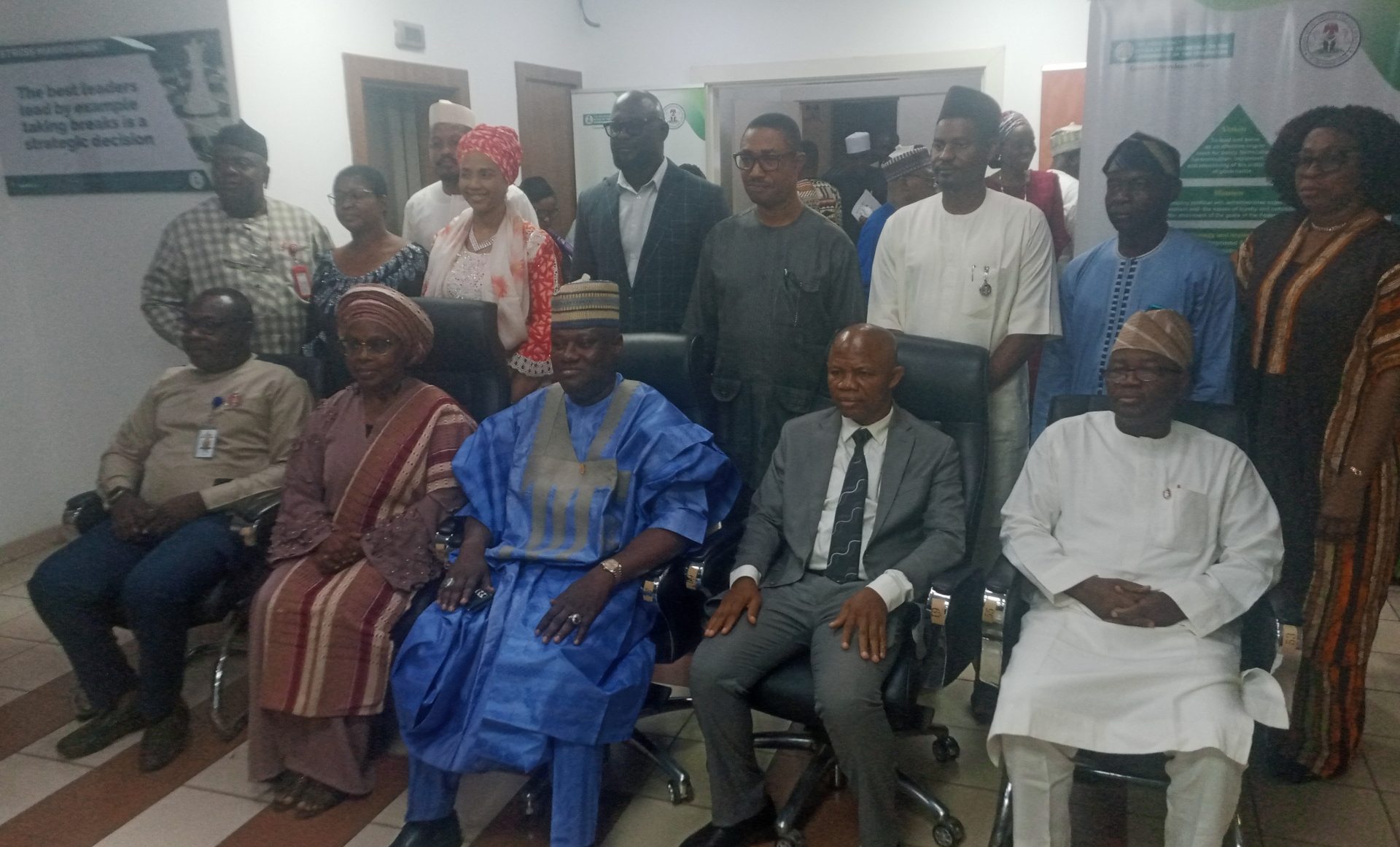
The JIC was inaugurated in Abuja on Tuesday by the Secretary to the Government of the Federation (SGF), George Akume, who was represented by the Permanent Secretary, General Services Office (GSO), Office of the Secretary to the Government of the Federation (OSGF), Ibrahim Kana, during the launch of the ClergyWealth Digital Skills Nigeria (SkillUp) Initiative.
“This inauguration represents a significant milestone in the Federal Government’s deliberate and strategic commitment to deepening national digital literacy, strengthening human capital development, and promoting inclusive digital transformation in line with national development priorities,” Kana said.
He said that the programme aligned with the Federal Government’s Digital Transformation Agenda, the National Digital Economy Policy and Strategy, and the Renewed Hope Agenda of President Bola Tinubu.
He stressed that the initiative, being implemented under the Future Proof Economy (FPE) Model, is fully funded and implemented by ClergyWealth Cooperative Society Limited.
“For the avoidance of doubt… the ClergyWealth Digital Skills Nigeria (SkillUp) Initiative is one hundred percent (100%) privately sponsored, funded, and implemented by ClergyWealth Cooperative Society Limited,” he stated. “The Federal Government of Nigeria bears no financial obligation, budgetary provision, or funding responsibility in respect of this programme.”
Kana said the programme “aligns strongly with the Federal Government of Nigeria’s Digital Transformation Agenda, the National Digital Economy Policy and Strategy, the Renewed Hope Agenda of President Bola Ahmed Tinubu, and Nigeria’s commitment to achieving not less than 95 percent digital literacy by the year 2030.”
He noted that recent decisions of the 13th National Council on Communications, Innovation and Digital Economy (NCCIDE) provided “a strong national policy justification” for the initiative, including the adoption of the FPE Model as the official framework for the National Digital Literacy Framework and the establishment of a Presidential Digital Literacy Management Structure from March 2026.
“The task before this Committee is therefore both national in scope and strategic in importance,” Kana said. “The Joint Implementation Committee is expected to provide leadership, coordination, and oversight for… the planning and organisation of the National Digital Literacy Conference; and the rollout, oversight, and successful delivery of the training and certification of one million (1,000,000) Nigerians in digital literacy and emerging skills under the Future Proof Economy (FPE) Model.”
Members of the committee are drawn from the OSGF, Federal Ministry of Communications, Innovation and Digital Economy, Federal Ministry of Education, Federal Ministry of Youth Development, Federal Ministry of Information and National Orientation, TETFund, NITDA, states and the FCT, ICT professional bodies, NGOs, and ClergyWealth.
Outlining the terms of reference, Kana said the JIC is to ensure policy alignment, coordinate stakeholders at federal and state levels, establish monitoring and evaluation mechanisms, and guarantee inclusivity “with particular attention to youth, women, underserved communities, and persons with disabilities.”
Other News
“Distinguished members, you have been carefully selected based on your expertise, experience, and strategic relevance,” he told the committee. “Nigeria’s digital future, workforce readiness, and global competitiveness depend significantly on the success of initiatives such as this.”
Declaring the committee inaugurated, he said: “It is my singular honour and privilege to formally inaugurate the Joint Implementation Committee (JIC) for the ClergyWealth Digital Skills Nigeria (SkillUp) Initiative under the Future Proof Economy framework and declare the Committee duly constituted and operational with immediate effect.”
Earlier, the Deputy National Coordinator of ClergyWealth Cooperative Society Limited, Rosemary Osikoya, said the ClergyWealth Digital Skills Nigeria (SkillUp) Initiative aims to train one million Nigerian youths for remote work and global tech opportunities through practical digital literacy and certification.
She added that the project will “raise our energy level in terms of digital interest” and make digital skills accessible to ordinary Nigerians. “It’s not something that is out of the reach of everyone,” she said.
Osikoya explained that the programme will go “beyond plain digitalisation” by providing hands-on training in basic digital literacy, digital tools, online safety, and digital entrepreneurship. “One of the desires we have is to strengthen public-private partnerships because of implementation of the digital literacy,” she added.
Each training batch, she noted, will last about six months and cover six modules leading to international certification. “At the end of the phase of the Digital Literacy Academy, we would have trained our one million youth and equipped them for remote work and global tech opportunities across the world,” she said. “They will take international certification exams… and employers outside Nigeria will also trust them.”
To ensure real empowerment, Osikoya said successful graduates will receive personal computers. “What is the point of having digital literacy skills without access to computers?” she asked. “They are required first to get certified… If you finish, the prize at the end of it is that you will have your own personal computer.”
She stressed that the initiative targets clergy, civil society leaders, rural dwellers, and youths across all faiths, describing ClergyWealth as “a humanitarian and mass empowerment-driven social enterprise.” She also lamented that many youths are on social media “most of the time” without earning from it, saying the programme will show them “how to get income, even remotely.”
Beyond digital literacy, Osikoya said ClergyWealth will scale up its artisan empowerment schemes, including the National Sewing Championship and a planned ClergyWealth Artisan Village, as well as provide microcredit and access to a job portal. “Sometimes you need a lot of microcredit to help you support your business,” she said. “There’s a network job portal that’s prepared, where you can get international jobs, mostly from your house.”
The committee, headed by Kana, has Zainab Abubakar Ebi, Mr Ifeanyi Okereke, Joe Odoh, Mohammed Tambuwal, Rosemary Osikoya, and Grace Amaefule as members. Others are Olobashola Kolawole, Bayo Onimode, Mercy Ohikhena, Niran Oyekale, as well as a representative of the Ministry of Communications, Innovation and Digital Economy.