Follow Us on Google
By Damiete Braide
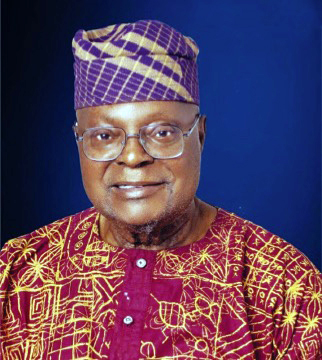
When Nigeria’s literary and theatre communities gathered recently to celebrate the 80th birthday of Emeritus Professor Femi Osofisan, the occasion was far more than a birthday party.
It was a week-long festival of ideas, creativity, scholarship and gratitude dedicated to one of Africa’s most influential playwrights and intellectuals. The celebrations, which spanned Lagos and Ibadan, reflected the immense respect Osofisan commands across generations of writers, scholars, theatre practitioners and cultural institutions.
For decades, Professor Osofisan has stood at the forefront of African literature, using drama not merely as entertainment but as a powerful instrument for social criticism, cultural preservation and national consciousness.
His 80th birthday, therefore, became an opportunity for admirers to celebrate not only the longevity of his life but also the enduring relevance of his remarkable contributions to literature, theatre and public discourse.
The festivities began in Lagos with stage productions of some of Osofisan’s most celebrated works. Audiences were treated to performances of Yungba Yungba and the Dance Contest, No More the Wasted Breed and The Engagement, directed by some of Nigeria’s accomplished theatre practitioners.
The productions reminded audiences why Osofisan remains one of the continent’s most performed playwrights. His plays continue to resonate because they confront timeless themes of justice, power, oppression, freedom and the resilience of ordinary people.
Beyond the theatre, the celebration evolved into an intellectual feast. At the J. Randle Centre for Yoruba Culture and History in Lagos, scholars, filmmakers, critics and theatre professionals assembled for lectures and roundtable discussions examining Osofisan’s immense body of work.
A keynote presentation titled “The Femi Osofisan I Know” offered personal reflections on the man behind the books, while another highlight was the unveiling of 100 Songs of Femi Osofisan, a musical tribute celebrating his creative genius.
The discussions explored the political, historical and artistic significance of Osofisan’s writings. Scholars examined how his dramas challenge post-colonial structures, question injustice and redefine African storytelling through a fusion of indigenous traditions and contemporary dramatic techniques. Renowned filmmaker Tunde Kelani joined other academics in celebrating the playwright’s enduring influence, while screenings of Maami and Cordelia, film adaptations of Osofisan’s works, demonstrated how his storytelling continues to inspire other creative disciplines.
Other News
The celebrations later moved to Ibadan, the city most closely associated with Osofisan’s academic and literary career. Recorded international performances of Yungba Yungba and the Dance Contest and Farewell to a Cannibal Rage were screened before audiences, followed by engaging conversations and tribute sessions. The Ibadan events underscored the global reach of Osofisan’s works, which have travelled far beyond Nigeria’s borders to classrooms, theatres and festivals around the world.
As the performances and discussions unfolded, tributes poured in from literary organisations within Nigeria and across Africa. The Association of Nigerian Authors (ANA), one of the country’s foremost literary bodies, described Osofisan as one of Africa’s greatest playwrights, scholars and cultural icons. The association praised his extraordinary contributions to drama, literary criticism, poetry, scholarship and cultural advocacy, noting that his works have inspired generations of writers, academics and theatre practitioners around the world.
According to ANA, Osofisan’s literary career remains one of the most remarkable achievements in contemporary African literature. Across more than six decades, he has produced an extensive catalogue of plays, poems, essays and critical writings that continue to shape intellectual debates and artistic expression. His ability to reinterpret classical stories through African perspectives while addressing pressing social and political realities has secured his place among the continent’s foremost literary voices.
Equally significant was ANA’s recognition of Osofisan’s contributions to institution building. As one of the founding pillars and third President of the Association of Nigerian Authors, he played an instrumental role in strengthening the organisation during its formative years. His mentorship has nurtured countless young writers, many of whom have gone on to become leading literary figures in Nigeria and beyond. The association recalled that naming its National Secretariat after Professor Osofisan in 2022 remains one of the most fitting tributes ever paid to a Nigerian literary icon.
The Pan African Writers Association (PAWA) also joined the celebrations by conferring on Osofisan its prestigious Patron of the Arts Award. The continental body described him as one of Africa’s finest playwrights whose works have transformed modern theatre through their unique blend of African traditional performance, historical consciousness and contemporary social critique.
PAWA noted that his writings continue to inspire writers, performers and scholars across continents while preserving the richness of African storytelling traditions. Born on June 16, 1946, in Erunwon, Ogun State, Professor Babafemi Adeyemi Osofisan’s academic journey began at the University of Ibadan before further studies in Paris. He later returned to teach at the University of Ibadan, where he rose to become professor of drama and was eventually honoured as Professor Emeritus in recognition of his immense contributions to scholarship and theatre.
His achievements extend far beyond the classroom. Osofisan has authored dozens of plays, novels, poems and essays, many of which remain standard texts in universities around the world. He has served as President of the Association of Nigerian Authors, President of PEN Nigeria, General Manager of the National Theatre, Lagos, and Vice-President of the Pan African Writers’ Association.
His distinguished career has earned him numerous honours, including the Nigerian National Order of Merit, the French National Order of Merit, Fellowship of the Nigerian Academy of Letters and the prestigious Thalia Prize, making him the first African recipient of the international award.
As the curtains fell on the week-long celebrations, one message resonated above every performance, lecture and tribute: Professor Femi Osofisan’s greatest achievement lies not only in the books he has written but in the generations of writers, actors, scholars and thinkers he has inspired. At 80, he remains a towering figure whose influence transcends borders, disciplines and generations.