Follow Us on Google
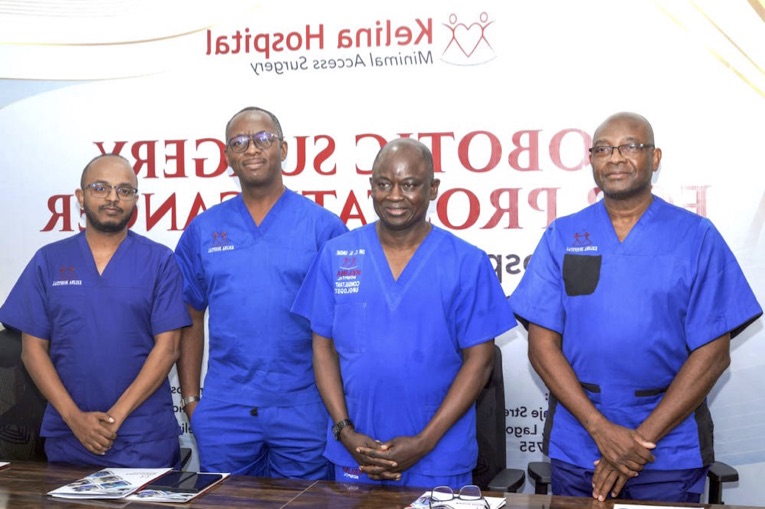
•Lagos hospital makes breakthrough in prostate surgery
By Doris Obinna
For decades, prostate disease has remained one of the most feared diagnoses among Nigerian men, often associated with late presentation, complicated surgery and poor outcomes. Many men either ignore early symptoms or seek help only when complications become unavoidable, reinforcing a cycle of advanced disease and limited treatment options.
In recent years, however, improved awareness, screening and the gradual introduction of minimally invasive surgery have begun to alter that narrative. Data emerging from specialised centres suggest that earlier presentation and modern surgical techniques can significantly improve outcomes, even in settings where most patients pay out of pocket.
Medical Director, Dr. Celsus Undie, Kelina Hospital, Lagos, said prostate surgery has traditionally been associated with prolonged hospitalisation and complications, factors that have contributed to fear and delay. “However, advances in surgical technique have altered that experience. Minimally invasive approaches such as laparoscopic, laser-based and robot-assisted procedures reduce tissue trauma, blood loss and recovery time when compared with older methods.
“Radical surgery remains the most effective treatment for prostate cancer when detected early, stressing the importance of screening and timely medical attention. The moment cancer spreads beyond its organ of origin; treatment becomes palliative rather than curative in most cases.
“Early detection allows us to offer a cure, he added, noting however that the hospital offers all three methods of surgery including open radical prostatectomy, laparoscopic radical prostatectomy and robot-assisted radical prostatectomy.”
He disclosed that his hospital’s experience in prostate surgery proves that world class cancer care is possible in Nigeria: “Two hundred prostate surgeries in one year and one hundred prostate cancer surgeries in two years with no single mortality are remarkable and commendable. It is important for Nigerians to know that all hope is not lost.”
He explained that “Holmium Laser Enucleation of the Prostate (HoLEP) has no size limitation, causes less bleeding, requires shorter catherisation and hospital stay and has fewer complications than Transurethral Resection of the Prostate (TURP). HoLEP, first introduced at the hospital in 2018, is increasingly regarded as a definitive treatment because it allows complete removal of obstructing tissue, which can then be examined for hidden malignancy.
“Also, prostate cancer care is now performed with robotic surgery almost exclusively, except in special cases such as kidney transplant patients. Our robotic surgeons have successfully performed over 2,000 robotic surgical procedures. Kelina Hospital has surpassed 6,000 surgeries with a surgical mortality rate of less than one per cent outperforming figures reported by U.S National Institute of Health, where mortality due to surgery ranged from 3.2 per cent to 6.0 per cent,” he stated.
Relief for health sector, achievable
Speaking further, Undie said most advanced medical equipment used in Nigeria is imported, noting that taxes and duties significantly raise the cost of treatment for patients. According to him, the intervention shows that targeted relief for the health sector is achievable and should be extended beyond high-end procedures to cover all categories of medical equipment. He argued that healthcare should be treated as a social good rather than a revenue source.
While acknowledging that some countries operate free healthcare systems, Undie said Nigeria’s fragile economy makes such a model difficult, adding that recent government policies indicate efforts to stabilise and reposition the economy. He called for broader government support for healthcare providers, including tax relief on imported equipment.
“Healthcare is a humanitarian service. Supporting hospitals ultimately strengthens the economy and the wellbeing of citizens,” he said, adding that the hospital plans to expand its minimally invasive surgery programme into general surgery, gynaecology, paediatrics, ear, nose and throat (ENT) care, and orthopaedics, while continuing partnerships with non-governmental organisations to support indigent patients.
Public awareness critical
Also speaking, Consultant Family Physician, Dr. Nedosa Kenechi, attributed the hospital’s clinical outcomes to early patient presentation, advanced surgical techniques and effective teamwork. He stressed that public awareness is critical to improving survival and recovery rates.
“Early presentation is key. Minimally invasive surgery reduces tissue trauma, speeds up healing and shortens hospital stay. It also helps address fears people have about being bedridden or disabled after surgery.”
He noted that modern procedures such as HoLEP and radical prostatectomy allow removed tissue to be tested early, aiding the detection of hidden cancers and reducing the need for repeat surgeries. “Minimally invasive procedures have shortened hospital stays, with some patients discharged within days or treated on a day-case basis,” Kenechi added.
Robotic surgery comes to stay
On his part, another Consultant Urologist, Dr. Aklilu Getachew, said the routine use of robotic technology for prostate cancer surgery sets the facility apart, not just in Nigeria but across Africa, where such procedures remain rare.
“Robotic surgery may sound fancy for Africa, but here it has become routine. We are now performing robotic prostate cancer surgeries almost monthly. That makes this hospital a living unit of advanced care in Africa.”
According to him, the availability of robotic prostate surgery locally could significantly reduce the need for Nigerians to travel abroad for treatment. He noted that many patients traditionally journey to countries such as India and Thailand for procedures that are now being successfully carried out in Nigeria.
“People travel thousands of kilometres to get the same surgeries we have performed in just the past few days,” he said. “This is not a small thing. It is a big milestone, a big achievement, and it is changing the picture of Nigeria’s healthcare system.”
Getachew explained that beyond the hospital, the development has broader implications for the country, including positioning Nigeria as a destination for medical tourism and boosting confidence in local healthcare delivery.
Disease, combination of genetic and environmental factors
Speaking on prostate cancer more broadly, the urologist said the disease is driven by a combination of genetic and environmental factors. While genetics, particularly among black men, plays a key role in initiating the cancer process, environmental factors largely determine how aggressively the disease progresses.
“Prostate cancer is mainly a cancer of blackness. You see it commonly in African-Americans and in Africans. That genetic risk cannot be changed. But not every black man will develop a clinical disease.”
He explained that lifestyle and environmental exposures such as smoking, obesity, sedentary living, alcohol consumption and poor dietary habits can accelerate the progression of prostate cancer and other malignancies.
“These factors don’t just apply to prostate cancer. They also play a role in lung cancer, breast cancer and colon cancer. When lifestyles change in a country, you begin to see the environmental factors making these cancers more evident.”
He also addressed the perception that prostate cancer cases are increasing rapidly, noting that improved detection through screening is a major reason more cases are being reported. “In the past, many men were dying of prostate cancer without knowing the cause. Now, with increased awareness and screening, we are diagnosing it earlier.”
Getachew called for a coordinated national screening programme, recommending that men aged 45 and above undergo routine checks. He said both public and private healthcare providers have a role to play in expanding access to screening services. “When you screen, you pick cases early. If you don’t screen, you mask the real numbers.”
He added that many of the prostate cancer cases now being treated are discovered through voluntary health checks initiated by patients themselves, allowing for early intervention and better outcomes. “These patients are benefiting from the most advanced form of surgery available anywhere in the world today. Robotic surgery offers precision, faster recovery and improved quality of life. Having this level of care in Nigeria is a major step forward,” he said.