Follow Us on Google
From Juliana Taiwo-Obalonye, Abuja
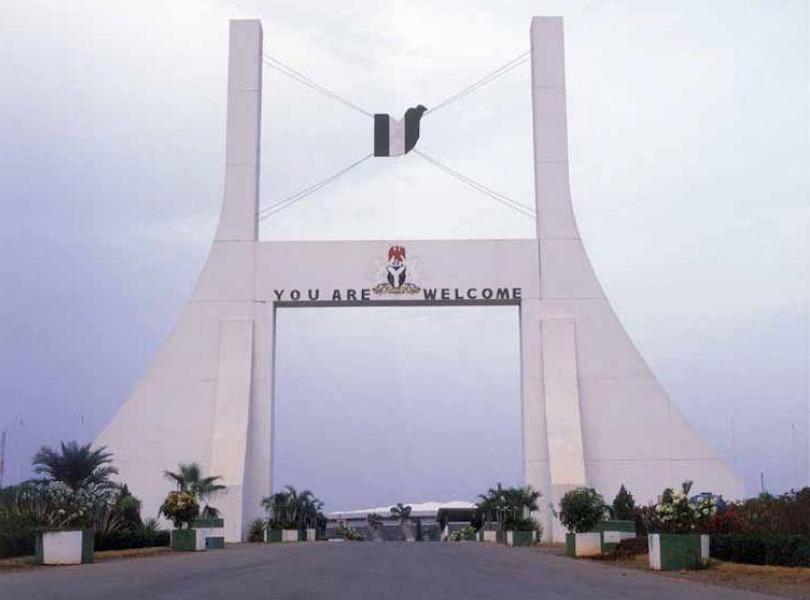
Fifty years after former Head of State, General Murtala Mohammed announced the creation of Nigeria’s Federal Capital Territory on February 3, 1976, original inhabitants gathered under the FCT Stakeholders’ Assembly to commemorate not triumphs in urban planning and infrastructure, but a half-century of “systematic dispossession, exclusion, and marginalization.”
Addressing a press conference in Abuja on Tuesday, the group detailed enduring grievances including socio-economic segregation, forced demolitions of homes in communities like Gishiri, Karsana, and Kuchibedna, desecration of burial grounds and sacred sites, and persistent poverty “imposed by policy, not choice.”
“These are not abstract grievances. They are lived realities that distinguish indigenous FCT communities from other citizens of Nigeria, not by choice, but by constitutional and administrative design,” stated President of the FCT Stakeholders’ Assembly, Aliyu Kwali.
Other News
He lambasted violations of Section 42(1) of the 1999 Constitution guaranteeing freedom from discrimination, political exclusions under Section 299 denying gubernatorial voting rights, and the skewed federal character principle sidelining indigenes from key appointments.
The assembly presented a comprehensive Charter of Demands, calling for fair land compensation, demarcation into three senatorial districts, reclassification of area councils as local governments, restoration of electoral rights, and legal safeguards for cultural heritage. “As stakeholders… we remain resolute in our conviction that development must not be built on exclusion, and national unity cannot be sustained where a people are denied dignity in their own homeland,” Kwali affirmed, ending with “Aluta continua. Victoria é certa. Long live the Indigenous Peoples of the FCT.”
Also speaking to journalists, Director of News and Politics Editor at ARISE News and a proud Abuja indigene, Sumner Sambo, urged indigenous groups to persist with press conferences and advocacy while pushing for broader governance reforms.
He rallied journalists for sustained indigenous advocacy, explicitly demanding a mayoral seat and an Abuja Assembly akin to state Houses of Assembly to boost representation.
He emphasised democratising representation in Nigeria’s expanding capital, drawing parallels to historical models like British Hong Kong’s transition.
“We need to keep looking for reform that would be good to have… We will continue to agitate for the democratisation of governance and representative based on proportional representation,” Sambo said, highlighting consequences of the city’s population boom on indigenous people.
He advocated agenda-setting for the government to ensure “more concentration of development” balancing indigenous and non-indigenous residents. Referencing the British commission study’s 50-year expectation post-Hong Kong handover, Sambo called for Nigeria to define integration steps, urging indigenes to prioritise education, build capacity to voice issues, and emulate structures like London’s City of London with its functional autonomy. “Indigenous people need to continue with education… 5They need to also empower people who have capacity to bring their issues to the fore,” he added