Follow Us on Google
From Okwe Obi, Abuja
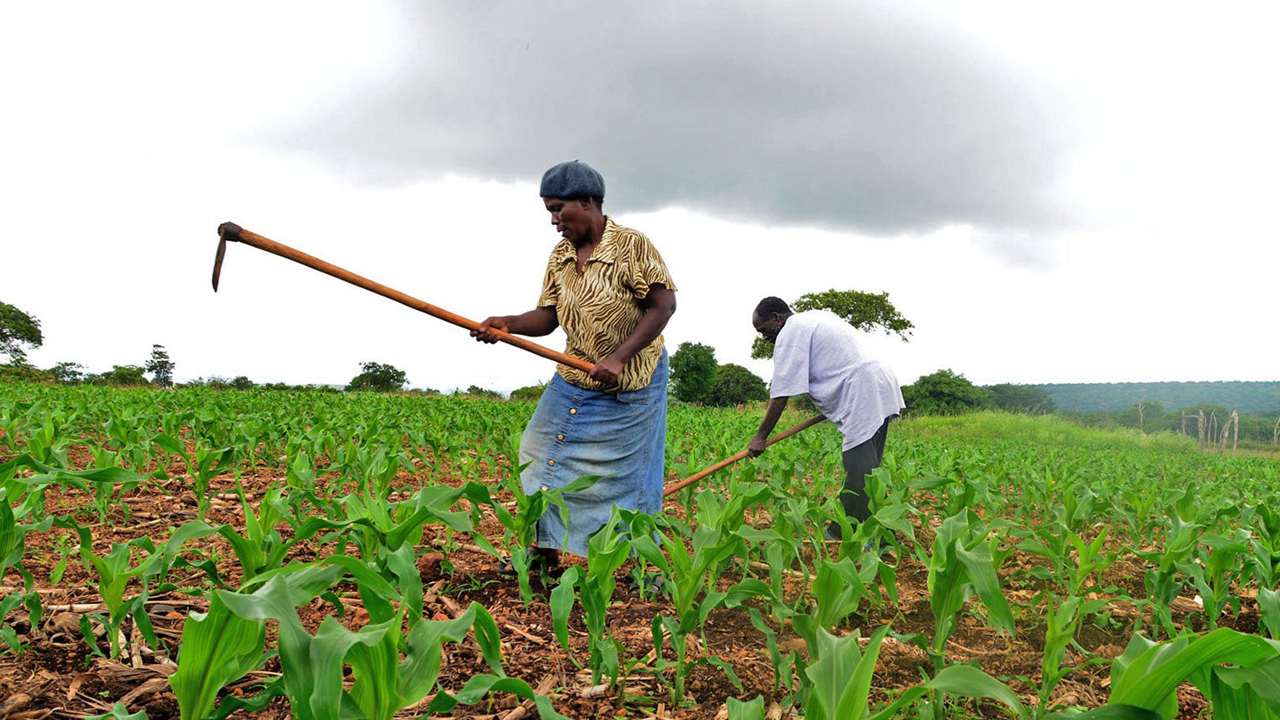
The federal government’s plan for a nationwide farmer census, designed to streamline input distribution and enhance food production, has ignited a mix of optimism and skepticism.
While some experts hail it as a strategic move for agricultural growth, others fear it could turn into an expensive, unproductive venture, typical of many government projects that gulp humongous funds and deliver next to nothing.
The Minister of Agriculture and Food Security, Abubakar Kyari and the National Identity Management Commission (NIMC) forged an accord to commence the initiative this month.
On how the implementation template, Kyari said two million farmers would be captured in the next three months; that is, between February, March and April; and that subsequently, the government would scale it up to six million farmers.
He said: “What we have just signed with NIMC is the development of the farmers’ register. We are going to use the platform of NIMC. That is the National Identity Number (NIN) and also the card, which will contain all the biometric information of the individual farmers.” He explained that the government will identify the farmland and also plug in the farmers, saying, “We want to capture a genuine farmer who will have only one biometric and one NIN, so that in times of intervention, we will know who we are going to target.
“Firstly, we will have primary information. The secondary information will now give us the location of the farmland, the type of crops, soil, and the type of cultivation—whether it is irrigation or rain-fed cultivation.
“The initiative will forestall all the issues we have had, like portfolio farmers and ghost farmers. In a sense, this is in line with Mr. President’s eight-point agenda on food security—to intervene and support real farmers, who will now produce more and give us successful and bountiful harvests.
“The data of the farmers will be based here in the Ministry of Agriculture and Food Security.
“We have, in the first instance, to register two million. And that, I think, will take at least three months. It is going to be like a pilot, as we signed. Subsequently, we are going to upscale it to six million in the second batch.
“For registration, we are developing the template. But I must say that it is not the financial obligation that matters. We need to know what we are saving—bringing into the country in terms of losses that we see go on and on. This is a way of saving a lot of money for the country in terms of food security.”
This is not the first time that the government would be coming up with such a plan.
In August last year, the former Permanent Secretary, Ministry of Agriculture and Food Security, Temitope Fashedemi, hinted that the government had set up a technical working group to commence the process. That did not materialize.
National President of the All Farmers Association of Nigeria (AFAN), Kabir Yusuf, lauded the initiative, claiming that it would not be business as usual.
He said: “If you do not now the number of farmers, how do you support them? It is part of development. Like Nigeria now, we do not know our population—that is why we are failing in the things that we do.
“So, it is a welcome development. We look forward to being captured. There were attempts to do that in the past.
“You do not have to capture them according to their value chain, like tomato farmers or beans or yam farmers. The first thing is for the government to identify the farmers.
“So, when you aggregate them to their competencies, that becomes another matter. A farmer is a farmer. Every association will come up with its numbers.
“But it is not compulsory for you to be a member of any association, and we have farmers who are not members of any association.
“You can only capture the ones that have come to join. Do not forget that one farmer can plant rice, beans, sorghum, and cassava. So, he will be captured as a farmer.
“It is like a census. It is very important. About three years ago, we signed a memorandum of understanding with a former minister of agriculture, who identified some support from the World Bank in order to get data on farmers in this country.
“Unfortunately, the man died. So, now that this minister has identified that possibility—even in budgeting for capacity building—it is important.
“Everywhere in the world, agriculture is subsidized. So, to that extent, we will cooperate fully with the government to get that data. And anything the government wants to do in terms of identifying and supporting farmers, we will support the programme.
“We cannot continue to guess. The matter should not be left for the Federal Government; the state and local governments should key in. Now, in Nigeria, people have inflated their numbers so that they can get allocations. But this is a scientific and empirical way of knowing the farmers.
“The number of farmers will be known. The support each sector will get will not be the same. It is a very important aspect of planning.”
But a member of the Small-Scale Women Farmers Association of Nigeria (SWOFON), Mary Uchenna, doubted the intentions of the government in this regard.
Uchenna recalled how, in 2019, some unidentified agents of the government collected their data for input assistance, but they did not see anything.
She said: “This is another trick by the government. We have commodity associations. The government has not identified with so many. They just want to use it to make money. You will hear the amount of money the government will budget for this scheme.
“We have more pressing issues, like the employment of agro-rangers to safeguard farmers and our farms from herders.
“The appeal has been on for years. Nothing substantial has come out of it. We have pleaded for more farmland allocations for farmers, but the government has not answered us. Look at the budgetary allocation—it is nothing to write home about.
“If the government is serious, it should work with commodity associations to get accurate data. “We do not want people to sabotage the process. Until we see the efforts of the government, I do not believe this initiative will see the light of day.”