Follow Us on Google
From Adanna Nnamani, Abuja
The popular Igbo apprenticeship programme, also known as ‘Imu-ahia’ or ‘Igba-Boi’, which was once celebrated globally as the world’s most successful model of communal capitalism, is fast losing steam, many southeast businessmen and leaders have warned.
The system, built on patience, humility, trust and a deep culture of service, has helped generations of young men rise from total lack to business success and transformed the lives of many Igbo families. Unfortunately, today, elders say its foundation is cracking under a new wave of impatience, value erosion, economic pressure and a growing mistrust between masters and apprentices.
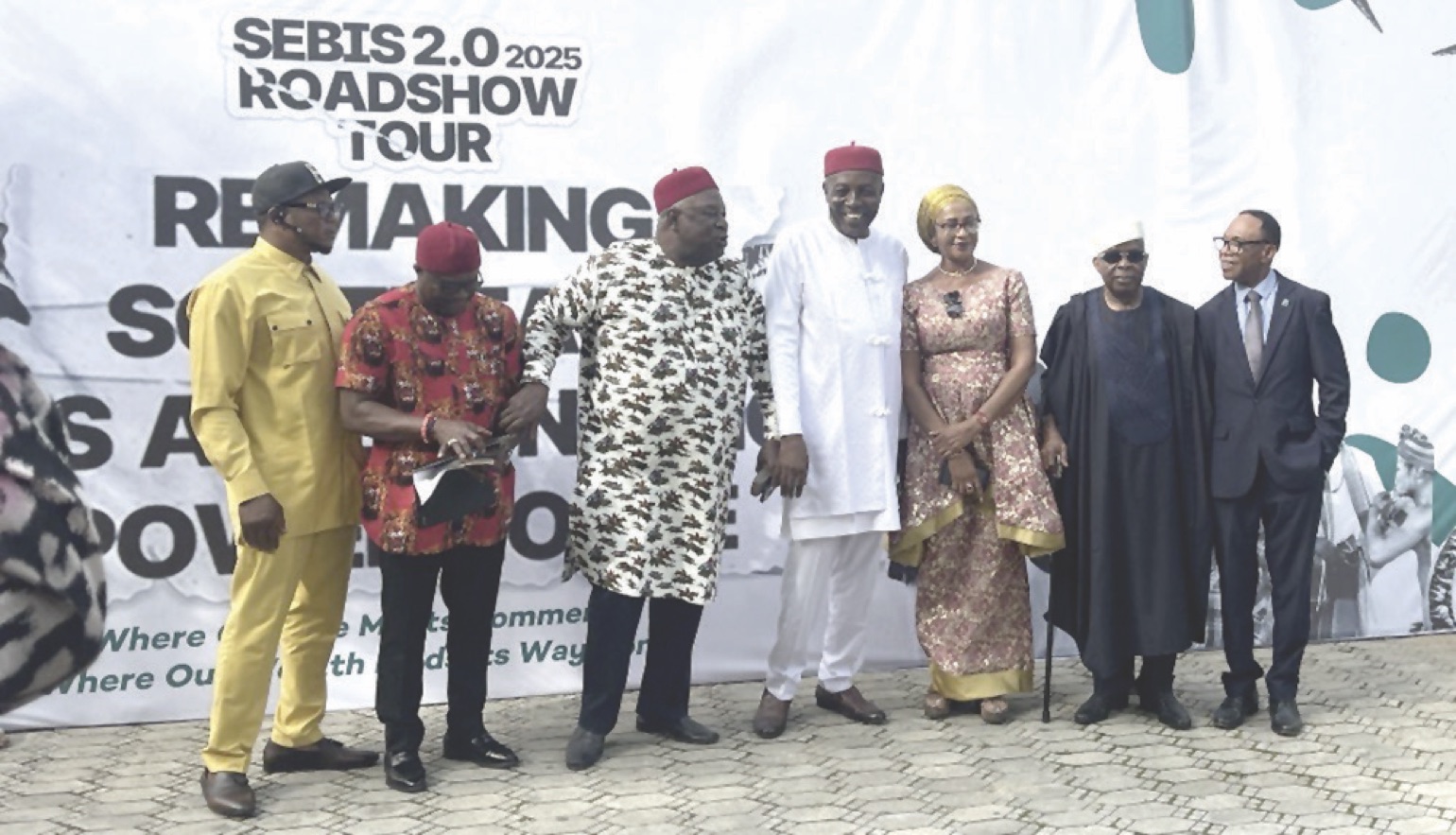
Just recently in Abuja, leaders of thought at the South East Region-Wide Business and Investment Summit (SIBES) reflected on the state of the system, with a blunt message that the tradition, which has lifted millions, is being suffocated by a quick-money mindset and must be urgently reviewed.
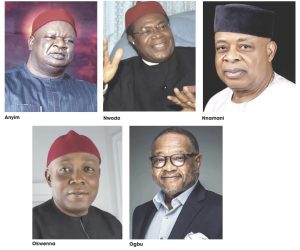
Executive secretary of SIBES, Dr. Ifedi Okwenna, noted that the biggest threat is the loss of the mindset that once sustained the system, especially among the youth. According to him, the cultural virtues of patience and obedience, the pillars on which the system stood, have been replaced with restlessness and a strong desire for instant gratification.
He argued that while modern pressures are real, the shift in attitude is deep and dangerous for a system that takes years to produce results.
“You see, the young men have got some orientation, which is not wonderful orientation. The humility of our generation, the patience of our generation is lacking. The youth of today want it fast. The Igbo apprenticeship scheme thrives on patience and obedience. You must serve somebody for five, six, seven, eight, even 10 years. Then the person will settle you. Then he will be supporting you and you grow. The youth of today do not really want that. They want to start now, get the results immediately. That is the problem,” he said.
Okwenna explained that it was part of the reasons that the organisation is introducing a N50 billion Micro, Small and Medium Enterprises (MSME) fund in January 2026 to re-energise the South East’s economy.
He said: “This is a critical part of our discussions today. We do not want to stop the youth. We are only aligning with the youth where they want to be. So that, when they learn this trade, we leverage on the MSME fund to still get them to where they need to be.“
Professor of Economics at the University of Nigeria, Nsuka, Enugu State, Osita Ogbu, explained that the apprenticeship model once married competition and cooperation in a way that created thousands of thriving entrepreneurs. But that trust that held it together is now broken, and the economic context has changed beyond what the traditional structure can support.
According to him, the solution lies in rebuilding trust, modernising business structures, strengthening regional cooperation and investing in local talent.
He stated: “Cooperation is the only driving force that makes every participant a winner. It is cooperation that has led to the emergence of the European Union with the attendant benefits. Back home, everybody wants to be a chief without Indians. The unique Igbo apprenticeship system brought together competition and cooperation.
“First, there is mentoring, tutoring and training, mostly learning by doing, with the master building the human capital of those under his tutelage. Upon graduation, they are supported with money, capital from the master to increase competition for the trade in which the master is engaged in. This is what we are now studying as venture capital, but with a difference. There is no equity participation, but the master is not afraid that he’s producing his competitors. Rather, he continues to see them as an extension of his network.
“But this system has reached its limit. First, there is very little pool of apprentices to recruit from. Second, the original intent of the system is being thwarted by the declining value system in the society, with the master and the trainee trying to outwit each other, entwined in a circle of suspicion and mistrust. Many have finished without being settled, and many trainees have become too clever for their masters. This system was built on trust, and trust is now in very short supply. This house cannot stand unless it is completely re-engineered.
“Modern businesses require huge capital, more than the settlement money. They require product differentiation, branding, customer service, quality control, product warranty and after-sales service. We must rethink the Igbo retail business. Cooperation is as important as competition in today’s business world. Who will be the arbiter of strong values that helped the Igbo community in the past but now seem lost on the new generation? The values of hard work, honesty, thrift, trustworthiness, willingness to delay gratification, respect for elders and respect for education were the hallmarks of the Igbo nation.
“We must acknowledge that this tendency toward extreme competition without cooperation, a belief in the zero-sum game, elite jealousy and one-man business mentality are now widespread. The notion that if one has won, the other has lost cannot create the renaissance we envisage. This unwholesome tendency, the spirit of “me and mine,” has left the zone without cohesive leadership, without a common economic or political agenda and with a perpetual cry of marginalisation.”
Former governor of Enugu State, Okwesilieze Nwodo, recalled a time when the East was driven by coordinated industrial ambition, long-term planning and a culture that empowered young people by giving them structure, training and opportunity.
Nwodo said the apprenticeship system flourished in that environment because it was rooted in a broader regional vision that placed development, knowledge and productivity at the heart of society. He warned that the decline of the system reflects the decline of these values.
“I was a young man before the civil war. But I had the advantage that my father was a minister under M.I. Okpara. And he also served as a minister, and with the help of the father of Odumegwu Ojukwu, who was the biggest entrepreneur in Nigeria at that time, they brought experts. And they developed the master plan with which the East was developed. That made us the fastest growing economy in the world.
“They had an industrial corridor stretching from Trans-Amadi Layout in Port Harcourt, through Oguta, Uhudum, Orlu, down to Aba, Umuahia, coming down to Enugu, where they had the first iron and steel industry in Nigeria, and where they had so many industries, down to Abakaliki where they had the rice mill industry. And, you see, this industrial corridor went through all that are today different states in the former Eastern Region. You can hear what the people in Cross River are saying now about how they were helped to develop by Abakaliki. They put a cattle ranch. It was the first of its kind in Africa.
“Today, Botswana is one of the greatest exporters of beef in Africa. But we were ahead of them in the Obudu Cattle Ranch. I remember that the ranch was not just to breed beef, but to breed cattle. It was also a tourist centre. Because my eldest sister and her husband, that’s where they spent their money. Now, we can repeat all these things that we have done, and more, with modern technology. And that’s why I support the South East investment that we created here. Because you are now bringing knowledge, which is the most powerful instrument you can use in your life. Knowledge is power.”
Also lending his voice to the issue, former Senate President, Ken Nnamani, emphasised the importance of politics, warning that economics cannot flourish without political stability and strategic unity.
Nnamani explained that insecurity, displacement and political fragmentation in the South East fuel desperation among youths and weaken traditional systems such as apprenticeship. He said the current situation should compel the Igbo to rethink where they invest their time, money and energy.
According to him, “Nigeria is at a place where politics is critical to economics. If you do not take politics seriously you lose a lot. Therefore, our people, while we are being praised for being enterprising, must also not ignore the effects of politics on our business. Because, if you watch the events that are taking place now, for instance, in Lagos, some people, after closing their shops, coming back the next morning, were not able to identify their shops anymore. I personally agree that, yes, you can invest anywhere you like, but home is home.
“What is happening now is a lesson. You don’t wait until it happens to you before you begin to invest at home. The Igbo have what you call natural endowments. We are able to clear bushes and turn them into big markets. But we have so many bushes at home. We should think about building our home. It doesn’t stop us from being the Red Cross of other cities; we do it for free.
“So we should encourage our brothers who are making investments outside to take at least a fraction of that investment home. It is like our people who are answering Eze Igbo in Abuja without even being a cabinet chief at home; it doesn’t make sense. So we should not wait until we are chased away before doing first things first.”
On his part, Senator Pius Anyim opined that the Igbo people have the talent, skill and drive, but they lack the critical support systems needed to convert ability into sustainable economic outcomes.
Without security, infrastructure, steady policy and government backing, he argued, neither apprenticeship nor any meaningful investment can thrive.
“We have got the ability to do it. Capacity we have, talents we have, ability we have. But the fertiliser to fertilise those talents is what we are lacking. And if we do not talk about it, then certainly something is missing. I know that I have had a lot of discussions with a number of people about what it is that brought their home to exist.
“But what I know is that maybe if we give the example of the Catalonians in Spain, how the Catalonians in Spain realised that they are perpetually being marginalised, and they now need to develop their talents, develop their capacities and be able to explore the economy that Spain had to depend on. But I want to say that Senator Nnamani has given us the reason we are not working in Nigeria. Because one state policy will wipe out every effort you have made. One point I want to make, or one suggestion: we must put an extra effort to secure that environment. Nobody is coming to invest in the South East.
“So it is time for South East to become a successful region. Nigeria is becoming increasingly unpredictable, politics-wise. But what is sure is that if we can recreate this Eastern Nigeria style of regional integration, strengthening locally and clustering, whatever happens in Nigeria, we will not fail to survive. And I say, do not forget that in the modern economy victory belongs to those who are smart, flexible and locally grounded,” Anyim stated.