Follow Us on Google
A top member of management of a multinational in Nigeria once told me how top government officials often intimidate and extort money from them. Such officials allegedly collect the money in cash stashed in big bags to avoid tracing it to any bank account. Any failure to pay results in blackmail and threats to shut down the company over cooked-up charges. The company had contemplated shutting down business in Nigeria, but for its numerous employees who will be negatively affected, it decided otherwise.
Corruption is a serious problem in Nigeria. Usually, the anti-corruption agencies concentrate mainly on hunting down people who have lost favour with the powers that be. Once one is in the good books of the ruling party, no matter how grievous one’s sins may be, it is likely that one will escape prosecution or punishment.
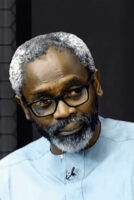
Recently, a certain Prince Adeniyi Adeyemi was alleged to have paraded himself as the Director-General of a phantom Federal Government agency called Presidential Foreign Investment Promotion Council (PFIPC) and Presidential Economic Advisory Council (PEAC). The lid of his alleged actions was blown open when the Nigerian Investment Promotion Council (NIPC) and the Ministry of Foreign Affairs raised concerns about his activities. When the heat came upon him, he fingered the Chief of Staff (CoS) to the President, Femi Gbajabiamila, as the one allegedly behind the formation of the agency. He said government was just playing a defence mechanism to silence him.
According to him, trouble started when the CoS allegedly demanded 48 per cent of the council’s N27.4 billion take-off grant. He also alleged that he paid Gbajabiamila N400 million out of an agreed N600 million through a proxy to secure his appointment. He claimed he fell out with Gbajabiamila over the balance of N200 million.
The CoS reportedly petitioned the Department of State Services (DSS) and the police on October 17, 2025, urging them to investigate Adeyemi and his associates. Hence, the police arrested him on October 27, 2025. A month after, they slammed him and two other defendants with eight-count charge, including criminal forgery and impersonation, at the Federal High Court in Abuja. The case is scheduled for hearing on July 27.
The Presidency has denied knowledge of the agency and the activities of Adeyemi. Special Adviser to the President on Information and Strategy, Bayo Onanuga, said Gbajabiamila never issued any appointment letter to Adeyemi, who reportedly used forged documents to operate 34 bank accounts and opened an account with the Central Bank of Nigeria by misleading the Office of the Accountant-General of the Federation.
According to him, Adeyemi and his associates operated from an office at the Federal Secretariat Complex in Abuja, held a meeting with ambassadors at the Wells Carlton Hotel in Abuja, and wanted to procure the United States visa for staff members through the support of the Ministry of Foreign Affairs.
There are many issues begging for answers here. For instance, how did the PFIPC get office space at the Federal Secretariat in Abuja? How was it listed in the over N1.3 billion personnel, overhead and capital expenditure line of the 2026 Appropriation Act if it is unknown to the Federal Government? How did this escape the National Assembly’s oversight? How did the agency purportedly receive approval for over 300 staff from the Office of the Head of the Civil Service? Who ignited the fire at Kachi Hotel Abuja, which reportedly killed one Dolapo Tanimola, who was said to have helped Adeyemi in procuring the appointment letter from the CoS, on October 22, five days before Adeyemi’s arrest?
Ironically, Onanuga was the Managing Director and Editor-in-Chief of TheNews magazine when the former Speaker of the House of Representatives, Salisu Buhari, was disgraced out of office in 1999 for a near similar offence. Buhari had claimed to have graduated from Toronto University in Canada. He also falsified his age so as to meet the constitutional minimum requirement of 30 years to be in the House. It was TheNews magazine that investigated and rubbished Buhari’s false claims.
The headline of the cover story illustrated with the photo of Buhari’s face read, “The Face of a Liar”. The man later resigned in July 1999 and faced prosecution. He was convicted. Today, Onanuga is on the other side of the fence stoutly defending government officials and anything that has to do with the Presidency.
To clear every doubt in his claim that Adeyemi forged documents, including appointment letter, the presidential spokesman should have released copies of such forged documents in his press statement. Sadly, he failed to do this.
Other News
He was also silent on Adeyemi’s reported meeting with the Deputy Speaker of the House of Representatives, Benjamin Kalu, in July 2025 to discuss legislative support for investment promotion. Neither did he say anything on the reported meeting and discussions held between Adeyemi’s delegation and the Economic and Financial Crimes Commission (EFCC) as well as the Nigerian Electricity Regulatory Commission (NERC) in September 2025.
Last Saturday, the Saturday PUNCH reported that it obtained documents which revealed that the office of Secretary to the Government of the Federation (SGF) formally processed and forwarded a request by Adeyemi seeking office accommodation from recovered FG properties through the EFCC in November 2024. And this is supposed to be a fake agency!
In today’s Nigeria, the more you look, the less you see. We are preparing to hold a general election in 2027, either to retain or boot out the government in power. But there are hurdles along the electoral route. The National Assembly, which works in cahoots with the executive, gave us an amended Electoral Act in February 2026. On the surface, efforts were made to clean up the grey areas in the Electoral Act 2022. But inherent in the amended Act are landmines that may blow up any claim to a credible election in 2027.
Former Chairman of the Independent National Electoral Commission (INEC), Prof. Attahiru Jega, pointed out some of these grey areas recently in a paper titled, “Some Reflections on the 2026 Electoral Act and Nigeria’s Electoral Democracy,” in Abuja. He mentioned three major areas that need urgent amendment before the 2027 election. They include Sections 60(3), 83(5) and 138(1).
Many Nigerians cried foul about this Section 60(3) when it was still being cooked. They demanded real-time mandatory electronic transmission of election results. But the National Assembly, in its wisdom, made e-transmission mandatory, but added a caveat which authorizes the use of manual transfer in areas where there is communication failure. This will likely give room for rigging and manipulation of the results of the forthcoming election and that is what Jega has again drawn our attention to. He spoke from experience.
Section 83(5) restrains courts from entertaining any suit on the internal affairs of a political party. This is not our headache here.
Section 138(1) is laughable. Here, a country that has promised to fight corruption to a standstill infused a clause that tends to romance certificate forgers. This section excludes qualification as a ground for post-election challenge. In other words, even if you don’t have the minimum qualification of school certificate or its equivalent before you win any elective position, as required by Section 131 of the 1999 Constitution, you can assume office if your sin is not detected before election.
Obviously, the image of the country is already sullied. What citizens expect of this government is to engage in actions that will mitigate the tainted image.
That is what happens in countries where the rule of law functions optimally and where citizens hold government officials to account. On June 22, the British Prime Minister, Keir Starmer, announced he was resigning from office as Labour Party Leader and Prime Minister in the interest of his people. This was after two years of leading the Labour Party to a landslide victory. He was not found to be corrupt in any way. Neither was he under any probe. His only sin was that he couldn’t fulfill his promise of economic growth and steady leadership. He also decided to appoint Peter Mandelson, a friend of the convicted sex offender, Jeffrey Epstein, as the UK ambassador to the US in spite of the fact that he failed security vetting in January 2025.
Starmer’s perceived sins resulted in his party’s woeful performance in local elections last May. Two of his top defence officials and several ministers resigned recently for lack of confidence in his ability to lead. Six prime ministers have resigned in the UK this decade alone.
This is because people see political office as a service. Once they don’t measure up, they step down unlike in this country where political office is an avenue to amass wealth.
It takes nothing for the President to ask his CoS to step aside pending the outcome of investigations against him. Even without being asked to step aside, Gbajabiamila should be honourable enough to step down to allow for unfettered investigations, the court processes notwithstanding. Reputation matters a lot and when citizens lose trust in a government, every action of that government looks suspicious and questionable.