Follow Us on Google

By Simeon Mpamugoh
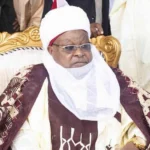
Eze Ndigbo Ajao Estate, Lagos Igwe Fred N. Nwajagu is challenging in the Court of Appeal of Nigeria, Lagos State count 4 of the 9 counts charge judgement of the High Court of Lagos State sitting in Tafawa Balewa Square (TBS), which borders on impersonation delivered by Hon. Justice (Mrs) Yetunde Adesanya, January 15, 2025.
Lead Counsel Chief Emefo Etudo who drafted it, filed and signed by Eze Nwajagu, said that the appeal was for the Court of Appeal of Nigeria, Lagos State: “to look into the judgment again and to know whether it is just. If it is not just, they will reverse it. That is what we are praying the Court of Appeal to do: to upturn the judgment so that justice will be done,” he added.
However in the particulars of the appeal notice on the Director of Public Prosecution (DPP) for Hon. Attorney General and Commissioner of Justice Lagos State and Ministry of Justice Alausa, Ikeja Lagos, and made available to press, it stated that the learned trial judge erred in law when he tried and convicted the defendant for contravention of section 34 of Obas And Chiefs of Lagos State Law 1981, which trial and conviction offend section 39 and 40 of 1999 Constitution of Federal Republic of Nigeria as amended, that guarantee the citizen’s right to freedom of expression and association. It stated that the defendant (Eze Nwajagu) was convicted for creating for himself or allowed for the creation of a kingship or chieftaincy title for himself by his Igbo Speaking Community in Ajao Estate, to wit, the title of Eze Ndigbo of Ajao Estate in contravention of section 34 of Obas And Chiefs of Lagos State law 1981, pointing out that the said judgment was given notwithstanding that the adjudged activities of the defendant and his Igbo Speaking Community in Ajao Estate: “are Constitutional and within the bounds of their freedom of association guaranteed by Section 39 and 40 of the 1999 Constitution.
It declared null and void the curtailment of the said sections 39 and 40 of the 1999 Constitution by Obas And Chiefs of Lagos State Law 1981 to the extent of their inconsistency with the 1999 Constitution of Federal Republic of Nigeria as amended, noting that: “the trial and conviction of the defendant based on the said curtailment of his constitutional rights are unconstitutional.”
It further averred that the learned trial judge was wrong when he convicted the defendant for contravention of section 34 of Obas And Chiefs of Lagos State Law 1981, which conviction, according to it, “is contrary to Section 166 of Administration of Criminal Justice (Repeal and re-enactment) Law of Lagos State 2015, adding that the defendant cannot validly be convicted for offence not charged when the subsisting charge or count is incompetent and the evidence before the court has not shown a contravention of section 34 of Obas And Chiefs of Lagos State Law, 1981.”
It argued that: “Section 166 of Administration of Criminal Justice (Repeal and re-enactment) Law of Lagos State allows conviction on other offences, if the evidence before the court prove that other offence. One of our contentions in this appeal is that the circumstances of this case does not support the conviction of the defendant for contravention of section 34 of Obas And Chiefs Lagos State Law 1981 when prosecution failed to prove the nine count charge filed against him or anyother offence.
“No statement, decree, edit, law or act was promulgated or made by the defendant or his Igbo speaking people neither did he parade himself before the general public to create the awareness that there is such kingship or chieftaincy stool occupied by himself in any manner whatsoever.
Other News
“Modest Igbo cultural activities of the defendant in his private residence cannot create kingship or chieftaincy as adjudged. It’s only by law, gazette or act of government officers and agencies that the defendant could have created such kingship or chieftaincy to be liable. And the court did not consider the fact that count 4 (impersonation) was based on nonexistent law. As it (court) adjudged that the defendant did not parade himself as recognized Oba or Chief; that decision was a conclusive evidence that the defendant did not contravene section 34 as aforesaid law and did not create any chieftaincy for or assumes any chieftaincy title contrary to the Obas And Chiefs Lagos State Law 1981.
“So the defendant ought to have been discharged and acquitted when the entire 9 counts of the charge collapse and there is no evidence upon which to convict for other offences, it stated, even as it noted that: “the entire decision of the learned trial judge as it relates to the contravention of Obas And Chiefs Lagos State Law 1981 by the defendant is against the evidence in the case.”
It notes that the convicting decision of the court was squarely based on inadmissible evidence especially the said video that purportedly went viral, adding that: “the learned judge turned into a translator/interpreter of Igbo evidence to English in effort to explain the meaning of Eze Ndigbo in his judgement contrary to law. It was the duty of the prosecutor to explain that meaning through his witness.
“He (learned trial judge) equally wrongfully discountenance Igbo content of the video exhibit and used the balance English content to convict the defendant, despite the fact that there was no translation of the Igbo content of the video to English. The court put undue reliance on the extrajudicial statements of the defendant about the content of said video when said statements have no weight in absence of the said video. “As the foundation of the evidence of prosecution, the said video is inadmissible; the rest of the evidence based on the extrajudicial statement has no weight and yet court held otherwise, so the conviction of the defendant cannot stand as there is material contradiction in the evidence of the prosecution which evidence was the basis of said conviction.”
It sums up by saying that: “the defendant did not parade himself as a recognized Oba or Chief in Lagos State and at the same time prosecution led evidence that defendant was parading himself as Eze Ndigbo (a chief) in Ajao Estate. “Prosecution evidence suggests on one hand that defendant did not parade himself and on the other hand suggested that he paraded himself.This material contradiction has created a doubt whether or not the defendant paraded himself. The court was right to have resolved it that he did not parade himself. It is illogical for the said contradictory evidence to be allowed by the court to be used to convict the defendant that he contravened section 34 of Obas And Chiefs of Lagos State Law 1981. The defendant ought to have been discharged and acquitted.”
On reliefs sought, it asked for a declaration that sections 26-36 of Obas And Chiefs Lagos State Law 1981 “are unconstitutional and void as the provisions offend sections 39-40 of 1999 Constitution of Federal Republic of Nigeria as Amended, and an order setting aside the enter decision of the court: High Court of Lagos State as it relates to the contravention of Obas And Chiefs Lagos State Law 1981; allowing the appeal; and discharging and acquitting the defendant in-toto.”
Asked why he is appealing the judgement after informing this reporter that he was not going to challenge it, Eze Nwajagu said: “I am acting on the advice of my lead counsel Barrister Emefo Etudo to file an appeal against the decision on Eze Ndigbo. Nonetheless, I have a constitutional rights to appeal the judgement,” he intoned.
It will be recalled that Eze Nwajagu was tried on nine count charges bordering on an attempt to commit acts of terrorism, financing terrorism, participating in terrorism, parading himself as an Oba (impersonation) and meeting to support IPOB, a proscribed entity. No date has been fixed for hearing.