Follow Us on Google
By Adewale Sanyaolu
Experts have identified inadequate funding, inequalities and imbalances as major factors hindering research in Nigeria and other African nations.
The experts, who noted increased funding of projects executed by foreign researchers, urged organisations and governments around the world to patronise indigenous African researchers as they have the capacity to add indigenous inputs, thus enriching the narratives.
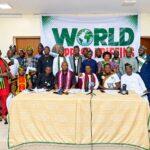
The panelists disclosed these at the 2025 NGO Dialogue, which had ‘Unlocking the Power of Indigenous Knowledge-Building for Sustainable Development in Africa’ as its theme, during the just-concluded Africa social impact summit in Lagos.
Speaking at the session co-convened by the United Nations in Nigeria and the Sterling One Foundation, the Director, Spaces for Change, Victoria Ibezim-Ohaeri, said: “Talking about the average base pay for researchers in the US as of 2020, it was $54,411 per year. And there is also the global spending on coronavirus research as of 2021, $5 billion was spent on research.
“As of 2015, funding for Ebola stood at $1.035 billion. Then in 2020, George Soros gave about a $100 million grant to Human Rights Watch to deepen its research presence in countries of concern, including African nations.”
There is also an NGO in the US, East-West Management Institute, which granted over $270 million for research across different parts of the world, including Africa to support civic, public and private sectors to develop laws, policies, programmes and food services, quality of life and respect for fundamental rights. But, are African organisations benefiting from these opportunities? No.”
Similarly, Prof. Bell Ihua, Executive Director, Africa Polling Institute, said: “There are a lot of places where they are telling our stories because there are barriers. I think that these barriers arise where you don’t have as much representation of African researchers, or even African stories because the funding is all coming from abroad.” On her part, Fumilayo Ayeni, Country Director, Innovations for Poverty Actions in Nigeria, said: “Despite the problems, our job is to study the society, constantly engage the society.
The society for a social scientist is on locus naturalis, natural habitats, whereby the challenges we want to study, the issues we want to look at and everything comes out of the society.
Other News
“So, whether I’m studying the state of IVPs in the North East, or whether I want to research into immigration of medical doctors, or whether I’m looking at social cohesion, or I’m studying the big war we did the other time, I’m studying the Canada rush, why are some Nigerians immigrating to Canada, or why are some Nigerians going to Europe by road?
“We look at our society, identify the issues within our society and pick the studies from our society. So, when we talk about indigenous knowledge, it’s about what is natural to us here. What are the issues we can investigate?
“A lot of times when you find researchers who know their onions we can’t pay them. That’s the truth of the matter, because it’s not an all-comers’ affair. If you find very good researchers, they’re very expensive. Who are those funding it? The funding mostly comes from the global north. We have not developed to the point where our government funds research.”
Also, Dr. Chukwuka Onyekwena, Executive Director, Centre for the Study of the Economies of Africa, said: “In terms of research, the problems that we, digital organisations, all research face, are both demand-side and supply-side. From the demand-side, we are creating an environment where there is weak demand for research.
“The ultimate users of research do not consider research as a decision-making tool. It is growing, but it’s not there yet. So, if you don’t have value for research and knowledge and you need to make decisions, you will not put in much money and much value and much resources.
“So, it’s also a resource problem. If you don’t have value for research, you don’t have the culture for research as well. The culture is not there yet. We are building it, but it’s not there yet. And that is one of the constraints that we have in achieving sustainable development, because if you can’t measure something, you can’t really change it.
Furthermore, Innocent Ikpamezie, member, House Committee on Environment, Imo State House of Assembly, charged indigenous researchers to sharpen their skills and develop more confidence in executing big projects.
Ikpamezie, who noted that some researchers have not demonstrated boldness in carrying out research, said: “That timid spirit must first of all be killed. If that spirit is killed in us in Africa, we will greatly achieve whatever we are looking for. We have a lot of capacity. We have people, but just to harness them is our problem.
“In Imo State, Spaces for Change with the Ministry of Environment organised a programme where we can peek from the dust about how to do this climate change law. Do you know how they started? It was just like a joke.”