Follow Us on Google
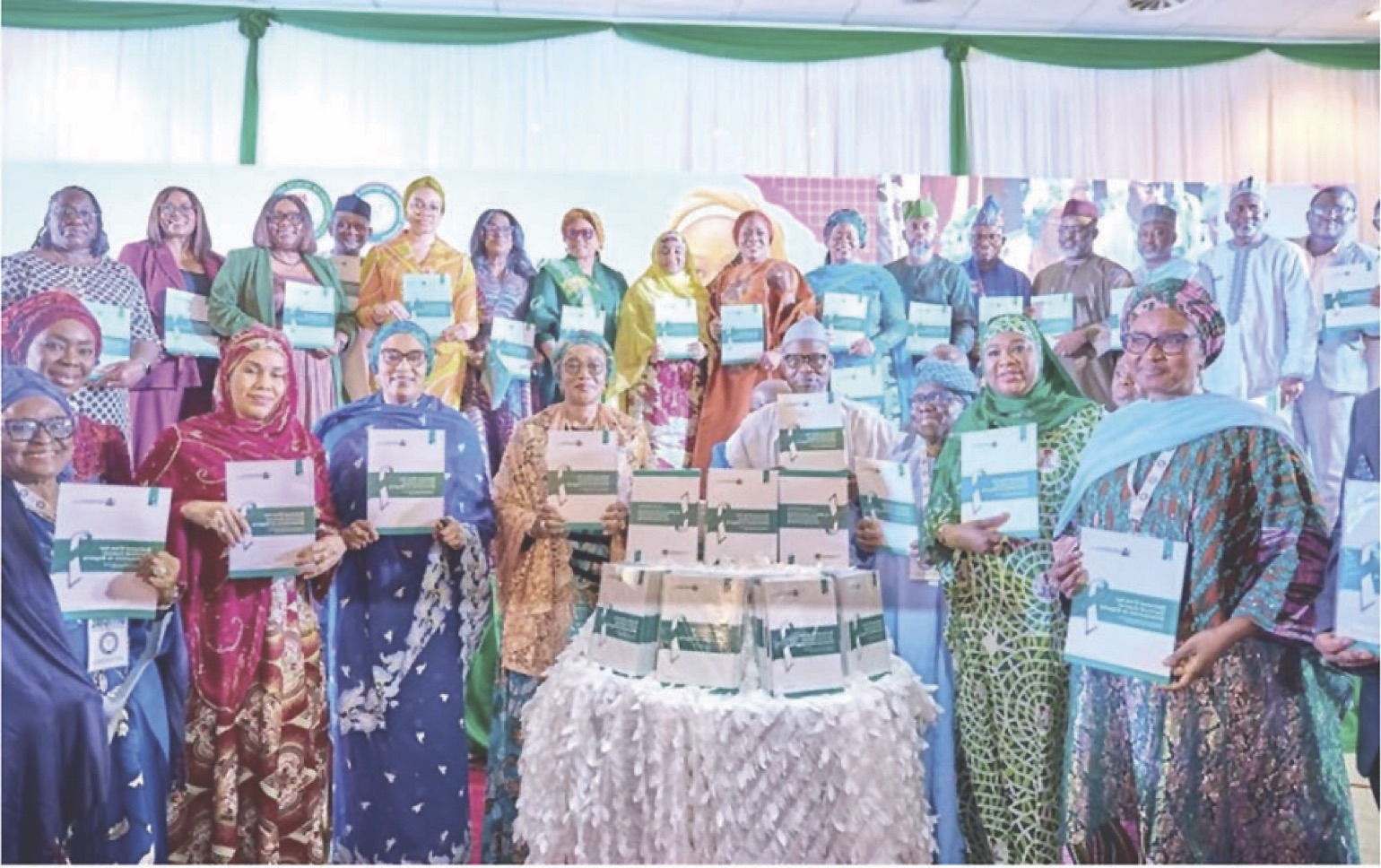
Survivors, experts discuss the pains and crushing costs associated with cervical cancer care even as about 60 million Nigerian women are at risk and 22 die daily from this preventable and treatable disease
From Juliana Taiwo-Obalonye, Abuja
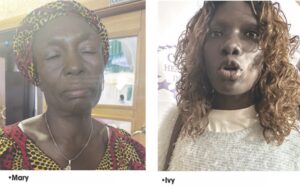
At the unveiling of partnership to eliminate cervical cancer in Nigeria by the Task Force on Cervical Cancer Elimination on June 3, a distraught Ivy sat quietly, her face lined with pain and determination. Eleven months prior, her life was turned upside down by a diagnosis that no woman wants to hear: cervical cancer.
Today, she is still fighting, but the battle is not just with the disease — it is with the crushing cost of treatment, the relentless pain and the fear of what will happen if she cannot continue.
She explained: “I was diagnosed in March 2024. When the doctor told me it was cervical cancer, he said it was treatable. But he also said something else — that I needed money to get the treatment. That’s when the real fight began.”
Ivy’s story is one of courage but also of harsh realities. The treatment for cervical cancer, especially chemotherapy, is expensive — far beyond the reach of many Nigerians. “I have spent more than N7 million on treatment so far,” she said. “Just one chemotherapy drug costs N1.7 million. There’s a drug in my prescription that costs N1.35 million. And that’s not including the frequent blood tests and other medications I need.
“I was running an interior design business before this. I used all my capital and profits to pay for my treatment. Now, I can’t work. I’m just waiting and hoping to get better.”
Despite her determination, Ivy’s treatment has been interrupted. “Recently, I had to stop treatment because I ran out of money again,” she revealed. “I’ve been in pain all this while, and now I’m one month without treatment. My doctor warned me that if I pause treatment without being declared cancer-free, the cancer will spread. It’s still only on my cervix now, but if it spreads, it will be dangerous and may not be curable.”
Ivy’s message is simple but urgent. “If the government can help, if they can reduce the price of the drugs or provide them at the hospital, we can afford treatment. The Cancer Health Fund (CHF) they gave us at the National Hospital doesn’t cover the expensive drugs we need. We have to buy them outside, and that’s where the money runs out.”
She looked directly at the reporter and said: “I want to get well and go back to my business. I don’t mind the pain if I can get treatment. But without help I’m afraid I will lose this fight.”
Friends and organizations have supported her as much as they can, but Ivy stresses that the battle is far from over. “I’m grateful for the help I’ve received, but it’s not enough. I need continuous support to survive.”
Mary Chima’s journey with cervical cancer began even earlier, in 2022. Her path has been marked by referrals from one hospital to another — from Enugu to Aba, then Imo State and finally Abuja. Each stop brought new challenges, including faulty machines and expensive treatments.
“I lost count of how much I have spent,” Mary said. “For stage 1 and 2 treatment, I spent close to N2 million. Now, every check-up costs me about N300,000. There’s a drug I was asked to take that costs N240,000, but I haven’t been able to afford it.”
Like Ivy, Mary was enrolled in the Cancer Health Fund, but she finds it insufficient. “They say the fund will help, but the drugs we need, especially the costly ones, are not available through the fund. So, we have to buy them privately, and that’s very expensive.”
Mary’s message to the government was clear and heartfelt. “I want the government to come to our rescue. Women and girls need to go for regular check-ups so they don’t end up like me. But when we get sick, we need affordable treatment.
“They tell us to buy drugs outside, but those people are private and don’t do charity. The hospital can only do so much with the Cancer Health Fund. It’s not enough.”
A survivor, who did not identify herself, shared her journey to a cancer diagnosis. The ordeal began with an unusual discharge that she initially mistook for a simple infection. “It started from a smelling discharge coming out. I never thought it was cancer; I thought it was an infection,” she recalled.
She sought treatment for the infection, and for a while, the symptoms seemed to subside. However, by January, new symptoms emerged—bleeding and persistent stomach pains.
Despite these warning signs, she did not immediately take them seriously. It was only after a hospital examination that she received the devastating diagnosis: cancer.
As the voices of women like Ivy and Mary echo across Nigeria, the government is stepping up with a bold initiative to eliminate cervical cancer by 2030.
World Health Organisation (WHO) declared 17th of November cervical cancer day of elimination. Nigeria, co-led that declaration, sponsored the bill.
On June 3, First Lady Oluremi Tinubu launched the Partnership to Eliminate Cervical Cancer in Nigeria (PECCIN) at the State House Conference Centre in Abuja. The initiative aims to fast-track Nigeria’s achievement of the World Health Organization’s 90-70-90 targets: vaccinating 90% of girls aged 9 to 14 against HPV, screening 70% of eligible women for precancerous lesions, and ensuring 90% of women diagnosed receive timely treatment.
“This is the beginning of a transformational journey in the health and dignity of Nigerian women and girls,” Mrs. Tinubu declared. “Cervical cancer is a silent killer that strikes hardest at the most vulnerable women. Yet, it is preventable.”
Highlighting the progress Nigeria has made, she said: “Last year, we protected over 12 million girls with the HPV vaccine in just nine months. That is a landmark achievement.”
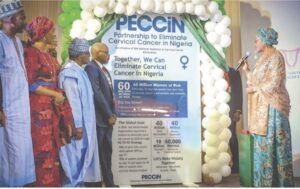
But she warned that vaccination alone is not enough. “We must build on this momentum by expanding HPV screening, scaling up treatment through innovative, cost-effective technologies, and ensuring these services reach primary and secondary healthcare facilities where they are needed most.”
Mrs. Tinubu called on all sectors , development partners, private sector, NGOs and academic institutions, to join the campaign. “We count on you all to ensure that this collaboration succeeds.”
Recognizing the financial needs of the campaign, she announced: “The Renewed Hope Initiative has committed ₦1 billion to support this national campaign. I call on state governors, business leaders, and development partners to join in supporting this laudable initiative. Together, we must invest in a future where no woman dies from a preventable disease.”
The Nigeria Governors Forum also endorsed the initiative. Governor Hope Uzodimma of Imo State, representing the governors, expressed strong support.
Uzodimma said: “We are ready to adopt necessary policies at the state level and allocate domestic funding for cervical cancer prevention and treatment.
“Strengthening primary healthcare is key to delivering equitable services, especially to women in rural and underserved communities.”
He praised the First Lady’s leadership, saying: “She has transformed maternal and public health concerns into practical actions, expanding rural outreach and mobilizing midwives nationwide.”
Chairman of the National Task Force on Cervical Cancer Elimination, Isaac Adewole, highlighted the urgency. “About 60 million Nigerian women are at risk, and sadly, 22 women die daily from this preventable and treatable disease.”
He emphasised that PECCIN will coordinate government-led expansion of elimination activities and foster multisectoral collaboration.
Vice Chair of the committee, Zainab Shinkafi-Bagadu, noted the progress made. “Approximately 13 million Nigerian girls have been vaccinated against HPV in recent years, aligning Nigeria with leading African countries like Rwanda.”
She urged Nigerians to spread accurate information through workplaces, churches, women’s groups, and social media to overcome stigma and misinformation.
For women like Ivy and Mary, the national campaign offers hope but also underscores the urgency of immediate support.
Ivy’s fears are palpable. “If I don’t continue treatment, the cancer will spread. I’m afraid. I want to live. I want to work again.”
Mary’s message is a plea for awareness and action. “I want women and girls to go for regular check-ups. Early detection can save lives. But we need support when we get sick.”
Their stories remind everyone that behind every statistic is a woman fighting for her life — and that the fight against cervical cancer is not just medical but social and economic.
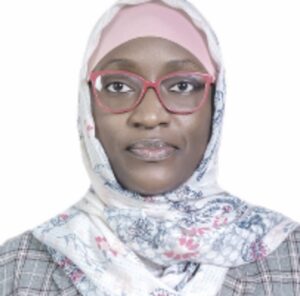
Dr. Aisha Mustapha, Senior Lecturer and Consultant Obstetrician and Gynaecologist at Ahmadu Bello University and its teaching hospital in Zaria, Kaduna State, Nigeria, shared a deeply personal and powerful perspective on cancer diagnosis and care in Nigeria during the unveiling of a partnership to eliminate cervical cancer in the country.
She emphasised that “cancer diagnosis is not a death sentence,” explaining that the common perception stems from the fact that most cancers in Nigeria are diagnosed too late, when treatment options are limited or unaffordable.
Specializing in gynecologic oncology, Dr. Mustapha described her role as one that involves preventing, screening, and treating women with reproductive tract cancers. She recounted a poignant moment early in her career when she encountered a patient named Aisha, a 32-year-old mother of four battling advanced cancer.
“I saw myself in that woman. She was so still, so wasted, and yet she smiled weakly when we approached her bedside,” Dr. Mustapha recalled.
That encounter shaped her determination to pursue gynecologic oncology despite the lack of formal training programmes in Nigeria at the time. “I was going to do it, to treat every Aisha out there,” she said.
Dr. Mustapha also shared her personal journey of treating cancer survivors, using her experience to fuel her advocacy. After her surgery, she wears a “survivorship” t-shirt and committed herself to raising awareness about women’s cancers, HPV vaccination, and cervical cancer screening.
“People tend to listen more when you’re telling your own story,” she noted.
On the science behind cervical cancer, Dr. Mustapha explained: “Cervical cancer is caused by a virus called Human Papillomavirus (HPV), a very common sexually transmitted infection.”
She highlighted that while 80% of women will acquire HPV in their lifetime, most clear it naturally within two years. However, about 30% do not, and it can take 10 to 15 years for HPV infection to develop into cervical cancer. This long window offers a critical opportunity for screening and early intervention to prevent cancer progression.
Describing the challenges of her work, Dr. Mustapha spoke of the intense focus and energy she summons during surgery, despite frequent obstacles such as malfunctioning equipment and unreliable electricity.
“Sometimes the electricity goes off, and you have to continue surgery in the dark,” she said, underscoring the resilience required in her field.
She also addressed societal pressures, especially in northern Nigeria, where cultural expectations can be contradictory. While men often prefer female doctors to attend to their wives, they may simultaneously criticize female doctors for spending too much time away from home.
“The same people who insist on a female doctor will say she doesn’t build her home, that her husband should marry another wife,” Dr. Mustapha explained. Yet, she stressed the importance of a strong support system, saying: “The best support a woman has is her husband. If your husband supports you, it’s like the whole world supports you.”
She concluded with a message of perseverance: “When you focus on what you are doing, nothing else matters.”