Follow Us on Google
By Josfyn Uba
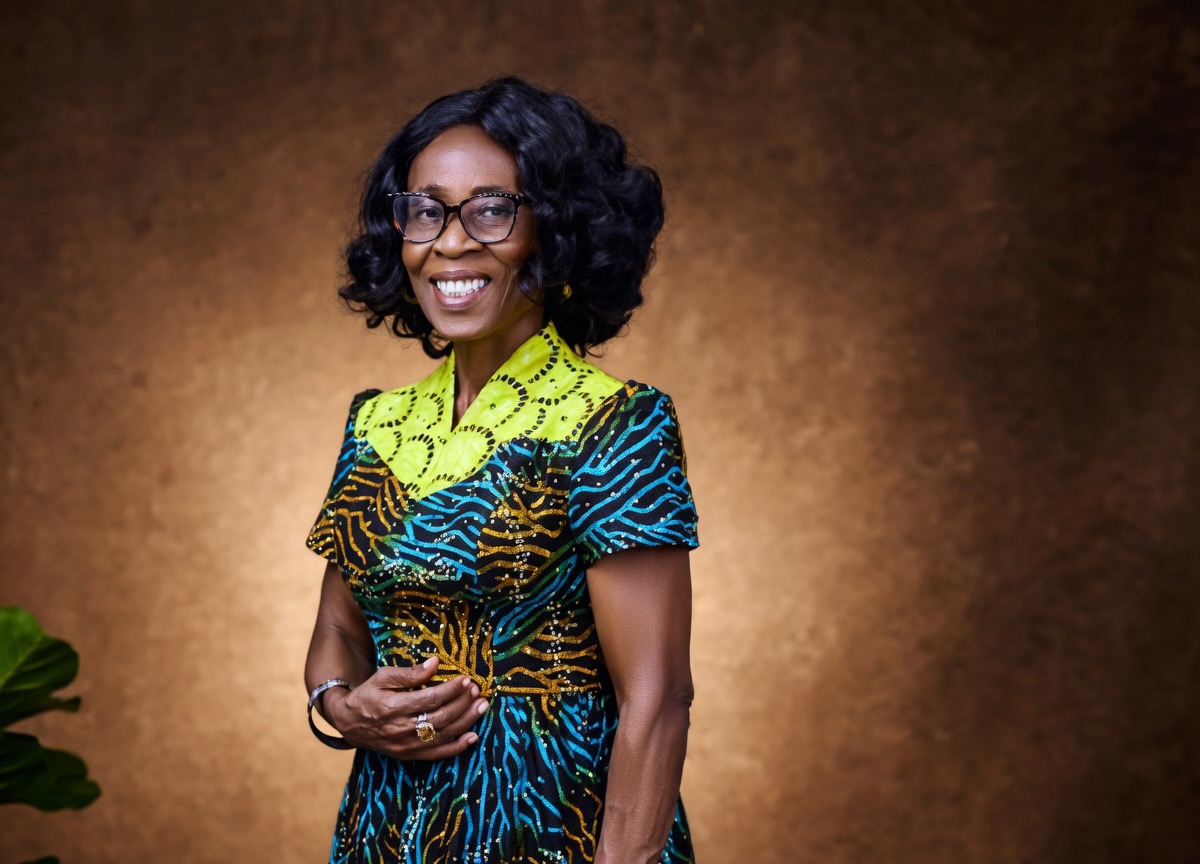
At a time when Nigeria’s history is often debated in classrooms but rarely felt in the soul, Mrs. Justina Nnenna Opara emerges as a vital bridge between the past and the present. A retired educationist whose career spanned decades across the corridors of schools in Imo and Lagos, Mrs. Opara debuts with a book titled “The Race”. It takes us back to a time before the accolades—to the 1960s, where a young girl’s world was upended by the Nigerian Civil War.
In another breath, when most people find it difficult to speak in times of profound grief, writing this book, “The Race” serves as an escape from the agony of losing a daughter and provided her with emotional sanctuary for her grief
For Mrs. Opara, 70, this. memoir is more than just a historical record; it is a raw, personal testament to resilience and the enduring human spirit. Born in 1951 and raised across the diverse landscapes of Makurdi, Kafanchan, and Owerri, the veteran head teacher who has traded her chalk for a pen, had dedicated her entire life molding the minds of the next generation. From her early days earning her Teachers’ Grade II Certificate in 1975 to her retirement as a Principal Assistant Education Officer in 2010, her name has become synonymous with discipline and administrative excellence.
In this exclusive interview with Daily Sun, the Owerri North native reflects on her journey from the classroom to the author’s desk, the importance of documenting lived experiences, why the lessons of the war must never be forgotten and how bereavement influenced documentation of her memoir.
You described this book as an escape from the profound agony of losing your daughter. At what point did you realize that writing could be a sanctuary for your grief?
In that moment of deep pain, I turned to God in prayer, asking for direction. It was during this period of reflection that I felt a strong inner prompt to revisit writing. As an educationist and a teacher of literature, storytelling has always been a part of me. But this time, writing became a refuge. I realised that putting my experiences into words, especially those from the war I had witnessed as a young girl, was a way to release my grief and begin healing. It gave my pain somewhere to go. And in doing so, it gave me something to hold onto.
Many people find it difficult to even speak after such a loss. How did you find the strength to translate your internal pain into a narrative for the world to read?
There are losses so devastating that they demand an outlet, or they will consume you entirely. I found my outlet in writing, but I did not find my way there alone.Prayer sustained me, as it has throughout my life. My children and loved ones rallied around me with a tenderness I will never forget. And then there was a book that found me at precisely the right moment: Tested to the Limit by Consolée Nishimwe, a survivor of the Rwandan genocide. Reading her account of living through unimaginable horror and choosing, still, to document it and offer it to the world moved me deeply. I thought, if she could do this, I could too. Someone, somewhere, might one day need to read my story the way I needed to read hers.
To what extent does your daughter’s memory influence the characters or atmosphere of this book?
My daughter’s memory has been a strong source of encouragement throughout my writing journey. Losing her and my grandchild in 2023 was devastating, but her memory gave me the strength to continue.Her memory is woven into everything. Grief has a way of sharpening your perception, making you look more closely at loss in all its forms. As I wrote about the families I witnessed during the war, parents who buried children, mothers who pressed on through devastation, I saw my own pain reflected at me across decades. Their resilience reminded me that, despite loss, life can continue, and purpose can still be pursued.
Having lived through the Nigerian Civil War, how did those early experiences of survival and loss shape your perspective on the tragedy you faced in 2023?
Living through the Nigerian Civil War shaped my understanding of pain and survival. As a young girl, I witnessed loss, hardship, and resilience.The war taught me, at a very young age, that the world you know can dissolve overnight. It also taught me that people endure. I saw it first-hand: ordinary men and women, stripped of almost everything, who still found reasons to keep moving forward. That lesson never left me.When I lost my daughter, I will not pretend that my wartime resilience made the grief easier to bear. Nothing could. But it did remind me that I had survived before, and that survival, while it asks everything of you, is possible. There is a saying I have returned to many times: tough times never last, but tough people do. I believe that. I have had to believe it. The past can instruct us, but we must not allow it to imprison us. The future still holds so much if we are willing to walk toward it.
Other News
Does the book draw parallels between the collective trauma of the war in eastern Nigeria and the individual trauma of bereavement?
Very much so, and I think that parallel is one of the most important truths the book holds. During the war, I witnessed families lose not one child but two, three, sometimes more. The scale of that suffering was staggering, and yet at its core, each death was also a deeply private agony. A mother grieving one child is not grieving less than a mother grieving many. Pain does not diminish because it is shared; if anything, the collective weight of shared grief makes it heavier.What struck me, both as a witness then and as a writer now, is how grief connects us across time and circumstance. The ache of losing a child is not specific to any war, any era, or any culture. It is one of the most ancient human experiences. In drawing that parallel, I hoped readers might understand that bereavement, whether born of conflict or of a the single quiet tragedy, deserves the same dignity, the same recognition.
As someone who witnessed such a pivotal era in Nigerian history, do you feel a responsibility to weave the Biafran War experience into your storytelling for younger generations?
Yes, I feel a deep responsibility to do so. Younger generations need to understand the consequences of conflict.The younger generation needs to understand that conflict is not abstract. It has faces, names, families, and futures that were extinguished. The Biafran War was not just a chapter in a history textbook; it was the lived reality of millions of people, including the child I once was. If my storytelling can bridge that gap, if it can make young readers feel the weight of what happened and inspire them to stand for truth, for justice, for empathy, even when it costs them, then this book will have done its work.
What has the process of writing this book taught you about life and resilience?
Writing this book has taught me that I must not allow painful or inhuman experiences to strip me of my humanity, my zest for life, or my hope for a better future.It taught me that what is done to us need not define what we become. I witnessed and personally endured acts of profound cruelty and loss. There were moments when it would have been entirely understandable to surrender, to let those experiences hollow me out. Writing this book was my refusal to do so.I also came to fully understand that every person carries a gift within them, placed there by God, waiting for the right moment to emerge. For me, that gift was the ability to give language to difficult truths. Writing this book was not just an act of grief; it was an act of becoming. And that, I think, is the most resilient thing any of us can do.
As an educationist, do you believe our curriculum should place more emphasis on expressive writing as a tool for emotional development and healing?
Yes, I strongly believe it should. Throughout my years in education, I watched students struggle to articulate what they felt — not because they lacked intelligence or sensitivity, but because they had never been given a structured, safe space in which to try. Expressive writing provides exactly that.When a student writes about what they have seen, felt, or survived, they are doing something extraordinary: they are externalising what might otherwise remain trapped inside. They are making sense of their own experience, on their own terms, without fear of judgement. This has therapeutic value, yes — but it also builds confidence, empathy, and critical thinking. Literature has always been the subject that taught us to be human in relation to one another. Expressive writing is simply the personal counterpart to that. We owe it to our students to make room for it.
If readers were to take one lesson away from your journey of writing through pain, what would you want it to be?I would want readers to understand that they must not allow painful or inhuman experiences to destroy their future.That is the heart of it. Life will wound us sometimes in ways that seem to leave nothing intact. But within each of us is a capacity for renewal that suffering cannot fully extinguish. After every darkness, there is light.I want my readers to hold onto hope. To pray for strength when their own runs out. To love fiercely and create peace wherever they are placed. These are not small things. In the face of loss and injustice, they are acts of tremendous courage.
What do you want the public to understand about the reality of moving on versus moving with grief?It is important to move forward after grief. If one remains trapped in grief, it can affect every aspect of life, spiritually, physically, mentally, and even economically. Grief can hold us in a place that does not serve us and does not honour the memory of those we mourn. Moving on does not mean forgetting. It does not mean the love diminishes. It means we choose life, despite everything. We lay aside the weight that would crush us, we look ahead, and we ask for the inspiration and the courage to build something meaningful from what remains.
Beyond your career in education, where does this book sit in the legacy you wish to leave behind?At the centre of it, I hope. My years in education were about nurturing the next generation, teaching young people to think critically, to feel deeply, and to engage with the world through literature. This book is an extension of that same mission, simply written from a different vantage point.The legacy I most want to leave is a simple but urgent one: that we must choose peace over conflict, truth over convenience, and compassion over silence. I have seen what happens when people keep quiet in the face of injustice, when they support wrongdoing for material gain, when they allow hatred to go unchallenged. The cost is devastating and generational. I want this book to be a quiet but insistent voice that says: it does not have to be this way. Choose truth. Choose kindness. Choose one another.
Now that you have found an outlet through writing, do you see yourself continuing to explore literature as a second calling?
Yes, I do. Writing this book, through the inspiration of God and the Holy Spirit, has opened a new path for me.I am pleased to say that The Race is only the beginning. I have completed a drama collection – three plays titled The Princess, Sisters Apart, and The Scandal, as well as my autobiography. I am also working on a follow-up to The Race, which will explore the aftermath of the war: what it means to rebuild, to reconcile, and to carry history forward without being destroyed by it. There is still so much to say, and, God willing, I intend to say it.