Follow Us on Google
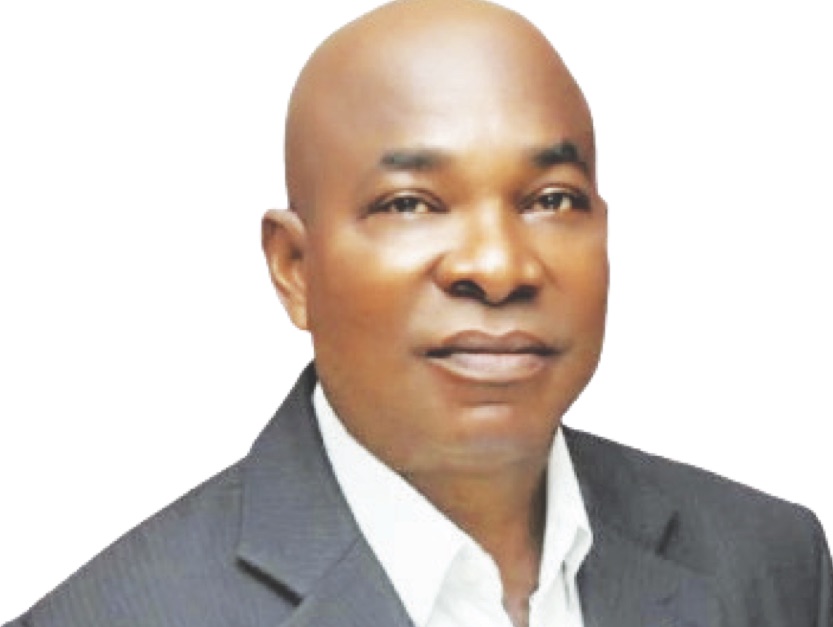
Hon. Ernest Onuoha is the author of the new autobiography, Sweet and Sour from Homeland, a deeply moving memoir chronicling his life as a rural Nigerian boy born into poverty, orphaned young, and shaped by the ravages of the Biafran War, who overcame countless personal, economic, and political challenges to emerge as a self-made community leader, public servant, author, and advocate for education and justice. From the rhythms of traditional village life to the harsh streets of Port Harcourt and the complexities of political service in Aba, the book weaves a rich narrative of resilience, survival, and transformation. Onuoha is a novelist, poet and the former Chairman of ANA Abia. Currently a manager with DANA Pharmaceuticals, Aba, he spoke to Henry Akubuiro on navigating the contours of life to become a self-made man and author.
Your new book, Sweet and Sour from Homeland, is published in soft copy by a bold scholar, how did this synergy work in practice? You usually publish your books in hardcopy?
I chose e-book version of the publication of my autobiography, Sweet and Sour from Homeland, because it is going to be in two volumes. What has been published by Boldscholar.com is Volume One, and I am writing Volume Two when it is ready, both volumes will be published in hard copy probably to celebrate coming of age in future. Already, many readers of my work are requesting for the hardcopy of my e-book or soft copy publication of Sweet and Sour from Homeland. I may consider hard copy publication if the demand persist.
Your story echoes the inspirational tale of “from grass to grace”, having been born into poverty in a rural community but rose to become a public figure. How did you navigate the circumstances of your birth and rising from the ashes of the civil war?
The purpose of writing Sweet and Sour from Homeland, my autobiography, is to tell the story of my life by myself. It was tough growing up without a mother and aged father who could only pay my school fees up to primary two, because he did not have the money. My father did all kinds of menial jobs, but the level of poverty was unprecedented. That is why it is very painful to my heart today, that in Nigeria of today, we still have over one hundred and thirty million people who are multi-dimensional poor and they have been left behind just like my father and I were left behind. Part Three, chapter four with the sub-title, “CAST INTO THE SEA” captures the historicism of my navigation from my life hard marathon.
The title of my said autobiography is a protestation against all past and present governments, for leaving us behind, it is a loud cry that it was wrong to expose children of my age of six years in 1968 to the horror of a civil war that nearly ended our infant lives and exposed us to malnutrition and seeing human corpses scattered on the roads as jet fighters offload their bombs in marketplaces and schools.
In choosing the autobiographical form rather than a coming-of-age fiction, what was the consideration?My generation is above the sixth floor in age; our people have this saying: if a child refused to ask about what killed the father that which killed the father would also come after him. It is the right time to talk about our life experiences, the obstacles we met while trying to make something out of our life. Perhaps those coming after us will learn the act of patience, hard work, self-improvement, and honesty and Godly contentment in life.
You painted a rosy past steeped in folktales as a child. As the first form of education you encountered, how did it impact your life?
As children growing up in seventies, we had the privilege of sitting down with elderly fathers and mothers under the moonlight hearing folklores about reward and consequences of bad behaviours, stories that conveyed respect and good conduct. These folktales were repeated several times helping our formative years. Stories that forbade stealing and lying were repeated often making us to imbibe truthfulness. Those days were golden; men kept their yam bans behind the compound and never were any one stolen. Women could leave their beancake on a tray in front of the compound and go inside the kitchen; everyone knew the price. When you picked one beancake without any person observing you, the buyer would drop the penny or kobo under the tray and nothing would be stolen. That golden age is gone sadly.
The book leads us to a gruesome Cloudy Morning. How did this sad experience affect your upbringing as a war-affected student?
The sub-title “Cloudy morning” talks about how heartbroken I became when I my mother died, exposing me the lastborn of my parents to all kinds of sad experiences, which scars are yet to vanish from my life. It touched me in a way that made me to share deep sympathies to all those children who had lost their parents. Where ever I discovered them, my hands of friendship will be available to them.
How did working in a law firm change your life?
When my education stopped at Class Three due to lack of funding, I came to Aba in 1980, on the fourth mont, I got a job in the law firm of Tagbo Nwogu and Company. I worked there for eight years and started the upgrade of my education. I got a lot of exposure working therein. In that law firm, I was becoming a man. You can read the rest in my autobiography.
Other News
Politics came calling at the grassroots level at some point in your life, how did that experience change your perception of politics?
My joining politics at the local government level was a coincidence. I would say that politics found me. In two occasions I was in the church, a friend came to me, and said “come let us run for the office of a Councilor.” I had no money, I was about migrating to Lagos, I had already quit my job at Aba. So, I said ok, let me give it a try and I did and won. Two years later, I went back to the corporate world till date. I could not swim in the shark infested water of daily politics.
The book details your foray into fiction and creative writing. Being a swift writer, was it hard to learn the rubrics?
Writing to me is a talent given to me by the almighty Creator. It was not my major at the University. However, I have learnt a lot from reading many literary works, attending colloquiums, literary workshops, and getting better and better each time I write.
You went on to write more books. Which of your books gave you the toughest time?
Yes, I wrote Challenges of Existence in 1999; Biafra: The Victims (2012); Tomorrow In Our Hands (2013); Beauty in the Rubble (2018) and now Sweet & Sour from Homeland (2025). My first novel, Challenges of Existence was the hardest. I hired three editors to assist me in the editing, moved it from one publishing house to another. Yes, it was the toughest.
Between poetry and fiction genres, which gets the best out of you?
Fictions works better for me. It gives me more room to be creative and interrogate actions of the society through fictional tools of humour, paradox, counterpoint, etcetera.
This book is an abridged version of your memoir. Why are you postponing the full publication to a later day?
Sweet and Sour from Homeland is indeed an abridged version of my autobiography. At 62 years of age, there will still be more stories to tell, I have two grandchildren now, God willing, more will come, I am a pencil in the hand of the Almighty God, who knows what more my Maker may make of me.
E-book is yet to find its feet in Nigeria fully, what promise does it hold at a time the reading culture is diminishing?
You are right to say that E-book is still coming of age in Nigeria. But the future of books lies in electronic books, electronic libraries and now artificial intelligence (AI). We have to make that transition at some point. The problem of reading culture in Nigeria has grown from bad to worst. Especially our young generations are hooked to the social media with their phones 24 hours. The Association of Nigerian Authors, which I belong, has done a lot to encourage reading in our society through their programs: a book a child, teen authorship and many more. But governments at all levels, a busy chasing the privatisation of public wealth that they hardly notice that our younger generations are now chasing the wrong values.