Follow Us on Google

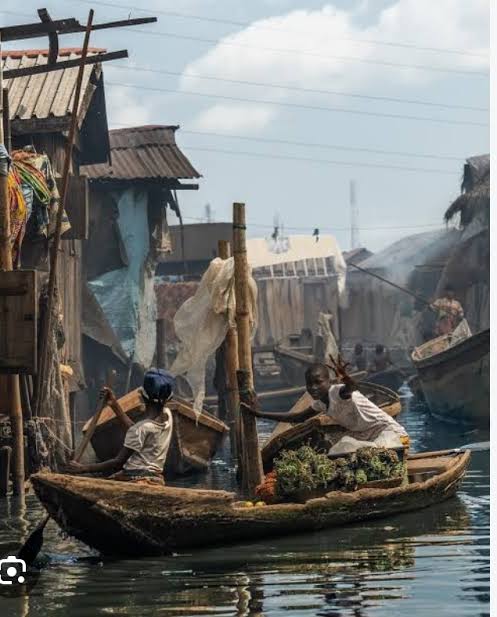
The recent disclosure by the Minister of Education, Dr Tunji Alausa, that about $345 million will be required annually to reintegrate 15 million out-of-school children into Nigeria’s classrooms has once again brought a national emergency into sharp focus. Yet, even this figure may underestimate the scale of the crisis. According to UNICEF, between 18.3 million and 20 million Nigerian children are currently excluded from formal education, arguably the highest number anywhere in the world. This is not just an education deficit; it is a ticking social and security time bomb.
The implications of leaving millions of children without education are dire. Beyond the immediate loss of literacy and numeracy, such children are more vulnerable to exploitation, criminality, and radicalisation. Reports and disturbing video evidence have shown how extremist groups recruit underage boys as fighters, exploiting their vulnerability and lack of opportunity. The longer Nigeria allows this situation to persist, the more it risks breeding a generation disconnected from productive citizenship.
While the Federal Government’s proposed annual intervention is commendable, mobilising $345 million yearly will not be a trivial undertaking, especially in a constrained fiscal environment. This makes it imperative that responsibility does not rest solely on the central government. State and local governments must play active roles, not only in funding but also in implementation.
Encouragingly, the Nigeria Education Sector Renewal Initiative (NESRI) has pledged support. However, given the scale—potentially 20 million children—far broader collaboration is required. The private sector, development partners, and civil society organisations must all be co-opted into a unified national response.
The burden of out-of-school children is unevenly distributed but remains a nationwide concern. Northern states such as Kano, Jigawa, Katsina, Kebbi, and Yobe consistently record the highest numbers, driven largely by poverty, cultural practices, and limited access to schools. For instance, Kano alone is estimated to have over 1.5 million out-of-school children, while states like Jigawa and Katsina each account for hundreds of thousands.
In contrast, southern states, such as Lagos, Anambra, and Rivers, report comparatively lower figures, often in the tens of thousands. Yet, even these lower numbers represent significant human capital losses, underscoring that the crisis is not exclusively northern—it is a Nigerian problem.
Globally, Nigeria’s situation stands out starkly. Countries like India have made significant progress in reducing their out-of-school population through sustained investments in universal basic education and social welfare programmes. Pakistan, which also struggles with millions of out-of-school children, has adopted conditional cash transfer schemes to incentivise school attendance.
Other News
In sub-Saharan Africa, nations like Kenya and Ghana have implemented free primary education policies with measurable success. Compared to these countries, Nigeria’s progress has been uneven and insufficient, despite its larger resource base.
The causes of Nigeria’s out-of-school crisis are complex but not insurmountable. Poverty remains the most significant driver, particularly in the northern region. The traditional almajiri system, which sends young boys away from home in pursuit of Islamic education but often leaves them begging on the streets, further compounds the problem. Addressing these issues requires both economic and cultural interventions. Northern state governments, in particular, must intensify poverty alleviation efforts and reform the almajiri system to integrate formal education.
Legal enforcement must also be strengthened. Basic education—at least up to Junior Secondary School (JSS3)—should not only be free but genuinely compulsory. Parents and guardians who deliberately keep their children out of school must face sanctions, as provided by law. However, enforcement must be balanced with support systems that make schooling accessible and affordable, including school feeding programmes, free uniforms, and learning materials.
Equally critical is the issue of insecurity. Over the past decade, schools have increasingly become targets for terrorists and bandits. The Chibok and Dapchi schoolgirls kidnapping, and more recent incidents in Kebbi and Niger states in 2025 have created widespread fear among parents and students. In many communities, schools have been shut down indefinitely due to safety concerns. Without addressing insecurity, efforts to return children to classrooms will be futile.
The revival and strengthening of the Safe Schools Initiative is therefore non-negotiable. Schools must be secured through improved surveillance, community policing, and rapid response mechanisms. Damaged infrastructure should be repaired promptly, and closed schools reopened once safety can be guaranteed. Parents must feel confident that their children will return home safely each day.
Other countries offer useful lessons. Bangladesh, for instance, has successfully used stipends for girls’ education to boost enrolment and retention. Brazil’s Bolsa Família programme links financial aid to school attendance, reducing dropout rates significantly. These examples demonstrate that targeted, well-funded interventions can yield results when backed by political will and effective implementation.
Ultimately, Nigeria cannot afford to let this crisis fester. The cost of inaction far outweighs the financial burden of intervention. A nation that leaves millions of its children uneducated risks undermining its own future—economically, socially, and politically. Reintegrating every out-of-school child into the education system is not merely a policy objective; it is a moral imperative and a prerequisite for national development.