Follow Us on Google

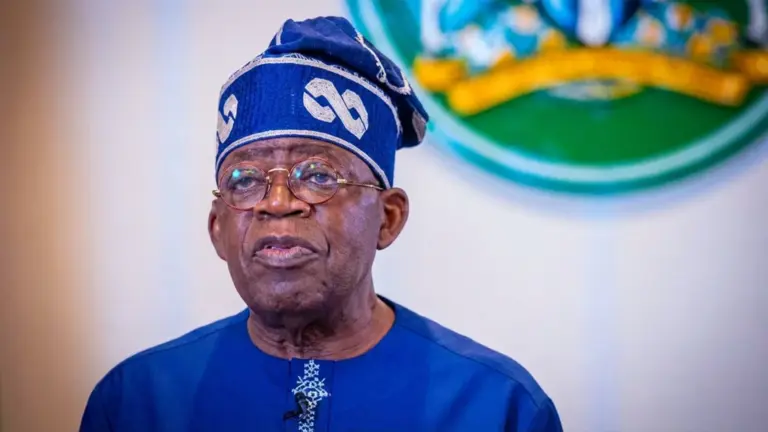
President Bola Ahmed Tinubu has apparently started on a good note with his recent plan to collaborate with the 36 state governors to end extreme poverty in the country. He threw the challenge at the meeting of the National Economic Council (NEC) in Abuja. The meeting came on the heels of the economic hardship arising from the removal of the fuel subsidy.
At the meeting, Tinubu decried the level of poverty in the country which he described as unacceptable and stressed the need for the governors to work with the federal government in tackling the menace. “We can see the effects of poverty on the faces of our people. Poverty is not hereditary; it is from the society. Our position is to eliminate poverty,” he stated.
In tackling the menace, the President directed the National Economic Council (NEC) led by the Vice President, Kashim Shettima, to commence the process of working out intervention initiatives to ameliorate the impact of fuel subsidy removal on the citizens and reduce the rising extreme poverty rate in the country.Beyond seeking the cooperation of the governors, Tinubu appealed to the United States (US) and other developed nations to recognise that Nigeria and Africa have a challenge of poverty that must be urgently addressed. He equally urged the European Union (EU) to support Nigeria in tackling insecurity and poverty challenges confronting her and the African continent.
Therefore, the President’s plan to end extreme poverty is commendable. The level of poverty in the country is worrisome and unacceptable considering our abundant human and material resources. With our oil and gas wealth, Nigeria should not be the poverty capital of the world. The growing level of poverty is not what the federal government alone can handle. The involvement of the state governors, friendly nations and international organisations in addressing the situation has become imperative.
Poverty has become a present danger to Nigeria and the West African sub-region in terms of insecurity and threats to the corporate existence of the country. According to the 2022 National Bureau of Statistics (NBS), about 133 million Nigerians, representing 63 per cent of the population, were multi-dimensionally poor, due to lack of access to health, education, employment and security. The figure of extreme poor Nigerians exceeded the World Bank’s projection that the number of poor Nigerians would hit 95.1 million in 2022. This is the right time to tackle the menace. Allowing it to fester portends great danger for the country. Unchecked poverty rate can lead to rise in criminality and other social vices. It is encouraging that the president has listed the war against poverty among his priorities in his first meeting with the governors. However, there is need for a comprehensive and articulated action plan against the monster. The governors must be fully involved in the project to end extreme poverty. They should design specific policies to address the challenge in their domains.
The federal and state governments must come up with a more elaborate scheme to address the challenge. Extension of handouts to certain groups and classes of people is not enough to eradicate poverty. There is need to empower the people with incentives for entrepreneurship, such as soft loans to establish small and medium enterprises (SMEs). Adequate sensitisation is needed to focus the people on positive engagements.
Let the federal government channel the palliatives from the fuel subsidy removal to stimulate the economy. Besides the palliatives, poverty reduction programmes should go deeper and be more encompassing. Improving the economy and creating opportunities for people remain the surest ways to reduce poverty. With enough arable lands for agriculture and water for aquaculture, the youths should be encouraged to go into farming.
There is need to return education to its pride of place. More technical schools should be opened to de-emphasise the dependence on white collar jobs. Nigerians should also be encouraged to embrace education for making informed choices. This requires reducing the number of out-of-school children in the country. As of September, last year, Nigeria had about 20 million out-of-school children, according to the global data on out-of-school children by the United Nations Educational, Scientific and Cultural Organisation (UNESCO). Getting this number back to school and giving them functional education is a good strategy in tackling extreme poverty.
Also, efforts should be made in creating more industries to absorb the teeming population of jobless youths. Tackling extreme poverty is a positive strategy in reducing the high rate of insecurity in the country.